Justice is knocking on the door of a 94‑year‑old revolutionary legend, three decades after four unarmed men fell burning from the Florida sky.
Story Snapshot
- Federal prosecutors are moving toward an unprecedented murder indictment of former Cuban leader Raúl Castro over a 1996 shootdown that killed four men in two small civilian planes.[1][2]
- Fidel Castro publicly claimed responsibility at the time, but prosecutors now appear ready to test Raúl’s role as military chief in a United States courtroom.[2][4]
- A federal judge has already ruled the Cuban state committed murder in international airspace, and families have received millions from frozen Cuban assets.[2][5]
- The case blends law, exile memory, and Cold War score‑settling—and raises hard questions about delayed justice, sovereignty, and American resolve.
The February Day When Two Cessnas Crossed a Line Havana Would Not Tolerate
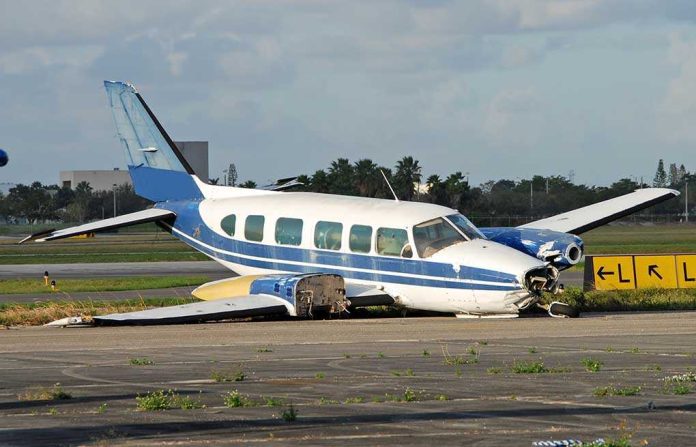
On February 24, 1996, two tiny Cessna aircraft flown by the Miami‑based exile group Brothers to the Rescue lifted off to search the Florida Straits for desperate Cuban rafters. Cuban fighter jets intercepted them and fired missiles that ripped the planes apart, killing four men: Armando Alejandre, Mario de la Peña, Carlos Costa, and Pablo Morales.[1][4] The Organization of American States later concluded the shootdown occurred in international airspace and violated international law. The outrage in Miami has never cooled.[1][4]
The Cuban regime told a very different story. Havana accused Brothers to the Rescue of repeated incursions into its airspace and suggested the group flirted with sabotage and propaganda stunts over Havana.[1] From that vantage point, the regime framed the shootdown as a sovereign defense decision. But radar data and international investigations undercut that claim, placing the destruction of the planes outside Cuba’s territorial airspace.[1][4] That geographic detail—international sky versus sovereign bubble—is the fault line on which a murder indictment now rests.
From Civil Judgments to a Criminal Target: How Washington Built a Murder Theory
American courts did not wait for Raúl Castro to become a criminal defendant before rendering judgment on the event. In a civil case brought by victims’ families, federal judge James Lawrence King concluded the Cuban government “murdered four human beings in international airspace over the Florida Straits” in outrageous contempt for international law and basic human rights.[2] When Cuba refused to pay, the United States government authorized transferring roughly ninety‑three million dollars in frozen Cuban assets to the families, converting moral outrage into concrete financial accountability.[2]
Those rulings focused on the Cuban state, not yet on Raúl Castro personally. Prosecutors now seem to be closing that gap. Reporting indicates the United States Department of Justice is preparing, or has prepared, an indictment charging Raúl Castro with murder tied to the 1996 shootdown, to be unsealed in Miami.[1][2] Two sources cited by the Miami Herald say the timing is set to align with a Department of Justice ceremony at Miami’s Freedom Tower, the symbolic Ellis Island of Cuban exiles, honoring the four victims.[2] That choreography tells you this is about law—and memory, messaging, and resolve.[2]
The Fidel Factor: Public Admissions, Private Intelligence, and Raúl’s Chain of Command
Prosecutors do not have to prove Raúl Castro personally pushed a launch button; they have to tie him into a command chain that made murder foreseeable and intentional. Fidel Castro, in a 1996 CBS interview, said he gave an order that these incursions could no longer be tolerated, that the Air Force had a general directive not to allow them, and that he assumed responsibility for what happened.[2] Former Central Intelligence Agency analyst Brian Latell later recounted Fidel privately saying, “I gave the order. I’m the one responsible.”[2]
So where does Raúl fit? At the time of the shootdown, Raúl Castro ran Cuba’s armed forces, placing him squarely over the fighter pilots who fired on the Cessnas.[4][5] American conservatives will instinctively see a simple chain: Fidel as supreme leader, Raúl as defense boss, air generals below them, and pilots at the end of the spear. However, the materials publicly available so far do not include a direct admission from Raúl ordering the strike.[2] Prosecutors likely lean on command responsibility theory: if you structure, bless, or knowingly tolerate lethal intercepts against unarmed aircraft in international airspace, you own the result.
Politics, Exile Memory, and the Risk of Symbolic Justice
South Florida’s Cuban‑American community has treated this case as unfinished business for thirty years. Local members of Congress have long demanded an indictment, calling the shootdown a cold‑blooded murder of American citizens and residents.[4][5] Many in Little Havana see the reported move against Raúl as overdue moral arithmetic, finally matching the legal ledger to what was obvious in their bones the day the wreckage hit the water. That passion aligns with core conservative instincts: protect American lives, punish terrorism, and reject impunity for communist regimes.
By JOSHUA GOODMAN, ALANNA DURKIN RICHER and ERIC TUCKER MIAMI (AP) — The Justice Department is preparing to seek an indictment against former Cuban President Raúl Castro, three people familiar with the matter told The Associated Press on Frid… https://t.co/VEJAMjmw8W
— Capital Gazette (@capgaznews) May 15, 2026
Yet the timing and packaging of the indictment story invite skepticism even from hawks. Reports link the move to broader United States pressure on Havana and to highly symbolic events at the Freedom Tower.[2][5] The risk is that what should be a clean question—did a foreign leader and his chain of command murder Americans in international airspace?—gets blurred into another front in the endless U.S.–Cuba grudge match. When justice becomes a prop, even deserving cases can look opportunistic, which gives Raúl’s defenders rhetorical ammunition they do not deserve.
What Real Accountability Would Look Like—and Why It Still Matters
Everyone knows Raúl Castro will not stroll into a Miami courtroom of his own free will. Cuban authorities will not extradite him. So the easy, cynical conclusion is that this is theater. That misses two things. First, terrorism and human rights cases often mature in stages: civil judgment, then sealed indictments, then eventual arrest when regimes fall or leaders travel unwisely. Think of old Latin American military chiefs or Balkan war criminals surprised at airports decades after their crimes.[4][5]
Second, a meticulous indictment forces the United States government to put its evidence on the record. That means radar plots, intercepted communications, transcripts, intelligence assessments, and sworn witness summaries. American conservatives should welcome that sunlight. If the case is as strong as victims’ families believe, a public charging document will show how a revolutionary state calculated it could shoot down civilian planes with impunity—and how long it took Washington to say, formally, that murder is still murder even when the accused wears fatigues and once charmed Western intellectuals.
Sources:
[1] YouTube – Raúl Castro could face charges in Brothers to the Rescue shootdown
[2] Web – Raúl Castro’s indictment expected to be unsealed in Miami
[4] Web – 1996 shootdown of Brothers to the Rescue aircraft – Wikipedia
[5] Web – Shoot-Down of the Brothers to the Rescue Planes – House.gov