A retired Swiss bishop watched Italian police drag two armed Turkish men from a quiet bed and breakfast and said aloud what many Europeans only whisper: “Islam has a problem with violence.”
Story Snapshot
- Bishop Marian Eleganti links a foiled Italian weapons raid near a Catholic festival to a deeper “problem” inside Islam with violence and dominance.[2][4]
- He calls Islam “inherently intolerant” and “anti‑Christian,” claiming Christianity withers wherever Islam gains power.[1][3]
- Italian police, however, publicly stressed possible organized‑crime motives and no proven terror ties in the case.[2][4]
- Pope Francis counters the whole framework, warning that equating Islam with violence is as wrong as ignoring violent Catholics.
Bishop Eleganti’s Charge: Islam, Power, and a Foiled Festival Attack
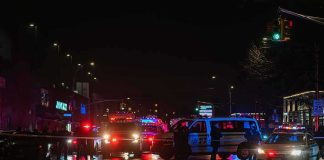
Italian counterterrorism officers did not raid a random farmhouse; they hit a bed and breakfast days before a centuries‑old Catholic festival that would draw thousands and Italy’s foreign minister.[2][4] Inside, they say they found two Turkish men and automatic weapons, including a semi‑automatic pistol and an assault machine gun, and opened an investigation into a possible planned terrorist act against the procession.[2][4] That scene is the backdrop for Bishop Marian Eleganti’s blunt conclusion that Islam “has a problem with violence.”[1][3]
Eleganti does not speak as an internet commentator chasing clicks. He is a former auxiliary bishop of Chur, known for criticizing post‑Second Vatican Council liturgical reforms as a “rather violent… reconstruction” of the Mass and for warning about the Church’s future in an aggressively secular West. When he looks at an armed plot near a Catholic festival, he sees a pattern, not a coincidence: Islam, he argues, is “naturally expansive” and always presses toward dominance wherever it is allowed to take root.[1][3]
Islam as “Anti‑Christian”: The Bishop’s Theological Reading
Eleganti’s real bombshell is theological, not tactical. He describes Islam as “a religion that we believe is not really inspired by God, but is deliberately conceived in an anti‑Christian sense,” highlighting its denial of the Trinity as a direct frontal assault on the heart of Christian revelation.[1][3] From there, he traces a sweeping historical claim: wherever Islam rules, Christianity “is being decimated to the point of near extinction,” and Christians “worldwide suffer persecution at the hands of Muslims.”[1][3]
From a conservative, common‑sense perspective, his argument taps into something concrete: in many majority‑Muslim countries, Christians face disproportionate legal and social pressure, and in some places outright persecution, even if the severity varies widely. Eleganti draws a straight line between this reality and what he sees in Islamic doctrine about power, law, and public order.[1][3] Critics respond that he offers assertion more than detailed textual proof, but his claim resonates with believers who have watched ancient Christian communities shrink or flee.
Police, Motive, and the Awkward Gap Between Guns and God
The Italian case that sharpened Eleganti’s comments does not fit neatly into his theological template. Reports from Catholic Review and OSV News quote police sources saying the two Turkish suspects had no links to the so‑called Islamic State or other terrorist networks and may instead be connected to organized crime.[2][4] Authorities still probed the “possible planning of a terrorist act,” but public statements stopped short of naming Islam, jihad, or any religious motive at all.[2][4]
That gap matters. Conservatives who care about truth more than narratives should insist on evidence before assigning motive. Guns near a Catholic event plus Turkish suspects does not automatically equal Islamic holy war. Organized criminal groups also use festivals as soft targets for extortion, intimidation, or score‑settling. The bishop’s sweeping judgment about Islam’s nature stands or falls on broader doctrine and history, not on one half‑explained Italian raid.[2][4]
Vatican Hospitality, Muslim Prayer, and the Fear of a “Foothold”
The controversy around Eleganti does not stop at the Italian weapons cache. He also sharply condemned the Vatican Apostolic Library for granting Muslim scholars a prayer room on Vatican property.[1][3] His concern had nothing to do with courtesy for visiting academics; he warned that the moment a Muslim begins to pray there, many faithful will see it as a symbolic “foothold,” an “outpost of the coming dominance that Islam naturally always strives for.”[1][3]
Here the bishop articulates a fear many older Europeans share but rarely state openly: every accommodation is irreversible, every gentle interfaith gesture creates facts on the ground that only move in one direction. From this vantage point, the issue is not one prayer room but a civilizational tug‑of‑war in which demographic trends and religious confidence favor Islam while Western elites dismantle their own Christian heritage in the name of dialogue.
Pope Francis Pushes Back: Violence as a Human, Not Islamic, Disease
Pope Francis offers a very different compass. Asked about terrorism and Islam, he answered, “It’s not right to equate Islam with violence.” He added a pointed comparison: “There are violent Catholics. If I speak of Islamic violence, I also have to speak of Catholic violence.” His point is simple but sharp: violence is a human problem, not a monopoly of any one religion, and cherry‑picking examples proves very little about doctrine.
That papal stance flows from the Second Vatican Council’s teaching that Muslims “adore the one God” and from decades of official Catholic outreach that seek common ground while rejecting hatred and discrimination. From this angle, Eleganti’s rhetoric about Islam as “deliberately” anti‑Christian risks undermining fragile cooperation, feeding tribalism, and ignoring the many Muslims who themselves reject violence and suffer under the same extremists that threaten Christians.
Where Common Sense Lands Between Alarm and Denial
So where does a sober, conservative reader land between Eleganti’s alarm and Francis’s warning? Denial is not an option. Serious tensions exist where Islamic majorities set the rules, and Christians and other minorities often pay the price; to pretend all religions behave identically in public life contradicts lived reality. Yet blanket indictments that treat every Muslim neighbor as an aspiring conqueror collapse justice into prejudice and skip the hard work of evidence.[1][2][3][4]
Common sense suggests three parallel truths. First, Western societies should protect their citizens, churches, and festivals without apology, and demand clear answers from law enforcement about motives when plots surface.[2][4] Second, Christians should study Islam and its legal‑political tradition in detail, not just through headlines or slogans, before drawing doctrinal conclusions. Third, both Bishop Eleganti’s warnings and Pope Francis’s cautions deserve to be held in tension: charity toward persons, clarity about ideas, and courage to say what the facts, not our fears, actually support.
Sources:
[1] Web – Bishop Eleganti condemns Vatican decision to provide Muslim …
[2] Web – Italian police foil attempted attack on Catholic festival; Turkish …
[3] Web – Bishop Eleganti condemns Vatican decision to provide Muslim …
[4] Web – Italian police foil attempted attack on Catholic festival – OSV News