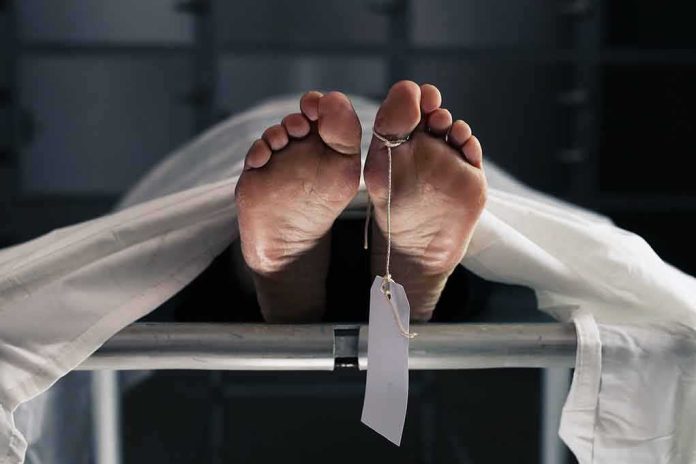
Harvard agreed to pay $53 million after families said a morgue manager sold body parts from loved ones who donated their bodies to science.
Story Snapshot
- A Massachusetts judge preliminarily approved a $53 million class settlement for donor families.
- Harvard will deliver a live statement calling the conduct “morally reprehensible,” addressing families directly.
- Federal prosecutors said the morgue manager trafficked organs, skin, hands, and dissected heads.
- The state’s highest court allowed the families’ lawsuits against Harvard to move forward in 2025.
What Harvard Agreed To Pay And Say
Harvard University agreed to pay $53 million to settle lawsuits from families tied to its medical school’s anatomical gift program. A state court judge gave preliminary approval, which is a key step before final approval and payouts. The plan also includes a live webinar statement to families. In that event, Harvard officials will call the acts “morally reprehensible” and say they violate the school’s standards for donor care, according to settlement materials and reports filed with the court.
Settlement funds will resolve claims from families whose loved ones donated remains for research and teaching. The agreement follows a high-profile criminal case against the school’s former morgue manager, Cedric Lodge. The settlement does not decide whether Harvard was legally at fault. It ends civil cases through payment and an official statement. Courts often use settlements to bring closure when facts are sensitive and harm is hard to measure in simple dollars.
🚨 HARVARD PAYS $53M SETTLEMENT
Harvard agreed to pay $53M to families after its former morgue manager stole donated body parts—including brains, skin, and heads—and sold them online.
Manager Cedric Lodge was sentenced to 8 years in prison. pic.twitter.com/g5PGhpbC1N— John Kennedy (@john_kennedy75) August 19, 2026
The Criminal Case That Triggered The Lawsuits
Federal prosecutors said Cedric Lodge removed human remains from donated cadavers over several years. Items listed included organs, brains, skin, hands, faces, and dissected heads. Prosecutors said he took parts after classroom or research use but before final disposition under the program’s rules. Lodge later pleaded guilty to transporting stolen goods across state lines, and a judge sentenced him to prison in 2025, confirming the core theft and trafficking scheme.
The criminal case led families to sue Harvard and employees of the anatomical gift program. The suits argued that the school failed to safeguard remains that donors entrusted to it. Harvard first sought dismissal. The university argued it did not know about Lodge’s crimes and that state law shielded it if it acted in good faith. In 2023 filings, Harvard also acknowledged families’ anger and fear while maintaining that Lodge alone was responsible.
Key Court Rulings And Why They Mattered
In 2025, the Massachusetts Supreme Judicial Court ruled the families’ cases could proceed. The justices held that the allegations plausibly described mishandling and allowed discovery and further proceedings. That ruling reversed a prior dismissal and put Harvard back into the case. The decision also recognized the complaints from 47 named plaintiffs tied to the anatomical gift program, setting the stage for wider settlement talks.
After that ruling, a Suffolk Superior Court judge later gave preliminary approval to the class settlement. Preliminary approval means the judge found the proposed deal fair enough to notify families and move ahead toward final review. This step often follows when both sides weigh risks, costs, and the emotional toll of a public trial. The $53 million total and the live statement reflect the gravity of harm to donor dignity claimed by the families.
What This Says About Trust And Oversight
Harvard’s 2023 motion said the school had no prior knowledge of the thefts and claimed legal immunity under the Uniform Anatomical Gift Act. That argument framed the crimes as one employee’s misconduct, not a system failure. Families pressed a different view, focusing on broken trust and oversight. An outside review later urged tighter tracking, security, training, and clearer policies for donor programs, echoing fixes that many institutions adopt after similar scandals.
A former Harvard Medical School Morgue Manager; Cedric Lodge, stole and sold dead bodies donated for scientific research on the black market
Now, a Boston Court has granted preliminary approval for Harvard to pay $53 Million settlement
He has been sentenced to eight years in…— Janny (@FablosJanny) August 19, 2026
This case highlights a core promise in medical education: treat donors with respect and care. Families on both the left and the right expect institutions to guard that promise without excuse. When controls fail, people see elites protecting reputations while ordinary families carry the pain. The settlement delivers money and an apology-like statement, but it also reminds schools, labs, and hospitals that chain-of-custody and human dignity are not optional—they are the job.
Sources:
insiderpaper.com, wbur.org, reuters.com, topclassactions.com, thecrimson.com, classaction.org