Rubio’s warning that President Trump will not be muscled into a “bad deal” landed on the same day Israeli and Lebanese envoys sat down in Washington and a 10-day ceasefire emerged from the fog of rocket fire and press leaks.
Story Snapshot
- Rubio coordinated Washington talks with Israeli and Lebanese ambassadors amid active cross-border strikes [2][3]
- Trump announced a 10-day Israel-Lebanon ceasefire and tasked Rubio with pursuing a longer peace framework [2][3]
- Lebanon’s presidency publicly thanked Rubio after a direct call about the truce [2]
- The specific “bad deal” terms remain undefined in available public records, inviting scrutiny [2][3]
Ceasefire headlines, behind-doors leverage
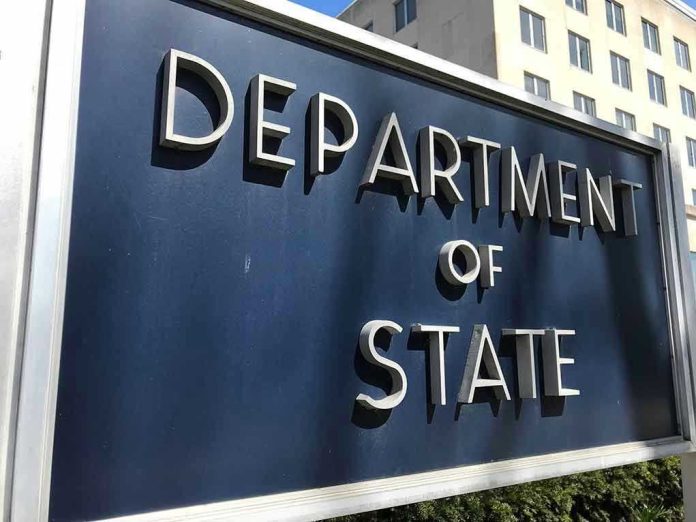
Fox News’ live reporting placed Marco Rubio at the center of quick-turn diplomacy: calls with Lebanon’s president, coordination with State Department talks, and a Washington meeting framed as the first such encounter in decades, all culminating in President Trump’s announcement of a 10-day ceasefire between Israel and Lebanon [2]. A primary-source broadcast transcript corroborates that Rubio met with Israeli and Lebanese ambassadors in Washington to discuss a potential ceasefire and broader de-escalation tracks [3]. The sequencing establishes Rubio as an operational actor, not simply a media quote [2][3].
Trump added his own instruction set, directing Vice President J. D. Vance and Secretary of State Rubio to work with both parties toward what he called a “Lasting PEACE,” a phrase reported in that same Fox News package [2]. The optics served two aims: shore up allied confidence that Washington was fielding a plan, and signal to adversaries that the White House would not negotiate under fire. The Lebanese presidency’s thanks to Rubio after his call suggests at least one capital viewed the engagement as substantive, not ceremonial [2].
What “no bad deal” means without a paper trail
The public record still lacks a verbatim Rubio statement defining a “bad deal,” a notable evidentiary gap given the slogan’s power in Washington politics [2][3]. Without a transcript or draft text, the red lines remain inference. Conservative common sense asks for terms: disarmament benchmarks for Hezbollah, border-security guarantees, verification protocols, and consequences for violations. Those specifics are not present in the reporting. That omission does not negate the claim’s intent; it does limit how precisely the public can judge tradeoffs that negotiators weighed in private rooms [2][3].
Critics of Rubio’s diplomatic heft argue that his résumé and instincts would drive escalation or produce brittle outcomes, a line advanced in prior commentary questioning his fitness for the State Department role [1]. That critique relies more on pattern and posture than on the documented mechanics of these talks. The available primary broadcast material shows Rubio convening and pressing for ceasefire architecture, which cuts against the caricature of a grandstander detached from process [3]. Evaluating the assertion should rest on the record: meetings held, calls made, and outcomes announced, even if provisional [2][3].
Pressure points: rockets, sanctions, and time
The counter-case contends that structural pressure flowed toward compromise: battlefield tempo, Iranian-linked leverage, and Lebanese political fragmentation narrow options to a deal many would call imperfect. CBN’s transcript summary cites hard-line positions in the region that box negotiators in, making any short-term pause look like a patch rather than a settlement [3]. That context explains why “no bad deal” resonates domestically; it reassures voters that speed will not trump substance while diplomats test whether a 10-day truce can harden into enforceable arrangements [3].
Washington choreography often tries to split the difference: de-escalate now, define terms later. Trump’s move to announce a bounded ceasefire while elevating Rubio and Vance to pursue a longer track fits that template [2]. If subsequent documents reveal verifiable border conditions, constraints on Hezbollah rocket activity, and a monitoring regime with snapback penalties, Rubio’s warning aligns with a disciplined bargaining stance. If the paper trail never materializes, the “bad deal” line risks becoming a durable talking point with little tether to enforceable realities [2][3].
Sources:
[1] Web – Eight Reasons Marco Rubio Would Be a Disastrous …
[2] Web – Trump says Israel, Lebanon agree to 10-day ceasefire as …
[3] YouTube – Trump Brokers Israel-Lebanon Ceasefire in Oval Office