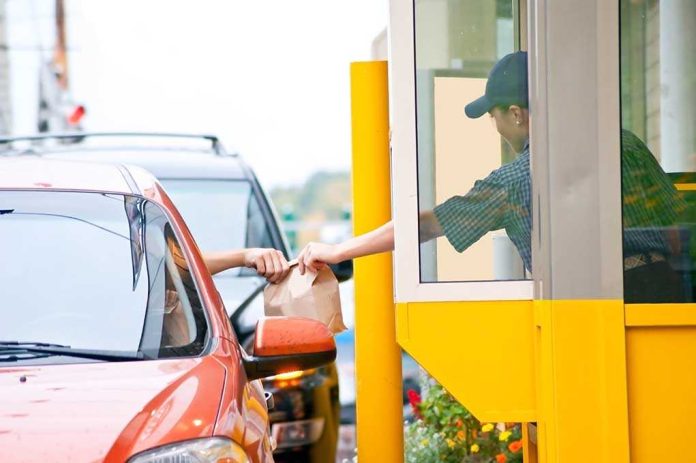
Taco Bell is quietly turning almost 900 drive-thrus into AI-powered lanes, raising new questions about who really benefits when machines take over everyday jobs.
Story Snapshot
- Taco Bell has rolled out voice artificial intelligence ordering to more than 890 drive-thru restaurants across 38 states.
- The company says the Omilia system matches or beats human order speed while keeping more workers from quitting.
- Voice artificial intelligence now handles repetitive ordering so staff can focus on food prep and face-to-face customer service.
- This move follows a wider trend of fast food chains using artificial intelligence to cut labor problems while raising public worries about mistakes and lost jobs.
Taco Bell’s Massive Shift to AI at the Drive-Thru
Taco Bell has expanded its partnership with technology company Omilia so voice artificial intelligence now takes orders at more than 890 drive-thru locations across 38 states. The system sits at the speaker post and talks with customers, then passes the order into the kitchen just like a human worker would. Omilia’s software adjusts to each restaurant’s menu, current stock, and special offers in real time, so it can handle changes without a manager stepping in. Company leaders say this rollout is a key part of Taco Bell’s long-term digital and technology strategy.
https://twitter.com/Oakstonerecruit/status/2074799773106766148
Data from Taco Bell and Omilia shows that transaction times with voice artificial intelligence are on par with, and in many cases faster than, traditional human order-taking. One case study found drive-thru time from speaker to food handoff stayed the same or improved when artificial intelligence took the orders instead of people. The system also filters background noise and is tuned for the tough sound environment of a drive-thru lane, where traffic, weather, and engines can make it hard to hear. Faster and clearer ordering matters because drive-thrus now account for most quick-service restaurant sales.
What This Means for Workers and Customers
Taco Bell reports that locations using voice artificial intelligence have higher employee retention than stores without it. The main idea is simple: the machine handles the most repetitive, mentally draining part of the job, so workers can focus on cooking food and talking with customers face to face. Early data from Taco Bell’s tests show that total sales and transaction counts are at least as good, and sometimes better, in restaurants with voice artificial intelligence. Complaints from guests are at parity or lower when compared with non-artificial-intelligence stores, suggesting service quality has not dropped as machines join the front line.
For many Americans, this shift cuts both ways. On one hand, workers who stay in their jobs longer may bring better skill and service, which helps families trying to earn steady pay in a shaky economy. On the other hand, a machine doing more of the “easy” work can look like the first step toward cutting entry-level jobs that teens, seniors, and struggling adults often rely on. Customers also know that when technology fails, large companies can shrug off the pain more easily than the person stuck at the window. These fears feed a growing belief that big brands use innovation mainly to protect profits, not people.
AI, Fast Food, and the Bigger Debate About Power
Taco Bell’s move fits a larger pattern across the fast food world, where chains use artificial intelligence to fight rising wages, staff shortages, and uneven service. Industry reports show many restaurants now test voice artificial intelligence systems that aim for very high order completion rates and sub-minute ordering times. Supporters claim these tools reduce friction, make orders more accurate, and allow smarter upselling that boosts sales without extra pressure on workers. Critics worry that every new smart system also gives corporations more data and control, while the people making the food and buying it see little of the gain.
Both conservatives and liberals have reasons to eye this trend carefully. Many on the right see artificial intelligence as another tool big corporations and what they call the deep state use to squeeze the middle class while talking about “innovation.” They connect this to long-running anger over inflation, global trade deals, and policies that seemed to help elites more than local workers. Many on the left view artificial intelligence drive-thrus as the latest example of technology widening the gap between rich and poor, with low-wage workers and minority communities feeling the impact first.
Speed and Convenience vs. Trust and Control
Supporters of Taco Bell’s system point to real wins: faster, more accurate orders for millions of customers, and less burnout for crew members who stay in their jobs longer. For drivers trying to feed a family after a long day, shaving even a minute off a wait can matter when every hour is tight. Yet, past viral incidents with drive-thru artificial intelligence at Taco Bell and other chains show how quickly public trust can crumble when systems break or get gamed, even if most orders go smoothly. In a world where social media can blast one failure nationwide in minutes, rare glitches can shape feelings more than quiet success.
Taco Bell is expanding its rollout of Omilia voice AI ordering at its drive-thru locations:https://t.co/CJMuqBI425
— Dan Berthiaume (@DBerthiaumeCSA) July 9, 2026
Underneath the talk about transaction times and voice recognition, this story points to something deeper: who sets the rules in daily life. Taco Bell’s artificial intelligence rollout was not voted on by customers or workers; it was chosen by executives under pressure to cut costs and keep profits flowing. The technology itself may help many people in small ways, but it also adds another layer of unseen code and corporate control between ordinary Americans and the basic services they use every day. For a country already worried that powerful elites call too many shots, even the drive-thru now feels like part of that battle.
Sources:
facebook.com, businesswire.com, restaurantdive.com, foxbusiness.com, kioskindustry.org, revenuemanage.com