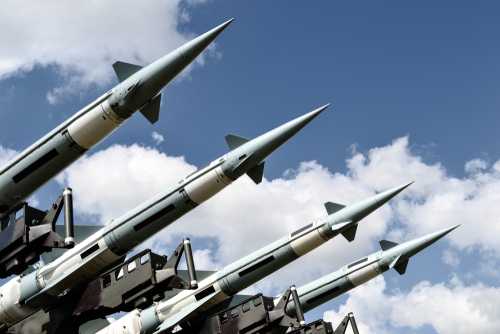
A missile launcher hidden in what looks like an ordinary shipping container just shot down a drone in Army testing, raising fresh questions about invisible firepower controlled by a handful of defense giants and Washington insiders.
Story Snapshot
- The U.S. Army and Lockheed Martin used a Joint Air-to-Ground Missile fired from a GRIZZLY launcher in a 10-foot cargo container to destroy a mid-sized attack drone in testing.[1][2][4][5]
- The containerized launcher uses off-the-shelf logistics and can be moved by trucks, ships, or aircraft, allowing powerful weapons to be quietly parked almost anywhere.[1][4]
- The system ties into artificial intelligence-enabled battle management software and radar, giving industry enormous influence over how threats are detected, tracked, and engaged.[2][3][5][6]
- Despite the dramatic demo, there is still no clear public record that the Army has formally bought or fielded GRIZZLY, leaving taxpayers in the dark on long-term plans and costs.[5][1]
A shipping container that shoots missiles at drones
U.S. Army testers at Yuma Proving Ground in Arizona recently worked with Lockheed Martin to use the company’s GRIZZLY launcher, hidden inside a 10‑foot shipping container, to shoot down a one‑way attack drone with a Joint Air‑to‑Ground Missile.[1][2][5] The test used software to track and engage a Group 3 drone, the Pentagon category for mid‑sized unmanned aircraft, and successfully destroyed the target in flight.[1][2][4] This marked the first intercept of this kind for the system.[4][5]
Lockheed Martin previously demonstrated that GRIZZLY can vertically launch Hellfire missiles from the same 10‑foot “Tricon” container, proving the basic containerized launcher concept before shifting to the newer Joint Air‑to‑Ground Missile for anti‑drone work.[4][6] The launcher is built from proven weapon architectures, including the Army’s existing M299 launcher, and was assembled in about six months, allowing engineers to skip a clean‑sheet design process.[4][6] This rapid integration helped move quickly from idea to live‑fire tests against real targets.[4][2]
Lockheed fires JAGM from containerized launcher in first drone intercept
June 3, 2026
Lockheed Martin says it has intercepted a Group 3 one-way attack drone for the first time using a Joint Air-to-Ground Missile (JAGM) fired from its GRIZZLY containerized launcher, in a test it… pic.twitter.com/Rk5m9tKBEV
— Parallel Polis in Exile 🇺🇸 (@Polis_in_Exile) June 4, 2026
How the kill chain works—and who controls it
During the counter‑drone test, the Army and Lockheed Martin linked GRIZZLY to Fortem Technologies’ truck‑portable R‑40 radar and to Lockheed’s Sanctum battle management software, which fuses sensor data, tracks targets, and cues the missile shot.[2][3][5][6] Company accounts describe Sanctum as using artificial intelligence to manage the engagement from first radar contact through missile impact, with the entire detect‑track‑engage “kill chain” integrated in under 45 days.[2][3][5] This architecture puts far more decision‑making into software designed and controlled by major contractors.[3][5]
Lockheed Martin says the same containerized launcher can hold up to eight missiles, be reloaded without tools, and operate from ground bases or ships using standard logistics equipment.[2][4][6] Defense News reporting notes that GRIZZLY is built from low‑cost commercial materials and can be moved by truck, ship, or aircraft, meaning a launcher can be dropped into a remote outpost or port with minimal preparation.[1][4] Army descriptions emphasize that the launcher is “housed in an ordinary looking 10‑foot shipping container,” making it blend into the clutter of global freight.[5][3] That mix of mobility, software control, and concealment aligns tightly with both Pentagon and industry visions of future “distributed” warfare.[4][6]
Promise, limits, and what the public is not being told
Task and Purpose and Military Times both report that the GRIZZLY test was framed as part of the military’s search for cheaper, more flexible defenses against the flood of inexpensive drones reshaping battlefields from Ukraine to the Middle East.[1][2] Lockheed Martin markets GRIZZLY as a cost‑efficient point‑defense option that can augment artillery and short‑range air defense by giving commanders a modular, rapidly deployable missile cell in a box.[4][6] For Americans worried about troops overseas facing swarms of suicide drones, that promise sounds like a badly needed upgrade.[1][4]
Yet the public record still shows a demonstration, not a done deal.[5][1] The Army’s own Yuma Proving Ground article describes a “controlled demonstration” of a counter‑drone concept using Joint Air‑to‑Ground Missile and GRIZZLY and mentions earlier Hellfire testing, but it does not announce any procurement contract, program‑of‑record status, or fielding timeline.[5] Available reporting also lacks hard numbers on hit probability, cost per engagement, reload time under fire, or how the system holds up against electronic warfare and enemy strikes.[1][4][5] That leaves taxpayers and citizens evaluating a marketing‑heavy snapshot instead of a full performance picture.[4][5]
Why this matters to Americans on both the right and the left
For many conservatives, GRIZZLY raises questions about yet another expensive, contractor‑driven system emerging from Washington without clear accountability on cost, mission fit, or long‑term strategy, even as basic border security and domestic priorities remain contested.[1][4][7] For many liberals, the idea of missiles hidden in cargo containers, steered by artificial intelligence software from a powerful defense firm, reinforces concerns about secretive militarization and technologies that could normalize remote, opaque uses of force.[3][5][7] Both sides see an acquisition process that looks more responsive to defense‑industry roadmaps than to open public debate.
The GRIZZLY story fits a broader pattern where companies unveil successful demos that the public quickly assumes are fully adopted, while the government releases only minimal, tightly controlled details.[4][3] Containerized weapons that blend into ordinary infrastructure echo long‑standing fears of “weapons in plain sight,” yet there is little open discussion of safeguards, doctrine, or who decides when and where such systems can be quietly staged.[3][7] As drones and counter‑drone tools multiply, the core issue is less about one launcher and more about a government‑industry complex that asks for trust first and transparency later, if ever.[4][5]
Sources:
[1] Web – The Army’s latest anti-drone tool fires missiles from a cargo …
[2] Web – Lockheed launches Hellfire missile from 10-foot cargo container
[3] YouTube – How Lockheed Martin’s Grizzly launcher could redefine battlefield …
[4] Web – Hellfire Launchers Hidden in Shipping Containers | MiGFlug Blog
[5] Web – GRIZZLY Containerized Launcher Completes Multiple Live-Fire …
[6] Web – U.S. Army Yuma Proving Ground tests containerized missile launcher
[7] Web – Grizzly missile launcher – new punch for US forces – Calibre Defence