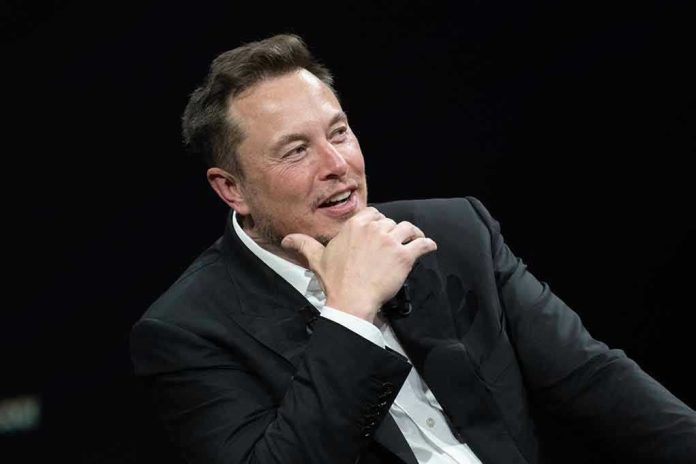
The most powerful man in tech just told a generation of students that the $200,000 degree they are sweating over is essentially a very expensive way to prove they can do their homework.
Quick Take
- Elon Musk told the Satellite 2020 conference that college is “basically for fun” and not for learning, and that people can learn “anything they want for free.”
- Musk called degree requirements in hiring “absurd” and said he wants to eliminate them at Tesla and SpaceX in favor of hiring for “exceptional ability.”
- Some Tesla and SpaceX job listings still include degree requirements, revealing a gap between Musk’s rhetoric and actual company hiring practice.
- Labor economists have long recognized that degrees function as cheap screening tools for employers, a reality that does not disappear simply because free online learning exists.
What Musk Actually Said and Where He Said It
At the Satellite 2020 conference in Washington, D.C., Musk delivered one of his most quotable takedowns of higher education. “I think colleges are basically for fun and to prove you can do your chores, but they’re not for learning,” he said, adding that people “don’t need college to learn stuff” because they can learn “anything they want for free.” He called the requirement of a college degree in hiring “absurd” and said the only real hiring standard should be “exceptional ability.” [1]
These were not offhand remarks from someone unfamiliar with the stakes. Musk built Tesla and SpaceX into world-altering companies, and his views on talent selection carry real weight in corporate America. When someone with that track record calls credentialism absurd, it is worth examining whether he is right, partly right, or simply saying something that sounds correct because tuition bills have made millions of people furious enough to agree with almost anything. [2]
Where the Argument Has Genuine Force
Musk is not wrong that access to knowledge has been democratized in ways that would have seemed impossible thirty years ago. MIT OpenCourseWare, Khan Academy, Coursera, YouTube tutorials, and open-source documentation mean that a motivated person can build real, marketable skills without ever setting foot on a campus. The internet has genuinely collapsed the information monopoly that universities once held. For software engineering, data science, graphic design, and dozens of other fields, self-taught practitioners regularly outperform credentialed peers. [1]
His hiring philosophy is also internally consistent. Musk has repeatedly said that the absence of a college degree would not prevent him from hiring someone, and some Tesla and SpaceX postings reflect that by accepting equivalent experience in place of a formal degree. The core idea, that demonstrated ability should trump a piece of paper, is not radical. It is actually closer to how most excellent hiring managers think when they are being honest. [1]
Where the Argument Gets Complicated Fast
The problem is that Musk’s sweeping generalization collides with a stubborn structural reality. Degrees do not just signal that someone learned calculus. They signal that a person showed up consistently for four years, navigated bureaucratic systems, completed work under external accountability, and finished something difficult. Employers who cannot directly observe a candidate’s work ethic use the degree as a proxy precisely because measuring “exceptional ability” in a one-hour interview is genuinely hard. That screening function does not vanish because Coursera exists. [1]
Elon Musk is 100% right.
You don’t need college to learn anymore. Everything is available for free online.
Universities aren’t selling knowledge — they’re selling a $200,000 receipt for compliance and bureaucracy.
The future belongs to the self-taught and the builders, not the… https://t.co/1twO1HUOdA
— Will Sherwood, MA, MSP (@WillSherwood) May 23, 2026
There is also the inconvenient detail that some Tesla and SpaceX job listings still require a bachelor’s degree or higher. That internal inconsistency does not make Musk a hypocrite exactly, but it does expose the limits of applying a philosophy uniformly across an organization with thousands of roles spanning software, regulated manufacturing, aerospace safety, and government contracting. Some of those roles carry licensing and compliance requirements that make formal credentials functionally non-optional regardless of what the CEO says at a conference. [1]
The Real Question Musk’s Remarks Force Us to Ask
Musk framed his remarks as a philosophical critique, not an empirical finding. He offered no controlled comparison of self-taught versus college-trained workers, no performance outcome data, and no longitudinal evidence that free online learning produces equivalent career results across industries. That does not mean he is wrong. It means the claim is still an assertion, and a provocative one made by someone whose own path to success involved degrees from the University of Pennsylvania and a brief stint in Stanford’s PhD program before he dropped out. [2]
The more useful version of Musk’s argument is not “college is useless” but rather “credential requirements have become reflexive rather than rational in too many hiring contexts.” That narrower claim is well-supported, intellectually honest, and actually actionable for employers willing to build better direct-assessment tools. The broad version, that anyone can replace college with free internet learning and expect equivalent outcomes across all fields, is the kind of thing that sounds liberating in a conference hall and gets more complicated when someone needs a licensed engineer to sign off on a rocket component. [1]
Sources:
[1] Web – Elon Musk dismisses college, says it’s ‘for fun’ and people can learn …
[2] Web – Elon Musk on Education: College Degrees, Learning … – GoTranscript