A Russian missile hitting a daytime weapons fair outside Kyiv has sparked not only grief, but a harsh debate over how war is being managed and who is really keeping people safe.
Story Snapshot
- Russia struck an open-air arms exhibition near Kyiv, killing about 10 people and injuring around 100, according to Ukrainian officials.
- Ukraine’s prosecutor general opened a war crimes case against Russia and a separate criminal probe into possible negligence by event organizers.
- President Volodymyr Zelensky said such arms shows near residential areas are “entirely unacceptable” under current wartime conditions.
- Ukrainian industry figures and local officials say safety rules, shelters, and permits may have been ignored, raising deeper questions about government competence.
Deadly Strike on a Public Defense Event
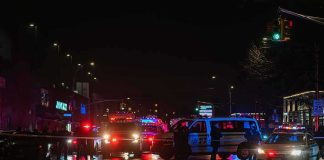
On July 24, a Russian ballistic missile slammed into an arms exhibition near Kyiv, turning a defense “demo day” into a mass casualty scene. Ukrainian officials report at least 10 people killed and close to 100 wounded, most of them defense industry staff and guests who were gathered in daylight at a training ground or private complex just outside the city. Russia claimed it hit a legitimate military target, saying the expo showcased drones used to strike inside Russia. Ukraine calls it yet another example of Russian terror against civilians.
The strike fits a wider pattern in the war, where Russia aims not just at front-line units but at training grounds, logistics hubs, and events linked to the defense sector. What makes this attack different is how exposed the gathering was. It was not held deep underground or in a restricted military base, but at an open venue near residential areas. Images and witness accounts describe destroyed tents, shattered equipment, and wounded people lying in the open as emergency crews rushed in. For many on both left and right, it looks like regular people once again paying the price for decisions made far above their heads.
Criminal Probes and Questions About Negligence
Ukraine’s prosecutor general, Ruslan Kravchenko, responded by opening two criminal cases: one for Russian war crimes and another for “possible negligence” in organizing and holding the event. He said investigators must learn who approved the expo, how risks were assessed under martial law, and whether safety rules were followed. This means officials are not only blaming Moscow, but also asking if Ukrainian organizers and authorities failed in their duty to protect people at a known wartime target. The probe echoes broader public anger that leaders often react after tragedy, not before it.
President Zelensky, in his nightly address, admitted the exhibition “certainly should not have been taking place there” and called such public arms fairs near housing “entirely unacceptable” with an enemy that fires ballistic missiles. His words match what many Americans feel at home: people see governments talk about security yet still allow risky events, weak infrastructure, or open borders, only to offer condolences after disaster strikes. Ukrainian commentators now ask how permits were issued, whether shelters and medical stations existed, and why a large gathering was allowed during daytime when missile alerts are common.
How Public Was This Event, and Who Knew What?
Reports differ on how openly the expo was advertised. A Council of Defense Industry spokesperson told the Kyiv Independent that invitations went through closed industry channels and did not reveal the exact venue, with the location and registration link appearing online only after the strike. Yet other coverage points to an event posted online by Armada, a drone makers’ association, promoting a “defense demo day & defense expo” near Kyiv on the same date. This gap feeds public suspicion: if elites share details in private while saying little in public, ordinary workers may be left in the dark about real danger.
Presidential adviser Serhii Beskrestnov criticized organizers who hold events without proper shelters and then promote them on social media, warning this can expose coordinates to Russian intelligence. Local official Alla Lakhmaniuk said the municipality never gave permission for the expo at the site. These claims suggest confusion over who was in charge and what rules applied. That kind of confusion looks familiar to many Americans who complain that, whether it is a border town or a rail line, no one seems clearly accountable, yet regular citizens pay the price when things go wrong.
Shared Frustration with Elites and Wartime Risk Management
The Kyiv strike speaks to a growing feeling on both the right and the left that modern governments protect systems and elites first, and the public last. Ukrainians now ask why defense industry and government insiders were comfortable gathering in an exposed spot while missiles still rain down. Many see a pattern where war planners and contractors keep business moving, even hosting fairs and expos, while those who attend or live nearby carry the physical risk. The criminal probe underlines that questions about negligence are not “Russian propaganda” but part of Ukraine’s own search for accountability.
Regarding yesterday's Russian Iskander-M ballistic missile strike on arms exhibition for the "ARMADA" company in Kyiv.
I've been told that the total number of people attending the event was between 200 and 1,000, and that Ukrainian authorities are downplaying the true number of… https://t.co/h3on3FW1st pic.twitter.com/l6erR7pKgP
— AMK Mapping 🇳🇿 (@AMK_Mapping_) July 25, 2026
For American readers, the story hits familiar nerves. Conservatives see echoes of “globalist” wars and defense events where ordinary people die while officials hold photo ops. Liberals see another case where safety, shelter, and medical care lag far behind talk of values and democracy. Both sides see a deeper issue: when missiles, inflation, crime, or failing infrastructure strike, the fallout lands on families, workers, and small businesses, not on the political class. The Kyiv expo tragedy is one more reminder that in war and peace, governments often tell citizens “you are safe” right up until the moment they are not.
Sources:
kyivindependent.com, washingtonpost.com, bbc.com, pravda.com.ua, irishtimes.com, dawn.com