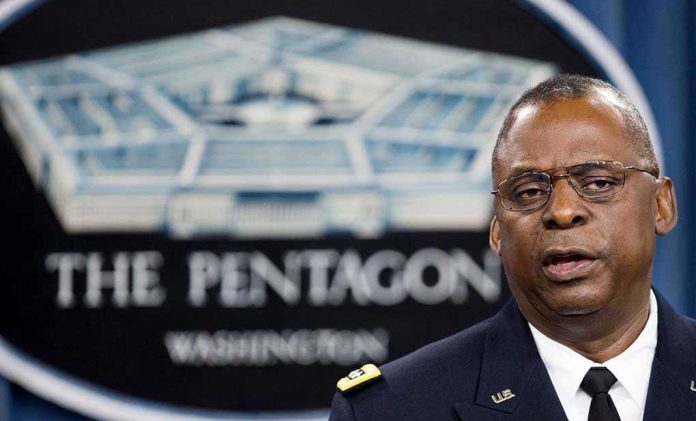
When the most heavily guarded building in America suddenly locks down over “poison in the air” and nobody can clearly explain what happened, it feeds the growing sense that regular citizens are told as little as possible while the powerful close ranks.
Story Snapshot
- Building sensors at the Pentagon detected an unspecified “air quality issue,” triggering a hazmat response and partial lockdown.
- Some corridors were evacuated while others were ordered to shelter in place, but no injuries were reported and no confirmed toxin has been named.[1][2][5]
- Officials call the moves “precautionary,” yet public records still do not show exactly what the sensors picked up or why they misfired if it was a false alarm.[1][5]
- The vague “hazardous materials incident” label and thin explanations highlight a deeper problem: a security state that demands trust while offering limited transparency.[5]
What Actually Happened Inside the Pentagon
On Thursday morning, Pentagon security systems detected what officials described only as an “air quality issue” inside specific corridors of the building, prompting an immediate emergency response.[1][5] Pentagon spokesperson Sean Parnell told staff by email that the building has sophisticated safety systems and that these systems had triggered precautionary measures while the issue was investigated.[1][3] Personnel in corridors 4 through 7, on floors 2 through 5, were ordered to shelter in place and move any meetings online.[1][3] Some nearby areas were partially evacuated at the same time, creating a patchwork lockdown.
Local responders treated the situation as a serious hazardous materials event from the start. Arlington County Fire Department reported that its hazardous materials team was “operating at the Pentagon in support of” the Pentagon Force Protection Agency during what it publicly called a “hazardous materials incident.” News cameras caught hazmat crews arriving, and some reports described security personnel wearing gas masks and chemical protective gear while teams tested the air. Officials said response teams were in place and ready to support any affected workers and warned that testing might take one to two hours.[3] Despite the dramatic response, no injuries were reported during the incident.[1]
A "hazardous materials incident" at the Pentagon prompted a Hazmat crew response on Thursday, but it ultimately turned out to be a false alarm.
According to the Pentagon, the incident was caused by an air quality issue found by one of their systems.https://t.co/92o4gxB9Pg pic.twitter.com/U88Yd4OJ9b
— The National Desk (@TND) June 11, 2026
From Hazmat Scare to “False Alarm”
As the hours passed, more reports suggested the scare was likely a false alarm rather than a confirmed release of poison or other hazardous material. CBS News and other outlets, citing sources familiar with the situation, reported that early indications were that a false alarm had triggered the hazmat response.[1] Newsweek likewise reported that the internal alert “was later confirmed to be a false alarm,” again based on sources speaking to CNN. That means the same event carried two very different labels: first a “hazardous materials incident” justifying lockdowns and shelter orders, and later a “false alarm” once the smoke cleared, at least on paper.
Even with the false-alarm framing, key details remain missing from the public record. Officials have not disclosed what specific substance, if any, was detected, or whether the problem came from a sensor malfunction, a harmless chemical, or a simple technical glitch.[5] Bloomberg reported that authorities declined to say whether the alert was caused by an attack or some other threat, leaving that basic question unresolved in official statements.[5] Media outlets note that the nature of the material “remains undisclosed,” even as they tell the public there is no ongoing danger. For citizens who already doubt Washington, that kind of partial reassurance feels thin.
Why This Incident Hits a Nerve Across the Political Spectrum
For many Americans, this event is about more than one locked-down building. It fits a pattern where powerful institutions demand patience and trust during emergencies but then release as little information as possible once the cameras leave. Conservatives who worry about an unaccountable security state see another example of government systems running on autopilot, with elites sheltered inside while the public gets vague talking points. Liberals who fear environmental and workplace risks see yet another reminder that people closest to potential hazards are often the last to learn the full truth about what they faced.[6] Both sides can agree on this: if sensors are sensitive enough to shut down the Pentagon, the people deserve an open record afterward.
The language officials and media used also shows how easily public fear can be dialed up without solid facts on the table. Phrases like “hazardous materials incident,” “potential hazardous exposure,” and “biohazard incident” flooded headlines while the only confirmed fact was an unspecified “air quality issue” under review.[5][6] Reporters on live broadcasts admitted they did not know what substance, if any, was present, or whether the event was accidental or intentional.[2] In a country already on edge about terrorism, industrial accidents, and government secrecy, that gap between alarm and information deepens distrust. Many citizens now assume they will either be kept in the dark or misled in real time, then told later that everything was under control and nothing to see here.
Sources:
[1] YouTube – Parts of the Pentagon locked down in ‘hazmat incident’
[2] Web – Some Pentagon workers ordered to shelter in place as air quality issue …
[3] Web – Part of the Pentagon under shelter-in-place over detected ‘air quality …
[5] YouTube – LIVE: Hazmat response as Pentagon investigates air quality issue, …
[6] Web – Pentagon Issues Shelter-in-Place Order Over Air Quality Issue