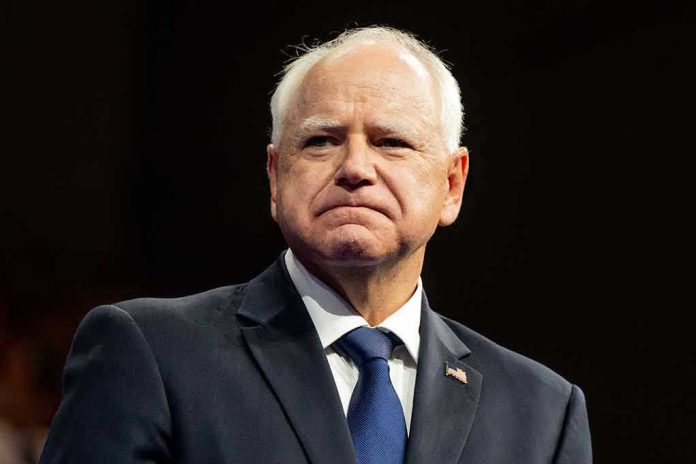
Minnesota Governor Tim Walz, Kamala Harris’s 2024 running mate, admitted on September 22 that his administration “should have done more” to stop the fraud that has drained hundreds of millions of dollars from Minnesota programs, then measured the theft against the cost of President Trump’s new White House ballroom.
Story Snapshot
- Walz told a Minnesota Star Tribune summit he accepts blame for not stopping the fraud sooner.
- Federal prosecutors have documented hundreds of millions of dollars in fraud, with estimates reaching into the billions.
- A House Oversight Committee report says Minnesota officials had the authority to halt fraudulent payments and did not act.
- Republicans say the warnings date back to 2019, years before the state took serious action.
- Walz says the fraud should not define his legacy, even as he steps aside from re-election.
Where This Stands Right Now
Speaking at the Minnesota Star Tribune’s North Star Summit on Tuesday, Walz said plainly: “Yep, I should have done more.” He added, “Fraud — should have stopped it sooner. We didn’t stop them. I accept that.” The comments are his most direct public admission since fraud investigations began engulfing the state’s social service programs.
Then came the comparison that spread across news outlets and social media within hours. He said the fraud prosecuted so far, and even what remains undiscovered, is “less than the ballroom at the White House,” adding, “So it puts it into perspective. It doesn’t make it right.” A governor conceding that taxpayers were looted on his watch reached, in the same breath, for a construction project at the other end of the country.
🚨BREAKING: Minnesota government workers blame Walz for MASSIVE FRAUD amid allegations against Somali community.
A group of more than 480 Minnesota Department of Human Services employees is publicly accusing Governor Tim Walz of being “100% responsible for massive fraud” in… pic.twitter.com/2rLqXkc6nv
— Q Right Scope (@Qrightscopee) September 21, 2026
How Much Money Is Actually Missing
Federal prosecutors have already documented a few hundred million dollars in fraud tied to Minnesota programs, and some estimates suggest the real total could reach into the billions. The money flowed through federally funded programs meant to feed children, house vulnerable residents, and provide Medicaid services, according to congressional investigators reviewing the case.
Congress Says Warnings Went Unheeded
The House Oversight Committee released a staff report finding that Minnesota lacked basic controls to verify that taxpayer money was being spent properly. The committee said state officials “could have stopped the flow of money to fraudsters at any time but chose” not to. Republicans on the committee say warning signs surfaced as early as 2019, long before major public action followed.
Minnesota House Republican leader Lisa Demuth said accountability starts at the top: Walz bears responsibility for the fraud because he never held any commissioners accountable for the failures under their watch. That absence of consequences inside state agencies is the clearest sign that oversight broke down at every level, not one office.
Political Fallout Reaches The Campaign Trail
The scandal has already reshaped Minnesota politics. Walz announced he will not seek a third term as governor, a decision reported widely as the scandal deepened public scrutiny of his administration’s record. His supporters call the admission accountability; his critics note it came only after years of pressure and mounting federal findings.
Walz insists the fraud should not define his time in office, even as he owns the failure to stop it sooner. Claiming responsibility while asking voters to judge his legacy separately is the balancing act at the center of the fight in Minnesota now.
A Pattern Bigger Than One State
Minnesota’s problem reflects a wider one. Programs funded almost entirely by federal dollars but run by state agencies often lack strong verification systems, creating openings for large-scale fraud. The question is not whether the fraud happened but how much warning the governor had, and the House report says he had years of it.
For voters frustrated with government failure, the episode confirms a familiar pattern: officials acknowledge failure only after investigators, journalists, or political rivals force it into public view. Whether Walz’s admission satisfies anyone, or simply confirms what Minnesotans already suspected, is the question heading into further hearings and audits.
Sources:
redstate.com, oversight.house.gov, townhall.com, foxnews.com