

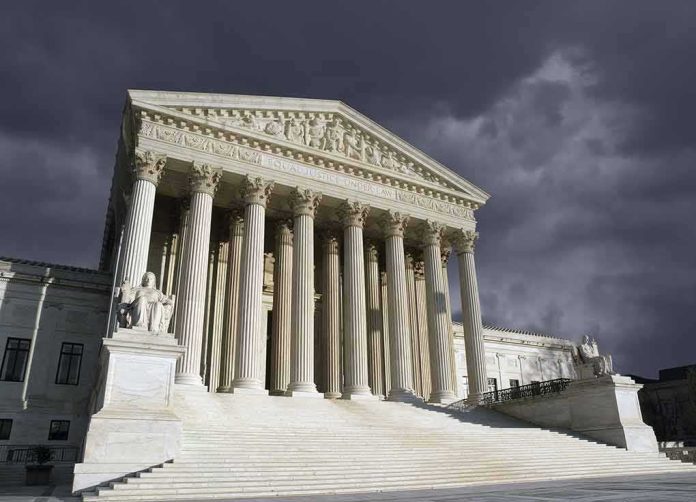
The Supreme Court told Hillary Clinton to answer President Trump’s bid to revive his 2016 Russia-story lawsuit, which keeps alive a case that was headed for a quiet denial.
Story Highlights
- The justices asked Clinton to respond to Trump’s petition after she had waived her right to do so.
- Her brief is due Friday, November 27, and the justices will weigh the case after that.
- Trump asks whether a president’s duties can pause the deadline to file his own private lawsuits.
- Lower courts threw out the suit and upheld nearly $1 million in sanctions on Trump and his lawyer.
What The Supreme Court Did
On Tuesday, October 27, the Supreme Court asked Hillary Clinton to respond to a petition from President Trump. The petition asks the justices to bring back his lawsuit claiming she and others worked together to spread a false story that his 2016 campaign colluded with Russia. Clinton and the other people Trump sued had filed a waiver on October 19, which means they told the Court they did not plan to answer. Had the Court not asked for a reply, the petition would likely have been denied, according to reports.
That changed when the Court asked for her side. It takes only one justice to request a response, and the Court does not say which justice asked or why. The case had been set for the justices’ private meeting on November 6. Clinton’s brief is due November 27, and the justices will take up the petition at a private meeting after it is filed. At least four justices must vote yes for the Court to hear the case.
What Trump Is Asking
The petition raises two questions. The first is about equitable tolling, which is a rule that pauses a filing deadline when something out of the ordinary keeps a person from suing on time. Trump argues that a president’s Article II duties, meaning the job the Constitution gives the president, should count. He says a sitting president should not have to choose between doing the people’s work and filing his own private claims on time.
The second question is about punishment. Trump asks whether a federal court may use its own power to fine a president and his lawyers for pressing that tolling argument, since no court had settled it before. A ruling on either question could guide future presidents and the lawyers who represent them.
How The Case Reached The High Court
Trump filed the suit in March 2022 against Clinton, the Democratic National Committee and others. Federal Judge Donald Middlebrooks in Florida dismissed it in September 2022 and later ordered sanctions. On Wednesday, November 26, 2025, a three-judge panel of the Eleventh Circuit Court of Appeals, a federal appeals court in Atlanta, upheld both rulings in a unanimous decision.
The appeals court said the main racketeering claims, which have a four-year deadline, were filed too late. It said Trump knew or should have known of his claimed harm by October 2017 but did not sue until 2022, and it said his time in office did not excuse the delay. The court called the complaint a “classic shotgun pleading,” a term for a sprawling filing that is hard to answer, and said it “recklessly forwards frivolous legal theories.” It upheld nearly $1 million in sanctions against Trump, his lawyer at the time, Alina Habba, and her law firm. On the Florida state claims, the panel found many of the statements Trump challenged were protected free speech.
Why The Presidential Question Matters
The issue sits beside past cases on presidents and lawsuits, not inside them. In Clinton v. Jones, a 1997 case involving Bill Clinton, the Supreme Court held that a sitting president can be sued while in office over things he did before taking office. That ruling was about a president being sued. It did not answer how filing clocks run when the president is the one bringing the suit.
Trump’s petition asks the Court to fill that gap. The lower courts rejected his view and called the tolling argument frivolous. The Supreme Court’s request for Clinton’s answer means the petition will get a closer look before the justices decide whether to take it.
What Conservatives Should Watch Next
First, watch Clinton’s brief, due November 27, and how she answers the two questions. Second, watch whether at least four justices vote to hear the case after that brief arrives. If they say no, the lower court rulings and the sanctions stand. Third, if the Court takes the case, watch how it handles fines for lawyers who argue a new constitutional theory, since that answer would reach well beyond this one lawsuit.
Sources:
yahoo.com, Deadline Legal Blog, scotusblog.com, supremecourt.gov, courthousenews.com