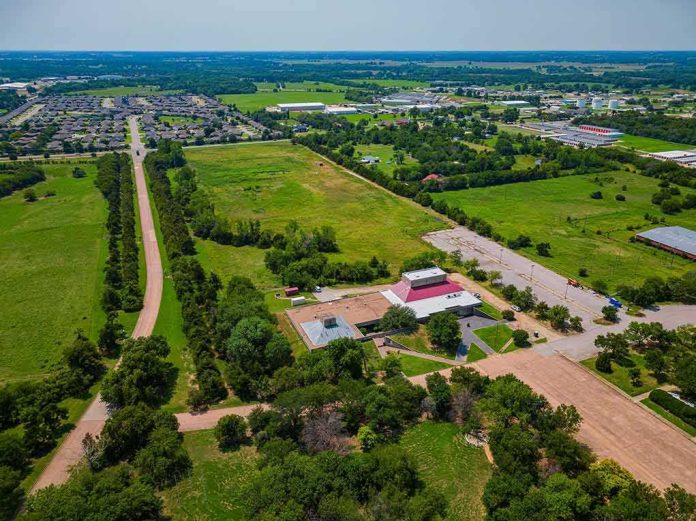
A federal judge signaled she would halt an Immigration and Customs Enforcement project in Gilroy because the government likely skipped required environmental review, putting a basic rule of process ahead of speed.
Story Snapshot
- California and Santa Clara County sued to stop an ICE holding and processing site near Gilroy.
- A judge said the state is likely to win on the National Environmental Policy Act claim and is inclined to grant an injunction.
- Plaintiffs cite waste system limits and potential hazardous materials at the former agricultural research site.
- ICE argues the site could operate with small numbers and that contamination fears lack proof.
What the Lawsuit Seeks and Why It Matters
California Attorney General Rob Bonta and Santa Clara County asked a federal court to stop construction and use of a planned Immigration and Customs Enforcement facility on Holsclaw Road near Gilroy. They claim the federal government moved ahead without the review that the National Environmental Policy Act requires. Their motion asks the court to block any design, demolition, or construction, and to bar operation of the site while the case proceeds.
A federal judge in San Jose is scheduled to consider a preliminary injunction next week that could halt plans for a proposed ICE detention facility in Gilroy. Educators from across the South Bay are urging officials to stop the project, which would be located near the Gilroy… pic.twitter.com/FMet6suZGo
— ABC7 News (@abc7newsbayarea) September 6, 2026
The complaint also cites the Immigration and Nationality Act, the Intergovernmental Cooperation Act, the Administrative Procedure Act, and California’s Williamson Act. The state frames the case as a process test, not only a local land-use fight. The message is simple: follow the rules before changing how sensitive land is used. Early court relief would freeze the status quo and force the agencies to show their homework before any build-out begins.
The Judge’s Early Read on Environmental Review
Reporting from the hearing says United States District Judge Eumi Lee told the parties she was inclined to grant a preliminary injunction. She said the state and county were likely to succeed on their National Environmental Policy Act claim. At the end of that hearing she extended the existing temporary halt on construction and said she would issue a full ruling within about a week, ordering the parties to keep negotiating a modified proposal in the meantime.
Courts often step in early on National Environmental Policy Act disputes to prevent irreversible changes while the law’s process is tested. That does not decide the end result. It does force a time-out until the court can see whether the agency took the “hard look” that the statute demands. The approach fits a wider pattern in similar detention and infrastructure cases, where early injunctions keep projects on hold pending a full record.
The Core Disputes: Septic Capacity and Site History
The state and county argue the facility could overwhelm an on-site septic system built for much lower use. They also warn that former agricultural research at the location raises the risk that construction could disturb hazardous materials. They say both risks require careful study before people work or are held there. Their filings cast the project as a fast-moving change that needs full environmental checks first.
Government lawyers counter that the septic overload fear is speculation. In one filing, they said the claim that Immigration and Customs Enforcement would hold 150 people, around the clock, plus staff, is not supported by the record. Immigration and Customs Enforcement has also said the facility could hold around 10 people at a time and that there is no proof of current contamination at the site. The agency argues office uses would not exceed past impacts.
Why This Fight Resonates Beyond Gilroy
People across the political spectrum see a system that cuts corners for those in power but slows help for everyone else. This case taps that nerve. If an agency pressed ahead without a proper review, that looks like rules for the ruled, not for the rulers. If local worries about waste limits and safety prove valid, then pausing the project protects workers, detainees, and neighbors. If they are not valid, a real review should clear the air and let work resume.
The broader lesson is about trust. Environmental review can feel like a pretext to block policies some people dislike. It can also be the only tool the public has to force facts into daylight. The court’s early lean toward an injunction suggests the process may have gaps. A clear, public record—on planned occupancy, waste flows, and any soil risks—would help end the guesswork and curb the feeling that decisions are made first and justified later.
What to Watch Next
Watch for the written order on the preliminary injunction, which the judge said would come within about a week of the hearing. If she grants it, federal agencies may need to produce their environmental analysis or start one. Look for details on expected daily headcount, staff, water and sewage loads, and any site testing results. Those facts will show if the septic system is fit and if the land is safe. Clear numbers, shared in public, would give this debate less heat and more light.
Sources:
mercurynews.com, cbsnews.com, thegatewaypundit.com, modbee.com