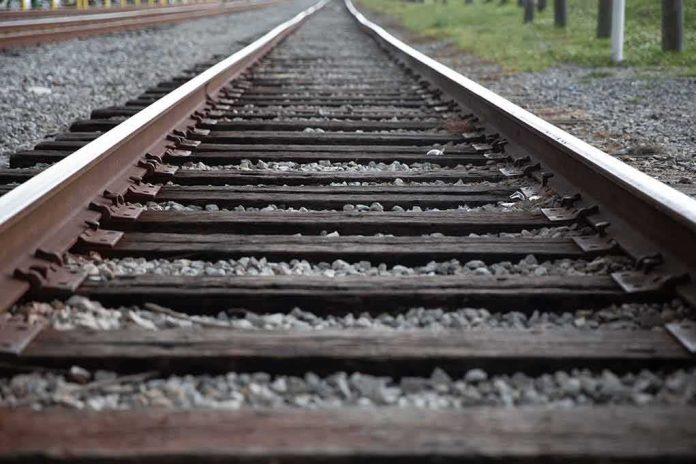
A packed French regional train derailed after a heavy rail segment was found on the track, leaving 44 people hurt and investigators probing possible sabotage.
Story Snapshot
- Authorities reported 44 injured, with one passenger in critical condition.
- Police found a rail segment on the track and are probing possible sabotage.
- The Rouen-to-Caen train carried 186 passengers when it derailed near Cléon.
- The train’s black box was seized; early tests show the driver was not impaired.
What Happened Along the Rouen–Caen Line
French officials said a regional train carrying 186 passengers derailed near Cléon in Seine-Maritime on Friday evening. The train ran the Rouen to Caen route when several cars left the tracks. Emergency crews treated 44 injured people, and one passenger was flown to a hospital in critical condition. Local authorities confirmed the injury count the next day. The site sits along a busy corridor south of Rouen, with nearby towns reporting a major response and disrupted local traffic.
Police and prosecutors said investigators found a segment of rail on the track at the scene. They said that object may have caused the derailment, and they are working to learn how it got there. Officials described sabotage as an active line of inquiry, not a final conclusion. The prosecutor’s office said interviews are planned, and the court appointed an expert to study the debris and the track. The court also ordered steps to secure and analyze the evidence.
French investigators suspect sabotage was behind a train derailment in northwestern France that injured 44 people and left passengers in "a state of shock", prosecutors said on Saturday, after a massive section of rail was found on the track.https://t.co/qaDghvid5j
— IllimarLepikvonWirén (@iLepikVonWiren) September 13, 2026
Safety, Injuries, and the On-Scene Response
Regional and local services handled the incident as a mass-casualty event. Reports described more than a hundred firefighters, multiple ambulances, and medical teams sorting and evacuating the injured. One patient was airlifted because of the severity of injuries. Hospitals in the area received dozens of patients for treatment. The scale of the response and the confirmed injury count show a serious event with clear documentation by local officials and medical centers that night and the next morning.
Early medical testing of the injured driver reportedly showed no alcohol or drug use. That finding is important because it shifts attention away from operator impairment. Investigators also seized the train’s event recorder, often called the black box, to capture speed, braking, and alarm data in the moments before the cars left the rails. That data, plus radio communications, will help confirm timing and sequence during the run-up to the crash.
Why Sabotage Is on the Table
Authorities said the main working idea is that a rail segment left on the line caused the derailment. That is a serious red flag and is consistent with prior rail security concerns in France. Officials have probed rail sabotage before, including cases that drew national attention in recent years. In this case, investigators are still working to establish who placed the object and why, and the forensic work on the part’s origin is underway.
The broader context explains the caution. France has faced organized attacks on rail infrastructure, including arson that disrupted high-speed lines and triggered national probes in 2024. Those episodes hardened focus on rail vulnerabilities and emergency readiness. That backdrop helps explain why police treat a found rail segment as potential sabotage. At the same time, officials stress the inquiry must test all causes, from human action to rare mechanical or maintenance failures.
What to Watch Next in the Investigation
Key next steps include a detailed technical report from the court-appointed expert. That report should assess the rail fragment, track marks, and impact angles. Investigators will likely seek closed-circuit video from stations, nearby businesses, and roadway cameras to track any movement near the right-of-way. Maintenance and inspection logs for the line before the incident could show if any unusual work or alerts occurred. The black box and radio logs should fix speed and braking to the second.
Why This Matters for Readers at Home
When a simple trip turns into a disaster because of a preventable hazard, people see a system that failed them. Travelers expect safe tracks, working alerts, and clear answers. Whether this case proves to be sabotage or not, it highlights a broader worry on both left and right: critical infrastructure is exposed, and accountability often comes late. Transparent findings, fast fixes, and better security—not spin—are what restore trust after high-stakes failures.
Sources:
abcnews.com, connexionfrance.com, the-independent.com