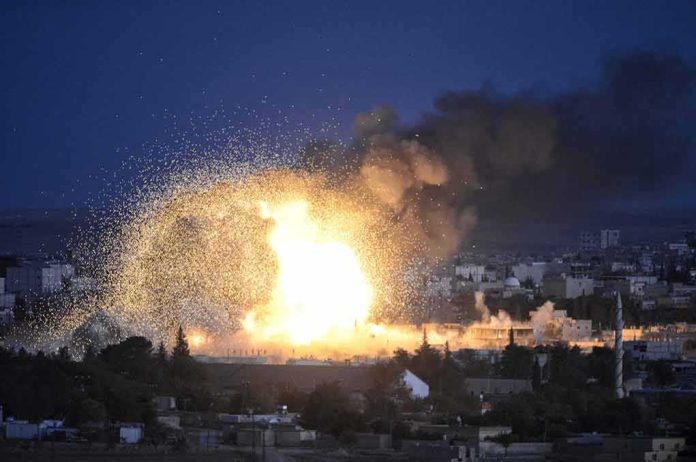
A powerful blast tore through a Bolivian army barracks near La Paz, killing at least 10 people and injuring dozens, exposing yet again how fragile public safety can be when critical sites fail.
Story Snapshot
- Bolivian authorities reported at least 10 dead and 59 injured after an explosion at a military base near La Paz.
- Early casualty counts varied as officials updated information through the day, a common pattern after large blasts.
- The incident echoes global risks tied to storage of munitions and pyrotechnics at military sites.
- The tragedy feeds wider anger that institutions miss basic safety duties while citizens bear the cost.
What Happened at the Bolivian Base
Local authorities in Bolivia said an explosion struck an army barracks in Viacha, near La Paz, killing at least 10 people and injuring 59 more. Officials warned the toll could change as hospitals treated the wounded and responders searched the site. Early reports from police listed fewer deaths before the update. The base stored pyrotechnic or explosive material, which added to the force of the blast, according to initial briefings shared with reporters.
The Defense Ministry issued statements through the day as responders moved victims to nearby hospitals and secured the area. Authorities urged people to stay away due to risk of further detonations. Most victims were on or near the grounds when the blast hit in mid-afternoon, catching workers and visitors in the open. Investigators have not released a final cause. The focus remained on search, medical care, and stabilizing the base perimeter for safety checks.
Why Early Numbers Shift After Major Blasts
Early death and injury figures often change after disasters. Analysts who track conflict and crisis deaths say first counts are usually conservative or inconsistent across sources as hospitals and police confirm identities and outcomes. Media studies also show early online reports can misstate totals before later corrections. That is normal in fast-moving events. In this case, the police and later authorities reported different figures before a higher confirmed count was shared publicly.
Explosions at sites that store munitions or pyrotechnics are especially hard to assess in real time. Secondary blasts can delay rescue work and complicate evidence gathering. Research on unplanned explosions at munitions sites finds that human losses are often larger than first assumed because debris spreads, fires grow, and responders must wait to enter. Those dynamics match concerns raised by officials who warned of more detonations at the Bolivian base.
Safety Gaps and Public Trust
Large blasts at military or storage sites raise a basic question: who is guarding the guards? When a secure facility fails, the damage hits workers and families first, and then nearby neighborhoods. People across the political spectrum worry that leaders focus on headlines and budgets while ignoring aging depots, weak inspections, and sloppy storage. This event will likely fuel that anger in Bolivia, where recent unrest has already tested faith in public institutions.
🚨 BREAKING: Explosion Hits Military Base Near La Paz, Bolivia
Blast tears through a site storing pyrotechnic material in Viacha. Dozens injured. Cause still unknown.#Bolivia #Viacha #LaPaz #BreakingNews pic.twitter.com/XZDDsx64aW— DR ADNAN ALI (@DrMalko) September 5, 2026
For readers in the United States, the lesson is familiar. When oversight slips, the public pays. Clear inventories, routine audits, and firm safety rules save lives. After this blast, Bolivian officials will face pressure to disclose storage practices, training standards, and inspection logs. Families will want answers and timelines, not slogans. That accountability process, if done in the open, can rebuild trust. If done behind closed doors, it will deepen the belief that the system protects itself first.
Sources:
youtube.com, reuters.com, livemint.com, bbc.com