

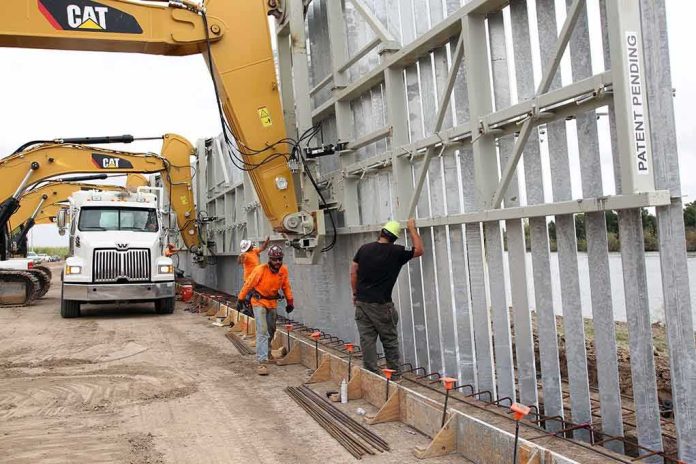
The Supreme Court let President Trump restart border wall work in Texas’s Big Bend region, saying a lower judge’s freeze stood in the way of the nation’s border security.
Story Snapshot
- On Monday, November 9, the Supreme Court lifted a judge’s order that had stopped all wall and road work in the Big Bend sector.
- The Court said the freeze kept the government from its “compelling interests” in border security.
- Justice Ketanji Brown Jackson was the only justice who said she would have turned the government down.
- The lawsuit goes on, but work can go forward while it does.
What The Supreme Court Did
On Monday, November 9, the Supreme Court lifted an order that had frozen President Trump’s border wall in the Big Bend region of West Texas. The Court acted in a short, unsigned order. It said the lower court’s freeze delays construction and “impedes the Government from advancing its ‘compelling interests’ in border security and integrity.” That means work on barriers, patrol roads and related projects can go forward while the lawsuit continues.
The freeze came from U.S. District Judge Kathleen Cardone, a federal judge in El Paso. On October 2, she issued a preliminary injunction, which is a court order that stops something before a case is decided. It barred any construction or “ground disturbing activities” across the sector. She ruled that the challengers were likely to win their claim that Homeland Security had gone past its legal power.
Why The Justices Sided With The Government
The fight is over a 1996 immigration law. It lets the Homeland Security secretary waive, or set aside, other laws that would slow the quick building of barriers and roads near the southern border. Normally, the government must first follow federal environmental and historic preservation laws. The department issued three waivers for Big Bend project areas starting in February.
The 1996 law lets a lower court hear only one kind of challenge to these waivers: a claim that the Constitution was broken. The Court said the challengers really argued that the secretary went past the power Congress gave him, which is not the same thing. It said the government is “exceedingly likely to prevail” on that point. The justices also said Congress had already chosen fast border building over the kind of harm to scenery and recreation the challengers described. In the Court’s words, courts “cannot, in their discretion, reject the balance that Congress has struck in a statute.”
Solicitor General D. John Sauer, the government’s top lawyer at the Supreme Court, had warned that stopping the work would create “a massive vulnerability in border protection.” The government says officers caught more than 89,000 people crossing illegally in the Big Bend sector from 2021 to 2025.
What The Challengers Say
The suit was brought by the Center for Biological Diversity, an environmental group; Friends of the Ruidosa Church, a nonprofit that cares for a historic church in Presidio County; and Danny William Miller, a Rio Grande river guide and landowner. They say the wall and roads would forever change an “irreplaceable landscape” that includes Big Bend National Park, Big Bend Ranch State Park and nearly 200 miles of protected river.
They also say Big Bend has the fewest arrests of the seven southern border sectors. The sector covers more than a quarter of the border, but its share of arrests ranged from 0.3% to 2.2% of the total, according to their filings. Their lawyers wrote that “once habitat is destroyed, vegetation cleared, historic resources damaged,” no final ruling can undo it. Ranchers, local law officers and lawmakers from both parties in Texas have also pushed back on the plans.
What Comes Next
Monday’s order does not end the case. The lawsuit goes on in the lower court, and no final ruling has been made. Under the 1996 law, appeals in these cases skip the regional appeals court and go straight to the Supreme Court.
The Big Bend sector covers more than 500 miles of the border. The planned wall is 30 feet tall. Customs and Border Protection Commissioner Rodney Scott has said the wall will not cut through Big Bend National Park, but other work would, including more than 200 miles of patrol roads and about 17 miles of vehicle barriers. Work on a 47-mile stretch in Hudspeth County began in September. For supporters of the wall, Monday’s order means crews can get back to building while the courts sort out the rest.
Sources:
cbsnews.com, azcentral.com, cbsnews.com, houstonpublicmedia.org, courthousenews.com, texastribune.org