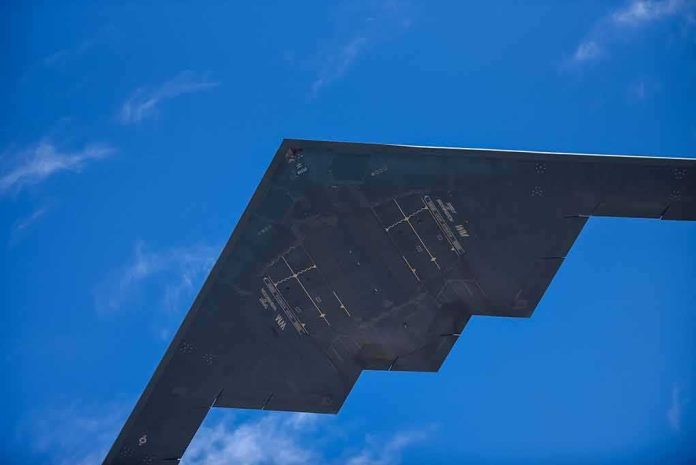
Despite new Iranian drones and missiles, open-source assessments say Tehran’s air defenses still cannot reliably stop U.S. stealth jets and bombers.
Story Snapshot
- Analysts say Iran’s S-300 and Bavar-373 struggle against low-signature U.S. stealth aircraft.
- Iran touts detection upgrades, but verified shootdowns of modern U.S. stealth jets remain unproven.
- Layered Iranian defenses deter and raise costs, yet fall short of halting U.S. air operations.
- Competing claims reflect messaging wars, not settled performance data in combat.
What assessments say about Iran’s ability to stop U.S. stealth
Analysts writing for The National Interest concluded that Iran’s air defenses can deter but cannot stop the U.S. Air Force. That judgment centers on U.S. stealth jets like the F-35 and bombers like the B-2, which feature very low radar signatures and advanced jamming. The analysis says those features let U.S. aircraft slip through engagement zones and strike key nodes. It frames Iran’s systems as dangerous but not decisive against sustained U.S. air operations.
Technical reviews echo this picture. Public estimates place the F-35’s radar cross-section at a tiny fraction of a square meter from the front. That makes reliable fire-control tracking difficult for systems like S-300 variants, even under clean conditions. Analysts add that clutter, electronic attack, and tactics further cut detection and tracking ranges. This creates gaps between sensing a contact and guiding a missile to a hit, especially against stealth aircraft that manage exposure time.
TRUMP STRIKES BACK: B-2 Stealth Bombers Flatten Iran’s Underground Missile Bunkers in Historic 36-Hour Raid — Iranian Warship Now Sinking
By Jonathan GregoryIRAN – AUGUST 11, 2026
In a stunning show of American resolve, four U.S. Air Force B-2 Spirit stealth bombers launched… pic.twitter.com/FGwmpUjDyA— StateSide Now (@Aggggaavijv) August 11, 2026
Iran’s layered defenses and what they do well
U.S. airpower experts describe Iran’s network as layered and modernized. The setup mixes radars, infrared-guided surface-to-air missiles, mobile launchers, and overlapping coverage. That design can stress unstealthy aircraft and unmanned systems. It can also complicate mission planning and raise attrition risk. These strengths give Tehran deterrence value and can force U.S. planners to spend more time and weapons to suppress the network. But experts still rate it short of denying air superiority to U.S. forces.
Iranian officials and aligned outlets have publicized detection claims for systems such as Bavar-373 and Khordad-15. Those claims include long detection ranges and threats to stealth aircraft. Outside analysts caution that detection in tests or announcements is not the same as sustained, jam-resistant fire-control tracking in combat. They also say that no independent evidence has verified shootdowns of modern U.S. stealth jets, despite periodic viral reports and official boasts.
Why the claims keep coming from both sides
Experts note this debate repeats across many countries and systems. Governments and state media highlight “stealth-breaking” gains, while outside analysts point out that detection alone does not equal an intercept. The record shows very few confirmed downings of modern U.S. stealth aircraft. That is why independent reviewers treat large claims as unproven until supported by verifiable data. Messaging, prestige, and deterrence all push bold statements, especially during crises.
For Americans across the political map, one worry stands out: clear facts are hard to find when official claims clash. People on the right see defense hype and media spin. People on the left see secrecy and elite control over information. Both sides sense that high-cost wars and complex weapons debates can move ahead without full public clarity. This case fits that pattern. The best-supported view today is narrow but important: Iran can raise risks, but U.S. stealth airpower still gets through.
Sources:
19fortyfive.com, presstv.ir, fighterjetsworld.com, nationalinterest.org, ndtv.com, theweek.in