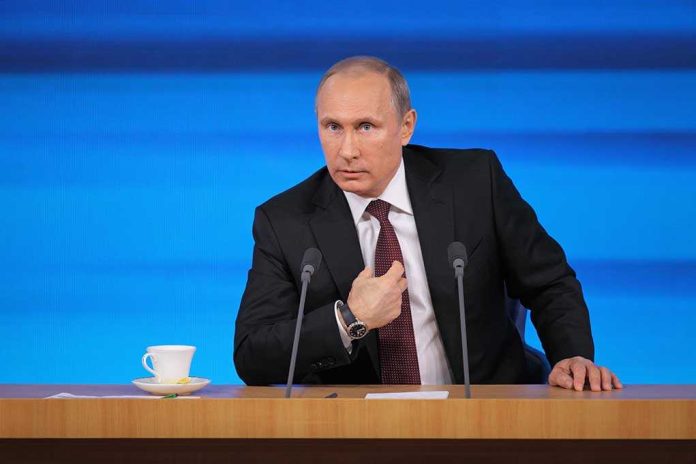
As Trump quietly takes personal control of Ukraine war talks through private calls with Putin and Zelenskyy, Americans are left wondering whether he is steering the world toward peace—or into a deal shaped by elites, defense contractors, and backroom understandings.
Story Snapshot
- Trump held long, separate calls with Vladimir Putin and Volodymyr Zelenskyy and says a peace deal is close.
- The Kremlin and Zelenskyy both describe the calls as positive, but no full transcripts or concrete plan have been released yet.
- The talks fit a pattern where Trump’s “deal-making” peace efforts often lean toward Russian demands and lack strong backing from allies.
- Huge arms deals, war profits, and silent institutions raise doubts about whether powerful players truly want the war to end.
Trump’s July 4 Calls: What We Know, Not What We’re Told
On July 4, President Donald Trump spoke separately with Russian President Vladimir Putin and Ukrainian President Volodymyr Zelenskyy about ending the war in Ukraine. Russian aide Yury Ushakov said Trump “reaffirmed his readiness to facilitate the earliest possible cessation of hostilities” in a roughly 90‑minute, “businesslike and highly constructive” call with Putin. Trump told Putin he believes an agreement to end the conflict is close, and that his trusted representatives will keep talking with both Moscow and Kyiv to move things forward. Afterward, Zelenskyy said he had a “very good phone call” with Trump and saw a “real prospect to put an end to this war,” adding that they would continue talks at the upcoming NATO summit.
These are major claims at a time when many Americans on both the right and left think the federal government has failed them and is more responsive to globalist interests and defense industry donors than to ordinary citizens. Yet neither the White House nor the Kremlin has released a full transcript of the Trump‑Putin or Trump‑Zelenskyy calls. That means the public only sees carefully worded summaries and social media posts instead of exact language, firm commitments, or clear red lines. Past coverage shows Trump often praises his phone talks as “highly productive” and claims immediate peace efforts will follow, but the promised breakthroughs have repeatedly stalled on the ground. For readers worried about “deep state” secrecy and elite deal‑making, the lack of hard documentation will feel very familiar.
A Familiar Pattern: Leader‑to‑Leader Deals With Little Oversight
Analysts say these July 4 calls fit a longer pattern in Trump’s handling of the Ukraine war: personal, leader‑to‑leader diplomacy that sidelines formal institutions and often leans toward Russian preferences. In previous contacts with Putin, Trump backed ceasefires based on current front lines, which would lock in Russian territorial gains in Ukraine. A Brookings analysis notes that Trump has even been reported as supporting Kyiv ceding all of Donetsk province to Moscow as part of a quick deal, feeding Ukrainian fears that U.S. mediation is “biased toward the Russian side.” A Council on Foreign Relations review of his mediation shows Trump promising fast negotiations, talking up trade benefits for both Russia and Ukraine, but not pairing those promises with serious pressure on Moscow or clear security guarantees for Kyiv. For Americans wary of globalism and “backroom diplomacy,” this pattern looks less like tough peacemaking and more like transactional bargaining over someone else’s borders.
Trump’s style also clashes with how earlier U.S. administrations tried to manage the war. A study of U.S. policy in the first year of Russia’s invasion under Joe Biden describes a strategy of “escalation management” that stressed formal alliances, clear limits, and restraint to avoid a wider war or nuclear use. Trump, by contrast, has argued that the United States should no longer be the official mediator and should stop “flying around the world at the drop of a hat” to manage talks, leaving Russia and Ukraine to present concrete ideas themselves. Yet he continues to insert himself as the key broker through calls and personal envoys, often without broad NATO or European Union backing. For citizens on both sides who already see Washington as captured by special interests, this mix of informal power and shrinking institutional oversight is exactly the kind of setup that feels ripe for abuse.
War Profits, Arms Deals, and Why Peace Is So Hard
Trump’s peace push is happening in a world where powerful players make money from war and may quietly resist any quick ceasefire. Ukraine has already taken on large European Union loans to buy advanced systems like Patriot missiles, adding long‑term debt and giving arms makers steady business.[USER] The United States has backed huge weapons packages for Kyiv, and major defense contractors benefit as the war drags on. Analysis from peace and security institutes warns that the “quality of mediation” in Ukraine is deeply shaped by these incentives, with many proposals built around continued arms supplies even during talks. This matters for ordinary Americans who pay taxes, feel inflation, and watch elites profit while promising peace “soon.” Every missile shipped overseas is money not spent on fixing crumbling roads, broken schools, or rising health costs at home.
At the same time, Ukraine’s leaders have grown “increasingly and publicly sour” on U.S. mediation even as their military improves its position. They worry that proposals pushed from Washington—including Trump‑linked ideas—could pressure Kyiv into territorial concessions without solid, long‑term security guarantees. European leaders have also expressed frustration when Trump talks up ceasefires but avoids clear ultimatums on Russia’s behavior, leaving them to shoulder sanctions and refugee costs while the front lines barely move. For Americans who fear that foreign policy is run for global elites rather than citizens, the picture is grim: war that is too profitable to end, peace plans that feel rigged, and everyday people paying the bill.
Shared Skepticism: Media Framing, Missing Facts, and Elite Silence
Mainstream outlets like CBS News, Euronews, and CNN highlight Trump’s claims of progress but frame the calls as “controversial” and stress that fighting has not stopped. They note that Russia continues offensive operations and disputes over towns like Konstantinovka remain unresolved, even as Trump talks about being “close” to an agreement. Fact‑checkers have also challenged some of his casualty figures and statements about Ukraine, pointing out that several numbers he cites do not match United Nations or other neutral tallies. This fuels suspicion among liberals who see Trump as reckless, but also among conservatives tired of media spin who notice that reporters often raise doubts without presenting detailed counter‑evidence to match the Kremlin and Zelenskyy’s own statements.
1 killed in attack on #Crimea as #Putin and #Zelenskyy hold separate Trump calls #StandWithUkraine #StopRussia #WarCrimes #Ukraine #Sanctions #Kyiv #Crimea #Mariupol #MXPoli #INDPol #CAPol #CdnPoli #USPol #USPoli #UKPol #EUPol #EUPoli #AUPol #NZPol #JAPPol https://t.co/U5jruCyBLj
— Tammy Richard (@Tammy_Richard) July 5, 2026
Perhaps most striking is the silence from major institutions. NATO and the European Union have not issued joint statements formally endorsing Trump as a mediator or blessing any July 4 “understanding” he may have reached with Putin. The U.S. State Department has at times pulled back from formal mediation roles, saying that Russia and Ukraine must now drive talks themselves. Yet Trump still presents himself as the central dealmaker, hinting at secret understandings and near‑ready agreements while details remain locked away. For Americans across the political spectrum who believe the federal government and global elites hide more than they reveal, this episode feels less like a clear victory for peace and more like another opaque chapter in a war that grinds on while the powerful keep dealing.
Sources:
apnews.com, euronews.com, ktvz.com, abcnews.com, facebook.com, aljazeera.com, youtube.com, brookings.edu, cfr.org, en.wikipedia.org, chathamhouse.org, kissinger.sais.jhu.edu