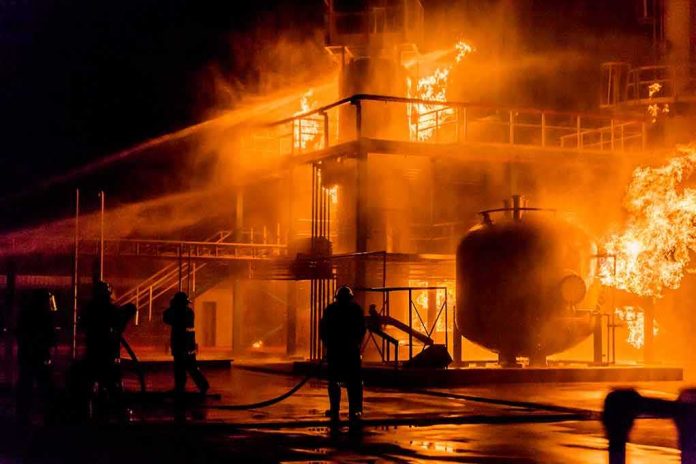
Hundreds of Ukrainian drones came down on Moscow overnight and set the capital’s main refinery on fire — on the final day of Russia’s national parliamentary vote. Polling went ahead under emergency measures while smoke rose over the Kapotnya district. Kyiv confirmed the strike. Moscow’s mayor called it the largest drone attack the city has ever faced.
As of Sunday, September 20, Russian officials report two dead in the wider Moscow region and damage at the Kapotnya refinery. The strike came six days after President Trump said both sides had agreed to stop hitting energy sites; neither side had fully stopped.
Story Highlights
- The barrage hit on the last day of Russia’s parliamentary election; officials say it was timed to disrupt the vote, and polling continued under emergency measures.
- Ukraine acknowledged striking the Gazpromneft refinery in Moscow’s Kapotnya district overnight.
- Moscow’s mayor called it the largest drone attack on the city since the war began; officials reported two deaths in the region.
- It came six days after Trump announced an energy truce that reporting shows neither side honored.
The Vote Went On While The Refinery Burned
Moscow’s mayor said the overnight attack was the largest drone strike the city has faced since the war began and confirmed drones reached the refinery grounds. Regional officials reported casualties in the wider Moscow area. Local authorities tied the timing to the final day of Russia’s parliamentary vote, arguing the wave was meant to disrupt it; polling went ahead under emergency measures, with voters heading to the polls as the fires burned.
Russian statements stressed large interception numbers and contained damage, but the fires at the refinery show multiple drones got through. Independent and opposition-leaning outlets posted images of flames and smoke over the Kapotnya skyline. The competing accounts follow the usual wartime pattern: Russia emphasizes its air defenses, Ukraine points to visible damage on a critical asset.
Ukraine Confirms The Strike On Moscow’s Key Refinery
Ukraine’s military said it hit the Gazpromneft-Moscow Oil Refinery in the Kapotnya district overnight, describing a coordinated operation by several defense units. The Security Service of Ukraine said units worked together to carry out the strike in southeast Moscow. Kyiv’s acknowledgment lines up with images of fires at the site. Reporting tied to the General Staff described major damage to key refining units, including the primary refining unit and an isomerization unit, and videos showed heavy smoke and flames over the complex. The refinery supports fuel distribution around the capital.
The Truce That Wasn’t
Six days before the attack, President Trump said Russia and Ukraine had agreed to pause strikes on each other’s energy infrastructure. Independent reporting in the days that followed found neither side had stopped: Russia kept hitting Ukrainian fuel depots and a petrol-station warehouse near Kyiv, and Ukraine kept up long-range strikes on Russian oil facilities. The Moscow refinery is the most visible breach yet, and the first inside the Russian capital since the announcement.
Since 2022, both sides have targeted energy assets to squeeze logistics, morale and revenue. Russia has run repeated large waves against Ukraine’s grid and power plants; Ukraine has aimed at refineries and depots inside Russia to cut export income and military fuel. Analysts have tracked a steady rise in Ukrainian long-range strikes on oil facilities through 2025 and 2026. Energy is the lever both capitals reach for first.
What This Means For America
A burning refinery in Moscow reaches global markets fast, and energy shocks abroad show up at American pumps. Families already carrying high fuel and grocery bills after years of inflation feel it first. That is why the United States has pushed for a pause on energy strikes: lower prices, fewer civilian casualties, and a step toward a wider settlement.
The facts on the ground say both sides keep hitting fuel targets when they see an advantage, whatever was announced. For Washington that means clear red lines, real oversight of aid, and a focus on results rather than announcements. Strong diplomacy backed by strength protects American interests; a truce nobody honors protects no one.
Bottom Line
Ukraine says it struck the Kapotnya refinery, and the fires back the claim. Moscow admits damage and calls the wave the largest yet, on the one day the Kremlin most needed calm at home. Six days after a truce was announced, the war for energy infrastructure came to Russia’s capital, and the ripples can reach American wallets. The question now is whether the truce was ever real, and what the president does about it.
Sources:
thegatewaypundit.com, kyivindependent.com, cnn.com, meduza.io, reuters.com