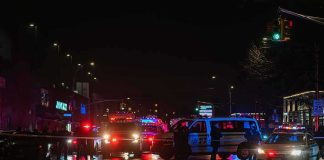
For about six months, anyone on the internet could secretly watch San Francisco police drones track people in real time — no password, no hacking, just a live window into modern American surveillance.
Story Snapshot
- Five San Francisco police drones streamed live video, thermal images, and location data on an open web link for months.
- The exposed feeds showed arrests, apartment visits, homeless encampment searches, and people who were never accused of any crime.
- Police say only two security researchers accessed the link and that they shut it down and tightened rules once told about it.
- The leak highlights a bigger problem: powerful surveillance tools are spreading faster than basic security, oversight, and respect for privacy.
What Exactly Happened With The SFPD Drone Feeds
Security researchers Sam Curry and Maik Robert say they found a public web address in June that streamed live video from five San Francisco Police Department drones. The link sat on the open internet with no password and did not require them to bypass any security systems. Anyone who had that address could watch color video, thermal images, map locations, and other flight details as police operations unfolded across the city.
Reports say the link was created using a sharing feature in Skydio’s drone platform and appears to have been set to stay active for one year. The live stream seems to have been exposed for about six months before the researchers found it and reported it to Skydio, the California-based drone maker. Skydio then disabled the link, cutting off access. San Francisco Police later said the link was “intended for law enforcement use only” and had been “improperly obtained.”
What The Exposed Drone Footage Revealed On The Ground
The open feeds were not just wide city views; they showed very close looks at people’s lives. The researchers say they saw what appeared to be multiple arrests, searches of apartment buildings, and sweeps of homeless encampments. Reports describe clear shots of people’s faces who did not know they were being filmed from above, including individuals who were never tied to any crime but were simply caught in the camera’s path.
Coverage from local and Chinese-language outlets says more than 60 video segments and about 20 flight records were visible, covering roughly 44 miles of drone flight. The streams included color video, thermal imaging that can pick up heat signatures, live coordinates, and the names and email addresses of six drone pilots. This mix of real-time tracking plus personal officer data created both privacy and security concerns, since bad actors could have watched or even targeted officers in the field.
A Leak of San Francisco Police Drone Footage Exposes the New Reality of Urban Surveillance | Andy Greenberg & Dhruv Mehrotra, WIRED
Just after noon on a Saturday last month, a Skydio X10 quadcopter hovered about 200 feet over a San Francisco apartment complex, watching police… pic.twitter.com/KxIZ3yKjmi
— Owen Gregorian (@OwenGregorian) July 14, 2026
How Police And Skydio Are Explaining The Mistake
San Francisco Police say they shut down the link as soon as they learned about the issue and changed their sharing rules to be more strict. The department says it has “no information indicating anyone other than the researchers accessed the live feeds” and that the matter is still under investigation. But so far they have not released access logs or internet addresses that would allow the public to confirm who else, if anyone, viewed the streams.
The police department also insists that drones are only allowed for active criminal investigations, to help or replace car chases, and for training. That claim conflicts with outside reporting that some deployments involved calls about “suspicious persons” where no crime was found, including at least one person who was just going to play basketball. Skydio, for its part, says that police departments decide how long links stay active and whether they require a code, placing security responsibility on the agency using the drones.
Why This Hits Nerves On Both The Right And The Left
This leak lands in a country where many people, on both sides of politics, already feel watched from above and ignored from below. For conservatives who worry about a growing “deep state” and unaccountable security bureaucracy, an unlocked live feed of police drones looks like proof that the people in charge of high-tech tools are not serious about basic safeguards. They see more power for government, but the same old carelessness when it comes to ordinary citizens.
Liberals who fear over-policing, discrimination, and constant surveillance of poor neighborhoods see something else in the footage: homeless encampments scanned from the air and people tracked even when they were not linked to any crime. Both groups can agree on one thing here. A department trusted with powerful flying cameras did not even lock the front door on its data. That failure feeds the wider belief that the system protects itself better than it protects the public.
This Leak Fits A Larger Pattern Of High-Tech Carelessness
Privacy advocates note that this is not a one-off mistake but part of a larger trend. In 2021, about 1.8 terabytes of Dallas police helicopter footage ended up online because it sat on an unsecured cloud server, exposing thermal images of homes, yards, and public events. A separate leak from a drone software company exposed flight paths, pilot names, and emails for more than 200 law enforcement customers, again due to poor cloud security rather than a skilled hack.
Groups like the American Civil Liberties Union and the Electronic Frontier Foundation warn that “drone as first responder” programs are spreading across the country without clear national rules on when drones can fly, what they can record, and how long that data can be kept. San Francisco voters approved expanded police drone use in 2024, and Skydio proudly promotes a 56 percent drop in auto theft tied to its systems. But as this leak shows, crime-fighting wins do not erase the duty to secure the tools and respect the privacy of the people they watch.
Sources:
reclaimthenet.org, dronexl.co, abc7news.com, gadgetreview.com, facebook.com, worldjournal.com, vexdynamics.com, skydio.com, live.skydio.com, sanfranciscopolice.org, eff.org, vice.com, dronedj.com, wired.com