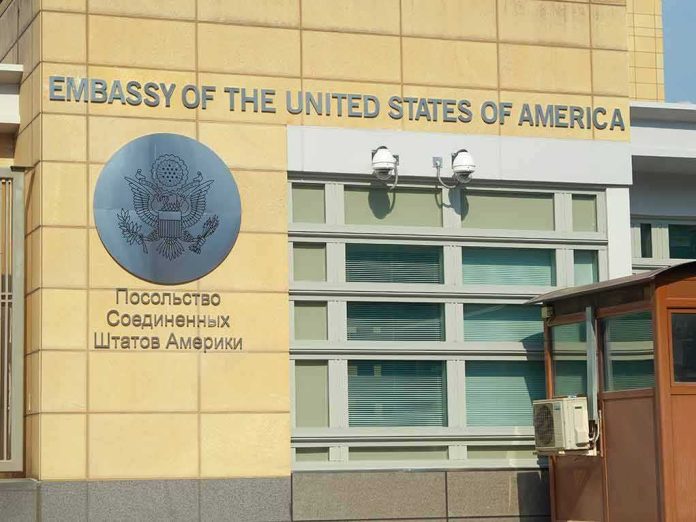
U.S. embassies across the Middle East urged Americans to leave as reports said the United States and Israel were preparing strikes on Iran’s energy network.
Story Highlights
- Embassies warned Americans about possible sudden escalation in the region.
- Reports said the United States and Israel planned strikes on Iran’s refineries and power plants.
- An Israeli official said Israel was ready but waiting for U.S. approval.
- President Trump was reported to be weighing attacks on energy and bridge targets.
Embassy Warnings Signal Fears Of Rapid Escalation
U.S. embassies across the Middle East urged American citizens to consider leaving due to rising risk. Diplomatic warnings like these usually point to near-term danger and limited options to help if violence spreads. The alerts followed days of reports that military action against Iran’s energy sites could come soon. Evacuation advice aims to reduce the number of Americans caught in a fast-moving crisis, especially if air travel or borders close without notice.
Embassy guidance often shifts when threat levels change quickly. Consular teams weigh travel routes, airline capacity, and local security. They also prepare to help those who cannot leave. When the government tells people to depart now, it usually means time is short. For families overseas, these calls can be costly and stressful. But the risk of staying can be greater if fuel, power, and communications get hit and basic services fail during a conflict.
Reports Describe Planned Strikes On Energy Infrastructure
Multiple outlets reported that the United States and Israel were preparing to strike oil refineries, power stations, and related energy sites in Iran, with timelines described as soon as this weekend. A Reuters report quoted an Israeli defense official who said Israel had prepared to hit Iranian energy facilities and was waiting for a green light from Washington. The target list reportedly included refineries, power plants, pipelines, and bridges tied to Iran’s economy.
The Wall Street Journal reported that the goal would be to weaken Iran’s economy by going after key energy and transport nodes. Such targets are central to daily life. Hitting them can dim lights, halt factories, and disrupt fuel and food supplies. It can also send oil markets into shock. That means higher prices at gas stations and higher costs for shipping and goods worldwide. These are the knock-on effects that many Americans feel first at home.
White House Calculus And Israeli Pressure
Reports said President Trump had not issued a final order but was weighing strikes on energy infrastructure and bridges if talks failed. Israeli officials were described as pressing for action and signaling readiness to move quickly once approved. This back-and-forth reflects a pattern in past crises where leaks about planning appear before a decision. The leaks can serve as pressure on Iran and as a signal to allies and rivals about what may come next.
Some coverage described friction over timing and scope, with at least one outlet saying Washington had asked Israel to pause certain energy attacks earlier in the conflict, suggesting internal debate over escalation risks. Even with debate, the common thread in the reporting is preparation for high-impact targets tied to power and fuel. That choice carries military logic but also raises hard questions about civilian harm and long recovery times if plants and grids are damaged.
Why Energy Targets Raise Shared Public Concerns
Targeting energy sites can tip daily life into crisis far from any battlefield. When power plants, refineries, and pipelines go down, hospitals struggle, water systems fail, and food shipments slow. Health groups have warned that such strikes raise major public health risks for civilians. Americans across the political spectrum worry that decisions made by a small circle of officials can have huge costs for ordinary people, at home and abroad, while elites avoid the worst outcomes.
BREAKING: US Embassies across the entire Middle East, UAE, Qatar, Oman, Iraq, Jordan, Israel, Kuwait, Saudi Arabia, Bahrain, and now Egypt, have issued security alerts today urging Americans to immediately depart, and to prepare for flight cancellations and airspace closures, due…
— The Hormuz Letter (@HormuzLetter) August 1, 2026
At home, many see a system that reacts late and leaves families paying more for fuel, flights, and goods when conflict hits supply lines. Abroad, people fear being trapped without power or safe water. These are not abstract issues. They affect seniors on fixed incomes, small businesses with thin margins, and workers who must drive to keep a job. Clear goals, limits, and accountability matter when leaders weigh actions that can ripple through the global economy and daily life.
Sources:
nypost.com, jpost.com, newarab.com, en.apa.az, thehill.com, rferl.org