

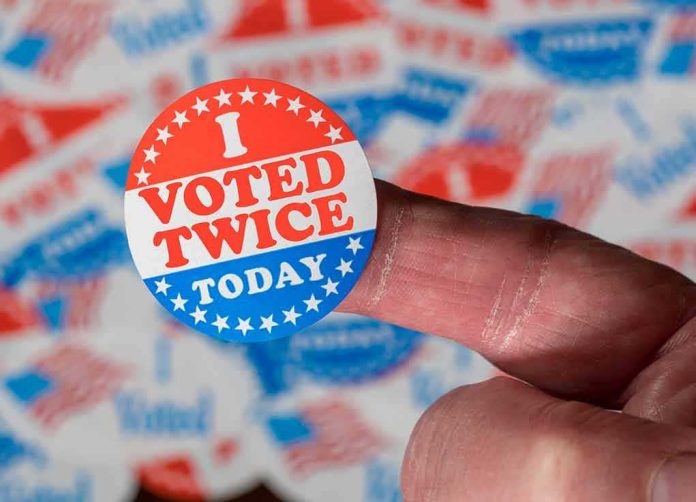
President Trump offered $1 million to anyone whose voter-fraud tip leads to an arrest and a conviction, a reward he says covers past elections and the coming midterms.
Story Highlights
- Trump offered $1 million for voter-fraud reports that lead to an arrest and a conviction.
- The offer covers past elections and the midterms on Tuesday, November 3.
- The money is paid only after a conviction in court, not for a tip alone.
- The White House has not said who will pay the reward or how to file a tip.
Trump’s Offer: A Conviction-First Bounty to Expose Election Crimes
Trump made the offer in a Truth Social post on Monday, October 26, eight days before Election Day. “Anybody reporting Voter Fraud in the past Elections, or the upcoming 2026 Midterm Election, will be paid $1,000,000 upon the arrest and conviction of those that created the Fraud!” he wrote. He repeated the offer to reporters the same day before he left for a campaign rally.
Trump has said for years that fraud tainted past elections, including 2020. This offer ties the money to proof. A tip pays only if it leads to an arrest and then a conviction in court. A rumor or an online claim does not count. That puts a hard standard in place, facts over gossip, and it gives tipsters a big reason to speak up before November 3.
How the Reward Would Work
The White House has not said whether the money would come from public funds or private sources, which office would check the tips, or how a person would file a claim. On Tuesday, October 27, the White House did not answer a reporter’s question about how the reward would be paid for. No rules have been posted for screening evidence, sorting out duplicate tips, or handling state cases versus federal ones.
Clear steps would help honest tipsters: where to send a tip, what proof to include, and how a tipster’s name would be protected. Written guidance from the Justice Department or the White House, a set budget, and a public record of paid cases would build trust. They would also head off later fights over who earned the money in a winning case.
Competing Narratives: Accountability Push vs. Claims of Rare Fraud
Trump’s allies say a big reward can expose real crimes that shake faith in close races. Critics point to studies of mail voting in the 2016, 2018, 2020 and 2022 elections that found documented fraud to be very rare. They warn that a large bounty could bring a flood of weak or repeat claims. Trump did not point to a specific new case of fraud in 2026 when he made the offer.
For readers, two things can be true at once. Election crimes do happen, people have been charged and convicted for them, and every illegal vote cancels a lawful one. Documented fraud is also uncommon, so a pile of tips will not stand in for proof. The strength of Trump’s plan is the conviction rule: proof in court, not noise online. The weak spot is process. Conservatives can press for fast, clear rules so solid tips lead to charges, and false claims do not waste time or smear innocent citizens.
Sources:
thegatewaypundit.com, washingtonexaminer.com, nytimes.com, upi.com, axios.com, usatoday.com