
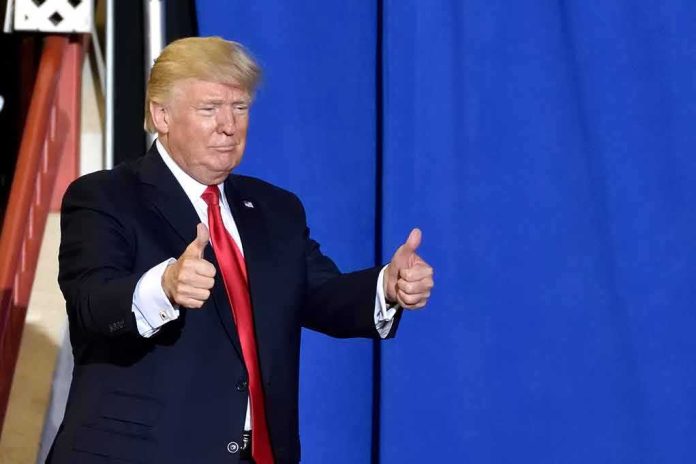
President Trump used his constitutional clemency power onstage in Alaska to pardon two local diesel mechanics prosecuted under the Clean Air Act.
Story Highlights
- Trump signed unconditional pardons for two Anchorage shop owners at a Wasilla rally.
- Prosecutors said the men pleaded guilty in 2022 to a Clean Air Act conspiracy.
- Court records say no prison time was imposed; sentences included probation and fines.
- The case spotlights a national clash between federal enforcement and working trades.
Public Pardons Onstage In Alaska
President Trump brought two Alaska mechanics onstage in Wasilla and signed pardons in front of the crowd. Reports identified the men as Zachary Czubak and Patrick Fleming, co-owners of an Anchorage diesel repair shop called Arm Rippin Toys. Coverage described the pardons as unconditional. The move drew cheers from Alaskans who rely on diesel trucks for work in harsh weather. The public setting underscored Trump’s view that Washington rules have punished ordinary tradespeople.
The rally moment was unusual because presidents often issue clemency from the White House. Trump instead chose a live event in a state known for oil, trucking, and remote travel. Supporters saw it as a sign that the administration is rebalancing policy toward work and energy needs. The decision also fit a broader push to scale back heavy-handed rules that drive up repair costs and sideline reliable vehicles families and small businesses depend on to earn a living.
What The Case Was About
Federal filings show prosecutors charged three shop co-owners with a Clean Air Act conspiracy. The Justice Department said the men removed pollution-control parts and altered monitoring systems on dozens of diesel vehicles. All three owners pleaded guilty in 2022, according to official notices. Government summaries stated the work let trucks run without required controls. The agency’s write-up called the shop a diesel specialist that used its services to remove the equipment from customer vehicles.
Local reporting based on Justice Department information said the defendants did not receive prison time. The sentences included probation, community service, and significant fines. That record cuts against claims that the men faced decade-long incarceration. It also highlights the gap between maximum statutory exposure and actual penalties imposed by the court. The pardons now wipe the federal convictions, lifting the remaining legal burdens on the two named owners who appeared with Trump.
The Competing Claims And Why It Matters
Prosecutors argued the altered trucks released far more pollution than allowed. They said the shop offered removal as a paid service to customers and modified onboard systems so vehicles would still run. Those claims are documented in agency bulletins and news accounts that cite official statements. Supporters counter that Alaska’s cold, remote conditions strain equipment and that rigid rules can sideline work trucks that must start every day to plow, haul, and rescue in life-or-death weather.
Trump’s pardons signal a policy preference for on-the-ground livelihoods when rules collide with real-world needs. The Justice Department’s own notices confirm the guilty pleas and describe the conduct. But the same record shows judges did not impose prison time, and the men were working mechanics, not corporate polluters. The clemency decision tells shops and drivers that Washington should not crush tradespeople for keeping essential trucks running in places where failure is not an option.
The Bigger Picture For Trades, Energy, And Freedom
The Alaska case sits inside a broader national fight over emissions enforcement and the right to repair. Federal agencies have pursued shops that “delete” or bypass controls, while many workers say the rules are too rigid, too costly, and blind to local realities. Critics warn that blanket crackdowns raise prices, sideline vehicles, and chip away at our way of life. The pardons highlight a shift toward common-sense limits on federal power and respect for those who keep America moving.
Breaking News
Trump signs pardons for Alaska diesel mechanics onstage during rally touting major energy dealsThe president declared every federal permit granted for the 800-mile pipeline while pardoning Clean Air Act defendants
President Donald Trump announced pardons for two…
— News News News (@NewsNew97351204) October 14, 2026
For conservatives, the lesson is clear. The Constitution gives the president clemency power to correct excess and restore balance. Trump used that power in public, in a state that lives by trucks, oil, and grit. The legal facts are on the record. The moral facts are, too: families need reliable engines, not one-size-fits-all mandates. When rules outrun reason, leadership must step in. In Wasilla, the president did exactly that—openly, and on behalf of working Americans.