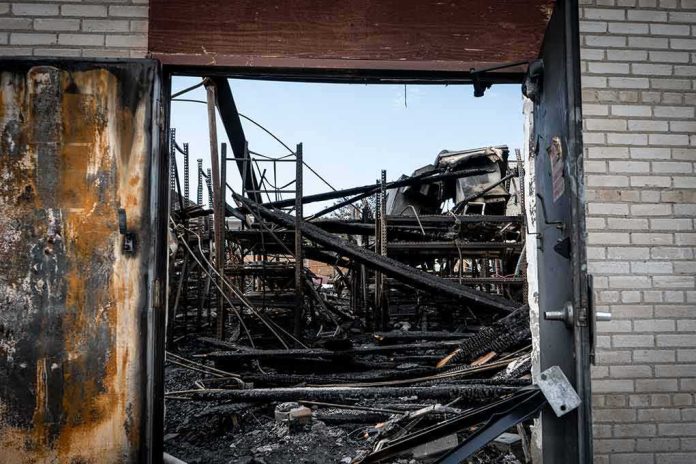
When a Russian drone turned a Ukrainian textbook warehouse into a giant bonfire, it did more than burn paper—it torched a year of learning for an entire country.
Story Snapshot
- A Russian drone strike on a Kharkiv warehouse destroyed millions of books, including school textbooks.
- The warehouse belonged to Ranok, a major Ukrainian publisher that supplies children’s books and textbooks nationwide.
- Company leaders say about 8 million copies and 600,000 textbooks were lost, roughly one-third of Ukraine’s annual book printing.
- The attack fits a wider pattern of drones hitting civilian warehouses, raising fears about targeted cultural destruction in modern war.
What Happened At The Kharkiv Book Warehouse
A Russian drone struck a large warehouse in Kharkiv on August 1, starting a massive fire that burned for hours and destroyed millions of books. The facility belonged to Ranok, one of Ukraine’s biggest publishers, and also served the KnyhoLand bookstore chain that distributes books across the country. Fire covered about ten thousand square meters of the site, turning rows of textbooks and children’s books into ash before firefighters could contain the blaze.
Ranok’s chief executive officer, Viktor Kruhlov, said two drones hit the same location and called it a planned effort to destroy Ukrainian textbooks and Ukrainian-language books. Company figures estimate about eight million copies were lost, covering twenty-eight thousand different titles and around six hundred thousand school textbooks meant for the coming school year. Ukrainian media described the strike as the largest single blow to the nation’s publishing industry since the war began, wiping out stock that was ready to be shipped to schools.
Why This Strike Matters For Schools And Culture
The destroyed textbooks were not sitting idle; they were packed to go to classrooms across Ukraine before September, when the new school year starts. Ranok’s logistics center helped move school books nationwide, so losing hundreds of thousands of textbooks in one night means many students may start the year without planned materials. The damage also hits children’s literature and Ukrainian-language books that help keep the country’s culture alive while families live through blackouts, shelling, and displacement.
Ukrainian and international outlets frame the strike as more than simple property damage; they see it as part of a wider war on the country’s identity. When books in the local language burn, people recall past eras when authoritarian regimes tried to control what citizens could read and learn. For Ukrainians, this attack lands on top of missile and drone strikes that already target power plants, postal warehouses, and other civilian facilities, deepening the feeling that the war is aimed at breaking their spirit as well as their infrastructure.
Modern Drone Warfare And Civilian Warehouses
This strike on the Ranok warehouse fits a growing pattern in the conflict, where drones frequently hit civilian storage sites and cause huge fires. In other attacks, Russian drones have lit up postal depots, humanitarian aid warehouses, and agricultural facilities, showing how easily flying weapons can turn everyday supply hubs into dangerous targets. Ukrainian officials say these attacks blur the line between military and civilian space, since a warehouse full of books or food is much easier to hit than a hidden missile battery.
Reports from different regions show a similar chain of events: drones arrive at night, warehouses catch fire, and firefighters work for hours to stop the spread. Each blaze may start with a single explosion, but it quickly becomes a full inferno as stacked goods burn and roofs collapse. In Kharkiv and other cities, residents now listen for sirens and drones above storage areas that once seemed safe and boring, making normal economic life feel like a front line in the war.
What We Know, What We Do Not, And Why It Feels Rigged
The core facts of the Kharkiv warehouse fire are well supported: a Russian drone strike hit Ranok’s logistics center, a huge fire followed, and millions of books burned. Multiple outlets, including Ukrainian media and foreign reporters, describe the same event and name Ranok’s leadership as the source of the loss figures. What remains less certain is the precise count of destroyed copies, because no independent public audit has yet checked the company’s inventory line by line.
A Russian drone strike on a warehouse of Ranok, one of Ukraine's largest children's publishers, in the northeastern city of Kharkiv on August 1 destroyed about 8 million books, the biggest blow yet to Ukraine's publishing industry during the four-year-old war…
— Reuters (@Reuters) August 10, 2026
For Americans watching from afar, this story taps into a deeper worry: powerful players use war and crisis to shape what people learn and what information they can trust. The strike shows how vulnerable education and culture are when drones can erase a year of printing in a single night, long before any voting public can weigh in on policy. In a time when many here feel our own leaders ignore basic needs like safe schools, strong borders, and affordable energy, seeing millions of books burned abroad is another reminder that ordinary families, not elites, pay the highest price when systems fail.
Sources:
youtube.com, english.nv.ua, newsukraine.rbc.ua, projectchintan.com, nypost.com, sana.sy, chytomo.com, france24.com, facebook.com, pravda.com.ua, komersant.ua