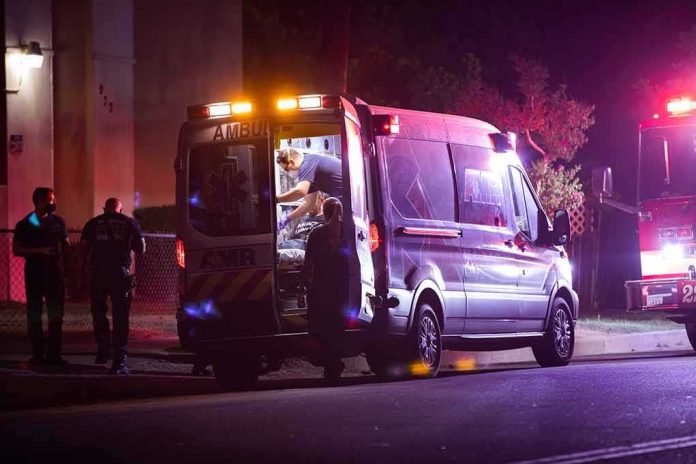
A 39-year-old mother died of a heart attack after an ambulance took about 80 minutes to arrive, and the service admits its response fell below expected standards.
Story Snapshot
- The ambulance service apologized and said its response fell below patient expectations.
- The wait was about 80 minutes for a suspected heart attack at home.
- National reviews link ambulance delays and handover backlogs to patient harm.
- A recent study found no clear rise in overall deaths from delay, but higher costs suggest more illness.
What Happened In Michelle Roberts’s Case
Mirror reporting says Michelle Roberts, a 39-year-old mother, felt chest and throat pain at home in October 2024. Her husband called for help and gave cardiopulmonary resuscitation while waiting. An ambulance arrived about 80 minutes after the call. She was later confirmed to have died from a heart attack. The East of England Ambulance Service apologized, saying the response “fell below the standards” that patients should expect and pointed to wider pressures that day.
The case highlights a common emergency care target: fast response to possible heart attacks. Long waits can lower the odds of survival because early treatment opens blocked arteries and protects heart muscle. National guidance and safety reviews warn that delays to urgent care and to handing patients to hospital teams can raise the risk of harm, especially when minutes matter for the heart and brain.
Why Delays Keep Happening
Health leaders in Parliament and safety investigators describe a jammed system. Ambulance crews often wait outside crowded emergency departments because hospital beds are full. Those handover delays tie up crews who could respond to new 999 calls. The Health Services Safety Investigations Body said delays in transfers are causing life‑threatening harm. The Association of Ambulance Chief Executives reported some people are dying because crews cannot reach them in time.
Operational papers from the National Health Service have linked slow ambulance arrival to ambulance unavailability, which is made worse by hospital backlogs and delayed discharges. When patients cannot move out of wards, emergency departments fill, handovers slow, and ambulances stack up. That cascade cuts response capacity across a region, and people at home wait longer for help during time‑critical emergencies.
What The Evidence Can—and Cannot—Prove
Several official reviews connect delays with higher risk. For heart attacks, national investigations warn that longer times to treatment raise the chance of death and disability. That matches decades of cardiology practice: time is muscle. Still, one peer‑reviewed study found no large rise in overall death risk tied to delayed response from busy ambulances, though hospital costs went up, which suggests worse illness after delay. In short, system delays are harmful, but proving causation in a single case can be hard.
In Michelle Roberts’s case, the ambulance service’s own admission of substandard response is notable. Families on the left and right see the same pattern: a large public system fails at the exact moment people need it most. Leaders promise fixes, but data continue to show dangerous backlogs. When emergency help crawls, trust erodes. People feel the system protects itself before it protects them, and the cost is paid in minutes that patients with chest pain simply do not have.
What To Watch Next
Watch for concrete steps that free up ambulance crews and speed handovers. That includes more hospital capacity, faster discharges to social care, and strict handover time limits backed by real staffing. Track local response-time dashboards, not just national averages. Look for audits on deaths linked to delays and for clear public reporting on fixes that stick through winter peaks. Accountability must match urgency, because when a call is life‑threatening, every minute counts.
Sources:
mirror.co.uk, theguardian.com, x.com, dailymail.com, hssib.org.uk