
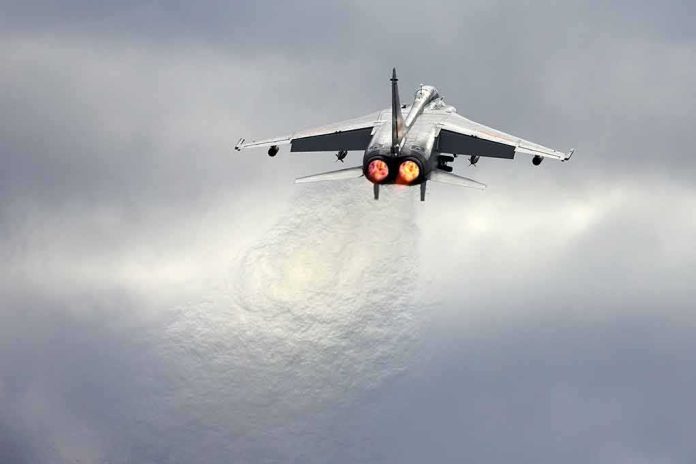
The SR-71 Blackbird flew on a fuel made just for it, and only one special fleet of tanker planes was allowed to feed it in the air.
Story Highlights
- From its first flight in 1964 until the Air Force retired it in 1998, the Blackbird burned JP-7, a custom fuel blended by Shell.
- JP-7 cost about three times as much as the fuel airliners used, and it ran hotter than 300 degrees Fahrenheit at Mach 3.
- Only specially fitted KC-135Q tankers carried it, and only their crews trained for the jet’s radio-silent meetups.
- As the tanks emptied, nitrogen gas filled the space so the fumes could not catch fire.
Lockheed built the Blackbird in secret in the late 1950s and early 1960s to spy from higher and faster than any enemy could reach. At Mach 3, three times the speed of sound, ordinary jet fuel would have boiled off or burned too easily. So the military called for its own fuel, listed under the code MIL-T-38219, and Shell Oil mixed a custom blend to meet it.
A Fuel That Would Not Burn Easily
JP-7 was made to be hard to set off. That kept it safe in a jet whose metal got hot enough to cook ordinary fuel. It was so stubborn that the engines needed a chemical called triethylborane, or TEB, which bursts into flame the moment it touches air, to light it. The jet carried only a limited supply of TEB for starts and afterburner lights in flight.
The fuel also did a second job. It soaked up heat from the plane and its engines before it was burned. During a Mach 3 cruise, the fuel heated past 300 degrees.
Nitrogen in the Tanks
Hot fuel gives off fumes, and the Blackbird had six fuel tanks full of them. As the engines burned the fuel, nitrogen, a gas that will not burn, was pumped in from the nose wheel well to take its place. The tanks were held at a little more pressure than the air outside. That kept them from caving in as the jet dropped into thicker air on the way down, and it kept the fuel from catching fire on its own.
The Tankers Only the Blackbird Could Use
Fully fueled, the Blackbird could fly about 2,000 nautical miles, so long missions needed several refuelings in the air. That job fell to the KC-135Q, a version of the Air Force’s standard tanker that was changed to carry and pump JP-7. Their crews were the only ones cleared for the Blackbird’s radio-silent meetups, where the two planes found each other without talking by radio.
The Q tankers also went along when the Blackbird landed at a base with no JP-7. On the ground, crews fueled the jet straight from the tanker with hoses.
Why It Leaked on the Runway
The Blackbird’s fuel system was not sealed. No seal of the day could stand up to that much heat and the way the metal grew and shrank. Its titanium panels were also fitted loose on purpose, so they had room to grow when they got hot. On the ground, the jet dripped fuel until it warmed up in flight and the leaks stopped.
That is one reason it took off with a light load and met a tanker right after takeoff. Lighter was also safer for the takeoff itself. Of the 32 Blackbirds built, 12 were lost in accidents, but no enemy ever shot one down.
Sources:
19fortyfive.com, en.wikipedia.org, thesr71blackbird.com, migflug.com, enginehistory.org