Federal agents and Los Angeles police swept Skid Row for gang drug crews, and a top federal prosecutor says California’s own laws left the job to Washington.
Story Highlights
- “Operation Save Skid Row” served 28 arrest warrants and 44 search warrants on gang drug crews, according to reports.
- Federal prosecutors say 23 of the 28 people charged were arrested, and guns, drugs, cash and luxury cars were seized.
- First Assistant U.S. Attorney Bill Essayli says weak state laws mean dealers face “not much of a deterrence on the state side.”
- Essayli called people who want to disarm the police “lunatics” who are “on the side of the drug dealers.”
Federal Sweep Targets Gang Dealers on Skid Row
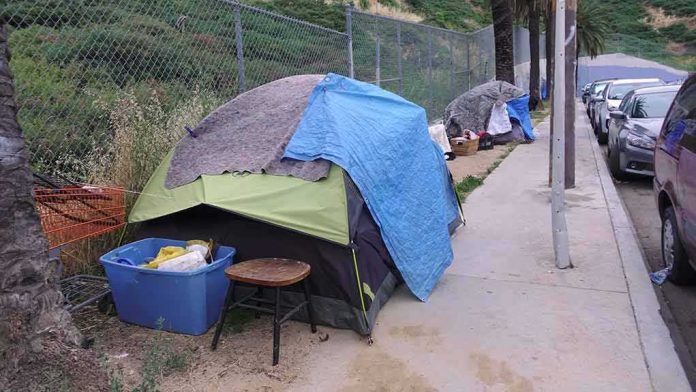
On Thursday, October 8, federal agents and the Los Angeles Police Department moved into Skid Row, a stretch of downtown Los Angeles known for the many homeless people who live in tents along its sidewalks. The target was drug crews tied to the Main Street Crips, the Grape Street/Raymond Avenue Crips and the Pueblo Bishop Bloods. Federal officials say the crews prey on the homeless people who live there, and Bill Essayli, a top federal prosecutor for the Los Angeles area, says the federal government stepped in because California’s weakened laws give dealers little to fear on the state side.
More than 100 police vehicles took part, according to reports. Federal prosecutors say 28 people were charged in federal criminal complaints, which are sworn charging papers filed in federal court, and 23 of them were arrested. Agents searched 20 homes, most of them outside Skid Row, along with several tents on Skid Row itself. They seized guns, suspected methamphetamine, cocaine, crack cocaine and pills, plus bulk cash and luxury vehicles. Officials have not released the amounts. Each defendant faces up to 20 years in federal prison if convicted.
Authorities said some dealers disguised themselves as homeless people or social workers. Others used tents and tarps as storefronts and kept drugs in cars and low-income housing. The FBI’s Los Angeles office called these traffickers “the single largest driver of violent crime in the Skid Row area.” The Drug Enforcement Administration said those arrested were “not low-level dealers.”
Prosecutor Says the State Side Has No Teeth
Essayli is the First Assistant U.S. Attorney for the Central District of California, a top post in the federal prosecutor’s office that covers Los Angeles. In an interview, he said “states like California have totally watered down their laws, their criminal justice laws,” and have “emptied their prisons and closed prisons.” The result, he said, is “there’s not much of a deterrence on the state side.” He added, “No one faces any serious consequences on the state side.”
Essayli did not blame local police. “Local law enforcement isn’t the problem,” he said. “It’s more the governor, it’s the legislature,” along with what he called “loud-mouth” members of Congress who, he said, care most about attacking the president. He credited Mayor Karen Bass for approving the LAPD’s part in the operation.
He saved his sharpest words for calls to disarm the police. “You have people trying to disarm the LAPD, and those people are on the side of criminals,” Essayli said. He said anyone calling for disarming the police “is on the side of the drug dealers” and added, “they’re lunatics.”
What Comes Next
Essayli said the sweep is only the start. He also said Skid Row dealers keep addicted people sick and take their public assistance money to pay for drugs. “We will use every lawful tool to dismantle the networks flooding Skid Row with deadly drugs,” he said in a statement. Officials say it follows an earlier federal operation at MacArthur Park this year.
The 23 people arrested are accused, not convicted, and each will have a day in federal court. Federal prosecutors said five of the 28 people charged had not been arrested when the sweep was announced. For readers tired of open-air drug markets, the takeaway is plain: federal prosecutors say they will keep bringing these cases to federal court, where, Essayli says, dealers face real consequences.
Sources:
foxnews.com, justice.gov, latimes.com, san.com