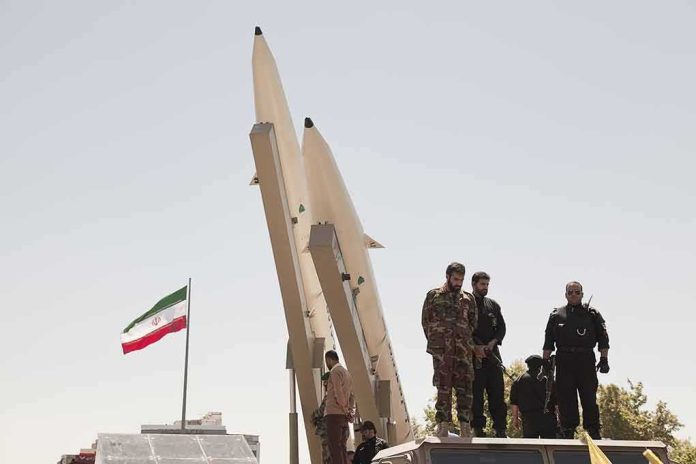
As President Trump said he is in “deciding mode” on Iran, U.S. embassies across the Middle East sent Americans the same message: heighten caution, prepare for travel disruptions, and be ready to move. A “worldwide caution” followed. Hours earlier, Iran’s Revolutionary Guard had warned it would widen the battlefield and bring new weapons into play if the United States strikes again.
As of Sunday, September 20, the State Department’s regional alerts and the worldwide caution were in effect, Trump had returned to the White House early from a weekend trip, and no new strike had been announced.
Story Highlights
- U.S. embassies and the State Department issued fresh regional alerts and a worldwide caution urging Americans to prepare for rapid escalation.
- Iran’s Islamic Revolutionary Guard Corps vowed to “change the weaponry and the geography of the war” if hit again.
- President Trump said he is weighing options as tensions remain high.
- Iran’s long use of proxy militias raises the risk that any clash could spread fast.
What The Embassies Sent
U.S. embassies across the Middle East issued alerts that urged Americans to be vigilant and prepare for travel disruptions. A “worldwide caution” also went out to U.S. citizens in light of a complex security picture and the risk of rapid escalation. These steps do not mean an attack is certain. They show the government is treating the threat level as serious and taking action to protect Americans and missions abroad during a tense period.
Tensions in the Middle East are escalating.
NewsNation's Robert Sherman…: “US embassies here in the Middle East warning Americans of unforeseen escalation, citing tensions that exist in Yemen involving the Houthis there and their recent conflicts with Saudi Arabia, warning… pic.twitter.com/lCY4PB0IL6— Worldwide News Network (@WorldwideNNX) September 21, 2026
The State Department’s messages told Americans to follow local embassy guidance and be ready to adjust plans. Posts cited the danger that conflicts can spread fast and hit diplomatic facilities or public spaces. Advisories also warned that Iran and allied groups could target U.S. interests if the situation worsens. These public notes often reflect classified inputs without revealing them. They are designed to reduce surprise and save lives if violence spikes.
IRGC Threat Links Any New U.S. Strike to a Wider War
Iran’s Islamic Revolutionary Guard Corps spokesman Hossein Mohebbi warned that any new U.S. assault would trigger a response with different weapons and a broader map of targets. He said Iran would “change the weaponry and the geography of the war,” according to reporting that cited Iran’s Fars news agency. The warning came as the conflict nears seven months and decision points sharpen. President Trump said he is considering options, signaling the White House is actively assessing next steps.
The statement matters because it ties Iranian retaliation to scope, not just timing. Iran did not detail which weapons or which fronts. That ambiguity is part of its playbook. The message is aimed at deterring a new U.S. strike by raising the cost. It also tries to reassure Iran’s network that Tehran will back them if fighting grows. The lack of specifics does not weaken the threat. It widens the set of places where risk could jump quickly.
Why Iran’s Proxy Web Raises the Stakes
Iran’s approach leans on allied militias in Lebanon, Iraq, Syria, and Yemen. This proxy network lets Tehran project power without always firing from its own soil. It also creates many flashpoints where rockets, drones, or sabotage can erupt with little warning. Analysts describe it as a layered deterrent that complicates any U.S. or partner response. The risk is simple: a single strike can trigger a chain across several fronts faster than diplomats can slow it.
Research on Iran’s security model shows how this “forward defense” can blur lines between local and regional conflict. Armed groups aligned with Tehran can act on signals, shared goals, or direct orders. That means embassies, bases, shipping lanes, and energy hubs can face pressure at the same time. The warning from the Revolutionary Guard fits this pattern. It tells Washington that a hit in one place could light fires in several others, straining defenses and logistics.
What This Means for Americans, Allies, and Energy Markets
American families with loved ones overseas need clear steps, not noise. Embassy alerts are the tool for that. Check registration with the nearest consulate, review routes to safe airports, and keep copies of key documents. Businesses with staff in the region should update contingency plans now. Rapid changes in flight schedules, checkpoints, and curfews can happen within hours when threats rise. Following official notices cuts confusion if security conditions shift.
Allies that rely on stable shipping through the Strait of Hormuz are watching closely. That waterway moves a large share of the world’s oil and gas. Prior standoffs showed how fast insurance costs and transit times can jump when missiles or mines appear near tankers. U.S. regional partners will likely tighten air defenses and maritime patrols in the short term. Their goal is to prevent a local flare-up from turning into a supply shock that hits families at the pump.
How the Trump Administration Is Positioned
President Trump said he is in “deciding mode” as his national security team weighs options. The administration faces a hard balance: deter attacks on Americans and partners, avoid handing Tehran propaganda wins, and prevent a rapid slide into multi-front conflict. The White House can lean on targeted defenses, partner coordination, and clear red lines. Embassy security and citizen safety remain top priorities as agencies track threats and prepare layered responses.
Sources:
cbsnews.com, timesofindia.indiatimes.com, independent.co.uk, livemint.com, politico.com