A young Mexican TikTok star was gunned down on camera outside a busy restaurant, just steps from a state prosecutor’s office, while thousands watched live.
Story Snapshot
- Mexican influencer César Gastélum was shot in the head while livestreaming with friends outside a fast-food restaurant in Culiacán.
- Two men on a motorcycle pulled up during the stream; the driver fired at close range and rode away as viewers watched in real time.
- The attack happened in a crowded commercial plaza near the Sinaloa state prosecutor’s office, raising fresh doubts about basic public safety.
- The killing echoes other murders of influencers in Mexico and adds to a wider pattern of “spectacle violence” and deep mistrust in government.
Influencer killed in front of his audience
Mexican social media influencer César Gastélum, in his mid‑20s, was shot dead while streaming live outside a fast‑food restaurant in Culiacán, the capital of Sinaloa state. He had about 600,000 followers on TikTok and was known for light comedy and challenge videos, not political content. On Tuesday evening, he stood with two friends dressed as food delivery workers for a stunt, broadcasting on the streaming platform Kick as viewers watched on TikTok. The stream turned into evidence of his killing instead of simple entertainment.
During the livestream, a motorcycle carrying two people approached the group in the busy Tres Ríos commercial area, only a short distance from the Sinaloa state prosecutor’s office. Video described by Reuters and other outlets shows the motorcycle passing once, then returning. The driver then fired a handgun at close range into Gastélum’s head, and he collapsed immediately on camera. The livestream cut off and was later removed by the platform, but clips and still images spread quickly across social media and news sites.
Crime scene near prosecutors highlights impunity fears
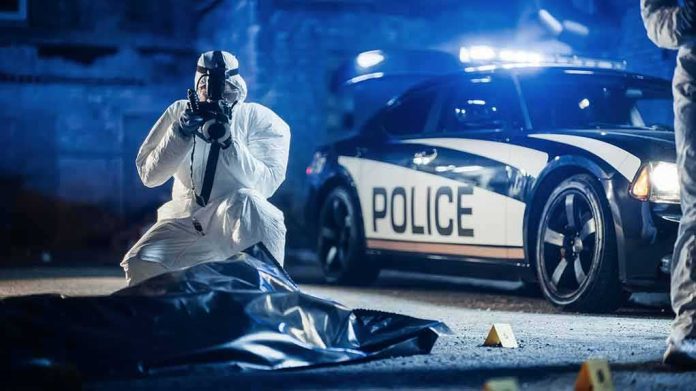
The shooting happened in a crowded shopping plaza outside a well‑known fast‑food chain, at an hour when families and workers were out in public. Local police and security officials confirmed Gastélum’s death and launched a large security operation in the area. Soldiers, police, and forensic teams arrived to secure the plaza, collect shell casings, and review nearby surveillance cameras for leads. Despite this show of force, the two helmeted attackers escaped on the motorcycle, and authorities reported no arrests or named suspects in the immediate aftermath.
The location of the killing has struck many observers as a symbol of how unsafe public life has become. Reports note the attack took place only a few meters from the Sinaloa state prosecutor’s office, the very institution meant to investigate serious crime. For people who already doubt that authorities can or will protect ordinary citizens, a brazen shooting in that spot feels like proof that armed killers do not fear the state. It suggests that even official buildings and high‑security zones cannot guarantee safety in regions where organized crime groups hold real power.
Pattern of attacks on influencers and public figures
Gastélum’s killing did not happen in a vacuum. Reuters and other outlets connect his death to a broader pattern of public attacks on influencers in Mexico, often carried out in crowded places or on camera. In 2025, beauty influencer Valeria Márquez was shot dead during a TikTok livestream in Jalisco, a case that shocked the country and was investigated as a possible gender‑based hate crime known as femicide. Since then, local media in Sinaloa have reported that around a dozen influencers, some suspected of ties to criminal groups, have been killed in recent years.
Experts interviewed after Márquez’s murder warned that Mexico was reaching a “saturation point” where people were growing numb to graphic violence. They described these killings as “spectacle violence,” designed or at least carried out in ways that guarantee maximum attention online and on television. Gastélum’s livestream death fits that pattern: a young, recognizable face cut down suddenly in a public space, with video evidence spreading worldwide within hours. Each case deepens the sense that violence is not just rising but becoming a part of daily digital life, especially in states like Sinaloa that have long struggled with cartel power.
Why this resonates with fears about failed government
For many Americans watching from across the border, Gastélum’s death feeds a wider fear: that government structures cannot keep up with fast, public violence in the social media age. Mexican authorities say they are reviewing surveillance footage and running a full investigation, but they have not named a motive or suspects. People who already doubt official promises see another familiar pattern—strong words, visible patrols, and little clarity about who ordered the hit or why the attacker felt safe firing in a packed plaza.
This story hits nerves that cross party lines in the United States. Conservatives who worry about weak borders and cartel power see a young man gunned down near a prosecutor’s office as proof that criminal networks operate with impunity just miles from U.S. soil. Liberals who focus on inequality and state corruption see another example of ordinary workers and online creators paying the price while elites stay protected. Both sides share a growing sense that modern governments—Mexican and American alike—are slow, reactive, and often more focused on their own image than on tackling entrenched violence.
Sources:
insiderpaper.com, cbsnews.com, bbc.com, en.wikipedia.org, reuters.com, facebook.com, youtube.com