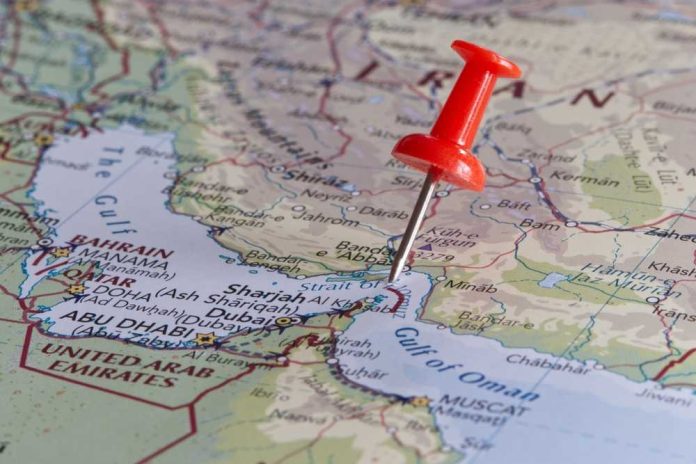
Oil tankers are finally inching back through the Strait of Hormuz, but the fine print of the deal and the same old power games mean American drivers are still hostage to decisions made in secret rooms half a world away.
Story Snapshot
- Tankers have resumed moving through the Strait of Hormuz after a U.S.–Iran ceasefire memorandum of understanding, sending oil prices sharply lower.[1][2]
- The deal promises a “free” reopening with no Iranian tolls for at least 60 days, but the full text is still hidden from the public and even allies.[14][16]
- Energy experts say it could take weeks or months for real oil flows to normalize, so relief at the gas pump may be slow and fragile.[2][14]
- Ongoing disputes over Iran’s nuclear program, Israeli military action, and threats to re-close or tax the strait keep markets — and family budgets — on edge.[3][17][18]
Tankers Move Again — And Markets React Fast
On June 15, ship-tracking data showed the first real convoy of tankers slipping south past Iran’s Larak Island, after weeks of near-silence in one of the world’s busiest energy chokepoints.[1] Iran’s foreign minister then said the Strait of Hormuz was “completely open” for all commercial vessels during the current ceasefire, signaling that attacks and blockages would pause for now.[1] Oil markets, wired to react to every headline, moved instantly as traders bet that at least some crude and gas would start flowing again.[1]
Brent crude oil prices dropped sharply right after Iran’s announcement, with one major benchmark falling nearly 13 percent in a single day.[1] U.S. stocks jumped too as investors priced in lower energy costs and slightly less risk of a wider war in the Middle East.[2] That may sound like a victory for everyday Americans tired of $5 gasoline, but the move mostly reflected hope and algorithms, not yet a stable, long-term fix to the deeper supply and security problems in the region.[2]
The Ceasefire Deal: Big Promises, Little Transparency
A new memorandum of understanding between Washington and Tehran underpins this short-term calm, extending the ceasefire by about two months and calling for the full reopening of the strait.[2] President Donald Trump publicly promised that the U.S. naval blockade would be lifted and that the waterway would be fully open by the signing date, ending months of military pressure on Iranian ports.[2] The agreement reportedly includes a pledge that Iran will not charge tolls on tankers for at least sixty days, matching a long-time U.S. demand for “free” passage.[14][16]
Yet the actual text of the deal is still not public, even to many G7 partners, leaving both citizens and allies guessing about what was traded away to get this pause.[2] Analysts say the memorandum mostly freezes the current conflict, while delaying hard questions about Iran’s nuclear program and its stockpile of enriched material to later talks.[3] Members of Congress from both parties are demanding the right to review the deal, and some want to block or rewrite it, raising the risk that Washington politics could derail implementation.[3] Once again, an agreement that affects global fuel prices was shaped behind closed doors, with ordinary drivers left to deal with the fallout.
Why Gas Prices Will Not “Snap Back” Overnight
Energy experts warn that opening the strait is only step one; getting real barrels to market is the harder job.[14] Several key export terminals and plants, including large liquefied gas facilities, suffered serious war damage and could take three to five years to fully repair, limiting how quickly exports can return to pre-war levels.[3] Even if more ships move, a long line of backlogged vessels, damaged pipelines, and cautious insurers means global supply will rise slowly, not in one clean surge like a light switch flipping on.[2][14]
Shipping analysts say it could take weeks just to unwind the traffic jam of tankers that have been stuck waiting on either side of the strait.[14] War-risk insurance remains expensive, and some shipowners still fear sudden reversals if the ceasefire collapses or if either side resumes attacks.[8][10] That means American families may see some relief at the pump, but not a return to “cheap gas” of past years, especially with refineries, taxes, and earlier price spikes still baked into the system. The cost of geopolitical games has a way of lingering long after the headlines calm down.
Fragile Peace: Toll Threats, Regional Tensions, and Nuclear Shadows
Iranian officials have hinted they might impose navigation fees on tankers once the ceasefire window closes, directly clashing with the U.S. demand for a toll-free strait.[17] During earlier phases of the crisis, Iran experimented with charging transit fees and selectively allowing ships tied to certain countries, turning a vital global passage into a kind of political tollbooth.[17] That history fuels real concern that today’s “free and open” promise could slide back into pay-to-pass rules or fresh harassment if talks sour.[5][17]
#Just_In: #US lifts #Iran naval blockade as nuclear talks enter 60-day implementation period
Addis Abeba – The United States has formally ended its naval blockade of Iran, allowing commercial and energy shipments to resume through the Gulf and Gulf of Oman as a newly signed… pic.twitter.com/QXJybChBP2
— Addis Standard (@addisstandard) June 18, 2026
Outside the strait itself, the broader region remains tense and unstable, keeping the risk of renewed disruption high.[3][19] Israel has sharply criticized the U.S.–Iran deal, continued operations against Hezbollah in Lebanon, and signaled it may act alone if it feels threatened, all of which could drag the region back toward open conflict.[3] Inside Iran, hardline factions are attacking the agreement as a sellout, raising the risk that leaders there could walk away under domestic pressure.[3] None of this reassures markets — or families who simply need predictable fuel and food prices to plan their lives.
What This Means for Americans Tired of Being Caught in the Middle
For many Americans, this story feels like yet another case where global elites make secret deals while regular workers pay more at the pump, the grocery store, and on their power bills. The Strait of Hormuz crisis shows how a handful of officials, generals, and energy traders can move the cost of living for hundreds of millions of people without any real democratic input.[11][13] When shipping halts or resumes based on classified talks and shifting red lines, the “free market” looks more like a rigged game than an honest system.
Both conservatives and liberals share a basic question here: why is the U.S. economy still so exposed to decisions by hostile regimes and unaccountable global institutions? This latest deal offers a short break from war and price spikes, which most people welcome. But it does not fix America’s deep dependence on foreign energy routes, the lack of transparency in foreign policy, or the revolving door between government and big finance that profits from every crisis. Until those structural issues change, the next tanker standoff — and the next price shock — is only a matter of time.
Sources:
[1] Web – Tankers are moving again through the Strait of Hormuz — and drivers …
[2] Web – Iran-US war latest: Tankers finally start moving through Strait of …
[3] Web – Sanctioned tankers transit Strait of Hormuz amid US blockade
[5] Web – Iran claims oil tanker transits Strait of Hormuz amid U.S. blockade on …
[8] YouTube – BREAKING: IRGC ‘SMASHES’ US Hormuz Blockade? $220M Crude Iranian …
[10] Web – US-Iran Tensions Rise as Tankers Navigate Strait of Hormuz
[11] Web – Iran Intensifies Pressure on Shipping in Strait of Hormuz Amid U.S. …
[13] YouTube – Strait of Hormuz blockade shifts US strategy to squeeze Iran’s economy …
[14] YouTube – The U.S. Naval Blockade and Iran’s Response: A Strategic Breakdown
[16] Web – Iran ceasefire raises hopes for reopening key Strait of Hormuz
[17] Web – Strait of Hormuz reopening may take weeks – CNBC
[18] YouTube – US begins reopening Strait of Hormuz, launches ‘Project …
[19] Web – US demands free reopening of Strait of Hormuz – Facebook