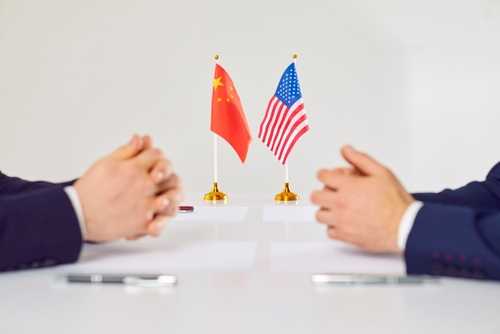
Trump’s latest China meeting delivered real market gains for American farmers and factories, but the fine print still leaves room for skepticism.
Quick Take
- China agreed to buy at least $17 billion a year in U.S. farm products through 2028, according to the White House.[4]
- The White House said China approved an initial order of 200 Boeing aircraft for Chinese airlines.[4]
- Both sides said they would create new boards on trade and investment to keep talks moving.[4][2]
- Critics noted that Beijing’s public readout left out key details, especially on rare earths and purchase totals.[3][2]
Trade Wins, But Questions Remain
The White House says President Donald Trump secured a package of trade and security gains with China that supports American jobs, farmers, and industry.[4] The strongest public claims include a multi-year farm purchase pledge, a Boeing aircraft order, and renewed market access for U.S. beef. Those items matter to voters who want results, not endless diplomatic theater. They also fit a broader America First message that puts American producers ahead of global talking points.[4]
Still, the public record shows a familiar problem in U.S.-China diplomacy: both sides told the story differently. NPR reported that China did not match the White House’s purchase numbers, while China-US Focus said there was no mutually agreed communiqué.[3][2] That gap does not erase the announced deals, but it does raise a fair question about how much is locked in and how much is only verbal agreement. Conservative readers have every reason to demand proof before calling anything historic.[3][2]
New Boards Aim to Keep Talks Moving
Trump and Xi also agreed to create the U.S.-China Board of Trade and the U.S.-China Board of Investment, which the White House described as tools to improve the economic relationship.[4] That is not a sweeping reset, and it is not a full settlement of the trade fight. It is, however, a way to keep disputes from spilling into deeper conflict. For a country that has watched years of weak, bureaucratic drift, that kind of structure can matter if it produces action.[4][2]
Council on Foreign Relations said the summit produced “mutually useful ambiguity,” which captures the shape of the meeting well.[17] The White House highlighted strategic stability, while Chinese readouts stressed different priorities and omitted some U.S. talking points.[17][19] That pattern suggests both sides wanted calm more than closure. In plain terms, the talks likely reduced pressure without solving the hardest problems. That may sound modest, but in a tense relationship, modest progress can still prevent a larger crisis.[17][19]
Security Issues Stayed Narrow and Unclear
The security side of the summit remained limited and mostly rhetorical. The White House said both leaders agreed Iran cannot have a nuclear weapon, that the Strait of Hormuz should stay open, and that China and the United States should support denuclearization of North Korea.[4] Yet outside analysts said the public readouts did not show a detailed new settlement on those issues.[6][2] That matters because Americans have seen too many lofty statements that vanish once the cameras leave the room.[6][2]
this is factually correct. except scheer is leaving out the most important facts. Carneys is traveling to lock in our great economy since CPCs buddy trump has effed us royally. Scheer clearly know why Carney is missing. unless he doesnt watch the news when carney explains how… https://t.co/atHHniLeZO
— 🇨🇦Cathy💙💛 (@MoralityPLS) June 17, 2026
Rare earths also stayed a major point of tension. The White House said China would address U.S. concerns about shortages in rare earth supply chains, but China’s public account did not spell that out.[4][3] That gap is important because rare earths affect defense systems, electronics, and other vital industries. If Beijing truly accepted that demand, the administration should push for clear terms and public confirmation. If it did not, then Americans deserve to know that as well.[4][3]
What Comes Next for the Administration
The political lesson is simple. When Trump strikes a deal, the administration must show the receipts. The White House can claim a win, and the public may welcome real gains for farms and manufacturing. But the China file is too important to run on vague language and selective readouts. The best way to protect U.S. leverage is to demand formal details, clear timelines, and public follow-through. Without that, even a real breakthrough can get buried under spin.[4][3][17]
That does not mean the summit was a failure. It means the burden now shifts to execution. The reported farm purchases, aircraft order, beef access, and new trade boards are only useful if they become real business on the ground.[4] If they do, Trump can point to a concrete win for American workers. If they do not, critics will rightly say the meeting produced a lot of language and not enough substance. In Washington, the difference between those two outcomes is often the difference between strength and theater.[4][2]
Sources:
[2] YouTube – Trump–Xi Beijing summit ends with limited outcomes and few formal …
[3] Web – Parsing the Results of the Xi-Trump Summit – China-US Focus
[4] Web – The aftermath of Trump-Xi summit: comparing U.S. and China … – NPR
[6] Web – Five outcomes that would make Trump’s trip to China a success
[17] Web – Trump Was Flattering, Xi Was Resolute. The Difference Spoke …
[19] YouTube – Why the US-China summit changed very little | Quick Take