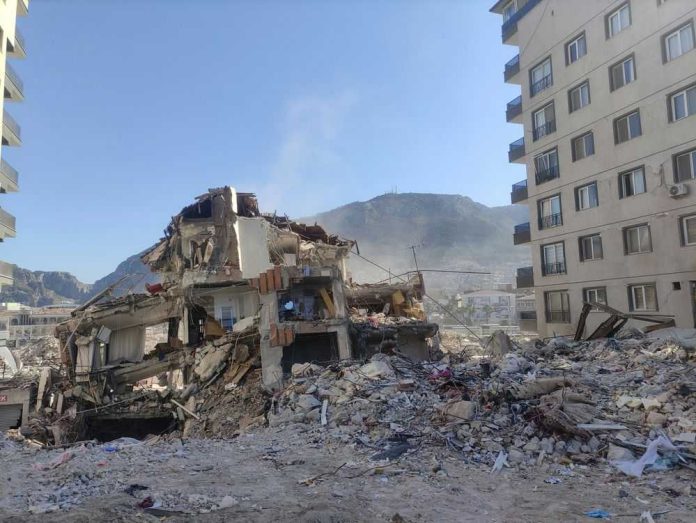
Israel’s strikes in Beirut’s dense southern suburbs, days after a United States-backed ceasefire push, signal a widening conflict that risks drawing civilians deeper into the crossfire while major powers struggle to enforce restraint.
Story Snapshot
- Israeli warplanes hit targets in Beirut’s southern suburbs following evacuation warnings and escalating operations against Hezbollah [1][2].
- Israel said it targeted Hezbollah infrastructure, including underground facilities and senior operatives linked to cross-border attacks [1][3][6].
- Local authorities reported casualties in Beirut as residents fled heavily populated areas described as Hezbollah strongholds [2][3][6].
- The timing undercuts international ceasefire diplomacy and raises the risk of broader regional spillover [4][5].
What Triggered The Strikes In Beirut’s Southern Suburbs
Israeli forces conducted airstrikes on Beirut’s southern suburbs, an area known as Dahiyeh, after issuing evacuation warnings and expanding operations against Hezbollah targets, according to multiple broadcast reports [1][2]. Israeli statements framed the action as a response to militant threats tied to Hezbollah activity, including underground infrastructure and command sites in the capital’s outskirts [1][3]. Coverage described renewed strikes near Beirut following earlier rounds in southern Lebanon, marking a notable escalation into a densely populated urban zone [2][3].
Media accounts reported that Israel linked the strikes to efforts to degrade Hezbollah’s capabilities and leadership. One report cited Israeli claims that a Hezbollah Radwan force commander was killed in a Beirut strike, aligning with Israel’s broader objective of deterring cross-border incursions and drone operations [6][3]. Broadcast segments also emphasized that neighborhoods hit are widely viewed as Hezbollah strongholds, complicating civilian protection because residential areas and militant infrastructure often overlap in modern urban warfare [3].
Earlier today,
Israel launched airstrikes on southern suburb of Beirut at orders of Netanyahu
Iran has threatened to retaliate with attacks on Israel, implying that it could lead to “Operation True Promise 5” pic.twitter.com/d92IWaaDlK
— Brian’s Breaking News and Intel (@intelFromBrian) June 7, 2026
Civilian Risk, Evacuations, And The Information Gap
Reports indicated residents fled Beirut’s southern suburbs amid Israel’s evacuation orders and subsequent bombardment, underscoring acute civilian risk in high-density districts [2]. Local tallies cited fatalities from the Beirut strikes, while Israeli briefings focused on operational targets and leadership nodes [6]. This divergence tracks a recurring pattern in limited wars: the striking party controls the initial operational narrative, while local authorities report casualties, and independent verification lags due to access constraints and ongoing hostilities [4].
The result is an information asymmetry that fuels competing claims in the first hours after an attack. Israel asserts targeted precision against military assets to prevent future attacks, while Lebanese sources emphasize civilian harm and the dangers of urban bombing [1][3][6]. Independent reporters face restrictions reaching strike sites immediately, leaving early coverage to official statements and local footage. That gap heightens mistrust on both sides and hardens international debate over proportionality, legality, and the practical limits of protecting civilians in mixed-use areas [4][5].
Escalation Risks And Diplomatic Fallout After Ceasefire Efforts
Strikes in Beirut shortly after renewed diplomatic pushes for a ceasefire backed by the United States deepen skepticism that outside pressure can constrain combatants when core security aims clash [4][5]. Israeli leaders have signaled a broader campaign against Hezbollah’s capabilities along the Lebanon front, including around Beirut, which they argue is necessary to deter infiltration and aerial attacks [1][5]. Lebanese authorities and regional media frame the strikes as escalation that threatens to widen the conflict and invite retaliation, including potential reactions from Iran-aligned actors [5].
For Americans across the spectrum, the episode reinforces doubts about the effectiveness of international mediation and the accountability of powerful actors. Conservatives see a reminder that deterrence fails without decisive action and clear red lines; liberals see human costs rising while diplomacy stalls and civilian safeguards falter. Both camps share a deeper worry: when major decisions occur behind closed doors and facts emerge slowly, citizens are left with spiraling risks, higher global energy uncertainty, and little confidence that leaders are prioritizing public safety and transparency [1][2][4][5][6].
Sources:
[1] Web – Israel Strikes Beirut’s Southern Suburbs Days After US-Supported …
[2] YouTube – Israeli army announces start of airstrikes on southern Beirut suburb
[3] YouTube – Residents flee Beirut’s southern suburbs after Israel orders strikes
[4] YouTube – Israeli air strikes hit Beirut: Lebanon’s southern suburb of Dahieh …
[5] YouTube – Israeli strikes hit Beirut’s southern suburbs amid new evacuation …
[6] YouTube – Israel launches new strikes on Beirut: Military says it is …