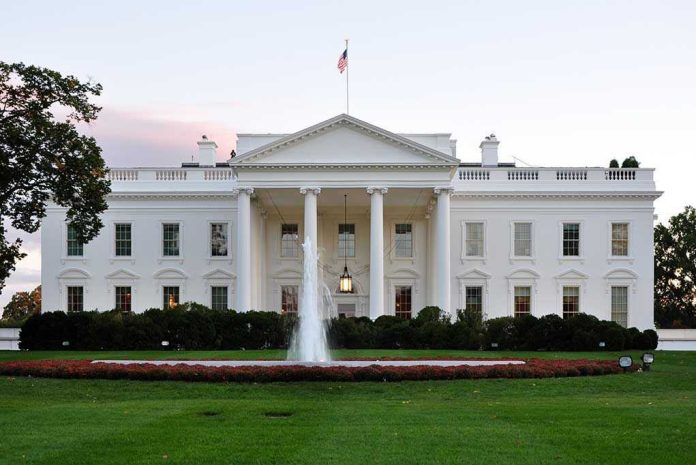
Glenn Youngkin blasts White House corruption as “looking like eBay,” exposing deep state cronyism that frustrates Americans on both sides of the aisle.
Story Snapshot
- Youngkin accuses Democrats of masking progressive policies as moderation while driving up costs and corruption.
- Emanuel counters by defending Democratic middle-class focus and slamming Republican tariffs and cronyism.
- Fiery exchange at Milken Institute signals intensifying 2026 election battles over free markets versus government intervention.
- Both sides highlight voter anger at elite governance failures, echoing shared distrust in Washington insiders.
Debate Erupts at Prestigious Conference
Former Virginia Governor Glenn Youngkin and former U.S. Ambassador to Japan Rahm Emanuel clashed on May 6, 2026, at the Milken Institute Global Conference in Beverly Hills, California. Gerard Baker, Editor-at-Large of The Wall Street Journal, moderated the panel on the future of U.S. politics. The 6-minute-19-second exchange, broadcast on C-SPAN, delved into party directions, economic policies, and governance. Youngkin, a Republican with private equity roots as ex-Co-CEO of The Carlyle Group, defended free-market principles. Emanuel, a centrist Democrat and ex-Chicago Mayor, pushed pragmatic centrism. Attendees from business and policy circles witnessed pointed critiques on authenticity and corruption.
Youngkin’s Sharp Critique of Democratic Policies
Youngkin charged the White House with operating like “eBay,” auctioning influence to cronies and betraying campaign promises on cost-of-living relief. He highlighted Virginia’s current Democratic governor’s low favorability ratings as proof of policy failures. Democrats, he argued, pose as moderates but deliver progressive agendas that inflate costs and erode economic freedom. Voters reject this bait-and-switch, Youngkin stated, predicting Republican gains in November 2026. His business background lent weight to calls for rejecting government overreach, resonating with conservatives tired of fiscal mismanagement and globalist excesses.
This rhetoric taps into widespread frustration across the political spectrum. Both conservatives and liberals increasingly view federal elites—”the deep state”—as prioritizing power over the American Dream of hard work and self-reliance. Youngkin’s attack underscores how entrenched interests undermine limited government and individual liberty, core conservative values now echoed by disillusioned independents.
Emanuel Fires Back on Republican Shortcomings
Rahm Emanuel rejected Youngkin’s portrayal of Democrats as socialist, insisting the party focuses on building the middle class through sensible policies by Democratic senators, congressmen, and governors. He accused Republicans of crony capitalism, pointing to tariff policies and opaque government contracts that favor insiders. Emanuel challenged Youngkin’s free-market credentials, arguing GOP approaches widen divides and harm workers. His executive experience in Chicago and the Obama White House framed Democrats as results-driven, countering claims of ineffective governance.
Yet Emanuel’s defense sidesteps verified voter concerns over inflation and immigration, issues fueling bipartisan distrust. Both combatants represent establishment wings, but their mutual corruption charges reveal a system where elites on left and right protect their own. This mirrors the overriding reality: Washington serves the powerful, not everyday Americans struggling with high energy costs and eroded opportunities.
Electoral and Policy Ramifications for 2026
The debate foreshadows 2026 midterms amid President Trump’s second term and GOP congressional control. Democrats obstruct reforms on immigration, spending, and energy, while Republicans push America First priorities like fossil fuels and deportations. Youngkin’s predictions of gains highlight anti-corruption momentum, but Emanuel’s middle-class pitch aims at swing voters. Broader realignments on trade, tariffs, and industrial policy persist, with both parties eyeing housing and competitiveness despite philosophical rifts. Business leaders at Milken watched closely, wary of regulatory instability.
Ultimately, the exchange exposes government failures uniting frustrated citizens. Conservatives decry woke overreach and open borders; liberals lament welfare cuts and inequality. Yet a growing consensus demands accountability from corrupt elites, urging a return to founding principles of liberty and self-governance. Watch November 2026 for voter backlash against deep state entrenchment.