Las Vegas Strip casinos are finally paying the price for years of “get‑what‑we-can” policies that squeezed middle‑class Americans dry and turned a once‑affordable escape into another symbol of corporate greed.
Story Highlights
- Visitor projections for 2025 show a sharp drop after years of post‑pandemic boom on the Strip.
- Families and budget travelers are walking away as resort fees, parking charges, and weak odds destroy value.
- Airport and tourism data reveal a sustained decline, even while casinos try to spin record revenue.
- Analysts say recovery will require real value, not marketing slogans, echoing conservative calls for market discipline.
Visitor Declines Expose Vegas’s “Value Problem”
UNLV’s Center for Business and Economic Research now projects roughly 39.1 million visitors to Las Vegas in 2025, about six percent fewer than the 41.6 to 41.7 million visitors estimated for 2024. That reversal comes right after a run of record spending, including nearly 45 billion dollars in visitor spending in 2022 and more than 40 million visitors again in 2023. The headline growth of the boom years is giving way to what analysts bluntly describe as a sobering reset.
Airport numbers tell the same story from another angle. Harry Reid International Airport has logged ten straight months of year‑over‑year passenger declines, with November traffic down 9.6 percent and year‑to‑date counts 5.5 percent below the same period in 2024. Fewer people boarding planes to Nevada means fewer players on casino floors, fewer customers in restaurants, and less tax revenue for state and local budgets that long counted on Las Vegas as a never‑ending cash machine.
&t=2s
From Cheap Fun to Costly Squeeze on Middle America
For decades, Las Vegas sold itself as the place where ordinary Americans could enjoy glamorous hotels, low‑cost buffets, and friendly odds, even if the house usually won by the end of the trip. Over the last decade, that model morphed into something very different. Strip operators shifted aggressively toward resort, entertainment, and fee‑driven revenue: higher average room rates, mandatory resort fees, paid parking, steeper food and drink prices, and higher table minimums became the norm.
During the 2022–2023 surge, that strategy looked unstoppable. Coming out of COVID restrictions, pent‑up demand filled rooms even as hotels raised prices and layered on new charges. Mega‑events in 2023 and 2024, from Formula 1 to the Super Bowl and marquee conventions, disguised early signs of strain. But as those one‑off events faded, everyday travelers did the math. Many realized they were paying more for worse odds, higher minimums, and constant nickel‑and‑diming, then quietly took their vacations elsewhere or stayed home.
How Higher Fees and Worse Odds Drove Tourists Away
Analysts consistently point to one central issue: Las Vegas “isn’t a value anymore” for the lower‑end leisure and middle‑class visitor that once filled the Strip mid‑week. Visitors now confront resort fees on top of inflated room rates, parking charges at properties that once advertised free parking, and noticeably higher costs for basic meals and drinks. On the casino floor, players see six‑to‑five blackjack payouts, triple‑zero roulette, and twenty‑five‑dollar minimums even during slow times replacing the friendlier odds many remember.
Even industry leaders admit the strategy went too far. Caesars Entertainment’s chief executive has acknowledged that aggressive pricing likely turned away visitors and damaged the city’s value perception. Analysts add that weaker lower‑tier leisure demand and softer international travel are hitting the Strip hardest just as consumers nationwide face tighter budgets. With more affordable alternatives—from regional casinos to cruise ships and online gaming—customers are exercising classic free‑market discipline, rewarding destinations that respect their wallets.
Data Show Sustained Weakness Behind the Casino Spin
Tourism authorities report that Strip visitor volume has been down for months on end, with declines stretching at least nine consecutive months through September and overall visitation down roughly 7.6 percent year‑over‑year by October 2025. In September alone, Strip visitation dropped 8.8 percent compared with the prior year, even as statewide gaming revenue had previously shown strength. Convention attendance also softened, falling nearly nineteen percent that month in part because major shows skipped their usual Las Vegas stops or shifted their timing.
Mid‑2025 data underline how broad the pullback has become. Visitor counts between July 2024 and July 2025 fell about twelve percent, while international arrivals in June dropped around thirteen percent. Local tax receipts tell the fiscal side of the story: room tax and gaming fee collections in Clark County slid roughly fourteen percent year‑over‑year in the first quarter of 2025. Those declines hit public services and tourism promotion budgets, reinforcing how fragile it is to build government revenue on the assumption that Americans will tolerate endless price hikes.
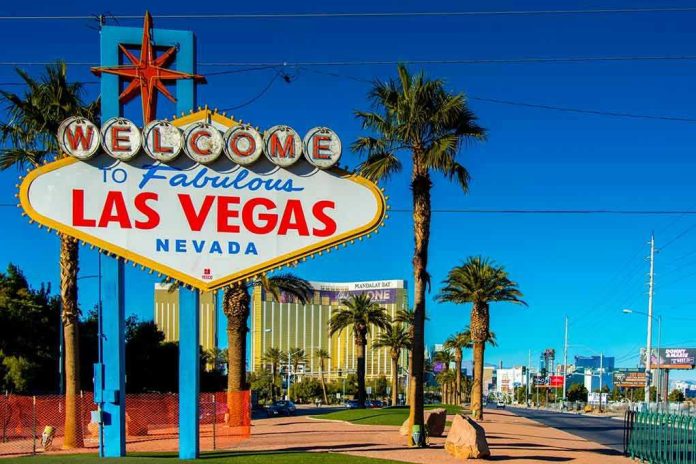
Strip casino leaders and tourism officials now promise a course correction. Executives talk about “delivering more value at all price points” and adjusting thousands of individual prices, from rooms to ATM fees. The Las Vegas Convention and Visitors Authority has launched a new “Welcome to Fabulous Las Vegas” campaign, hoping fresh marketing can offset the damage from years of aggressive pricing. Analysts remain cautiously optimistic, projecting a recovery in 2026 driven by record group and convention business and a stronger event calendar.
What This Reveals About Policy, Markets, and Everyday Americans
For many conservative observers, the Las Vegas slowdown is a textbook case of what happens when decision‑makers ignore the real‑world limits of working and middle‑class budgets. During the Biden years, families were already squeezed by inflation, higher travel costs, and shrinking purchasing power. Strip operators, insulated for a time by stimulus‑fueled demand and splashy global events, kept pushing prices higher instead of respecting their customer base. Eventually, Americans responded by shutting their wallets.
The 2025 downturn also underscores an important principle: healthy markets demand transparency, competition, and respect for the consumer, not hidden fees and one‑sided rules. When a destination abandons its core promise of affordable, family‑friendly fun, people notice. If Las Vegas truly wants the projected 2026 rebound, that recovery will not be secured by slogans or more government promotion, but by tangible changes—rolling back junk fees, restoring better value on the casino floor, and treating visitors like valued guests rather than revenue targets.
Sources:
Las Vegas Strip casinos get sobering visitor news
5 reasons Vegas visitor numbers have declined in 2025
Vegas Strip gaming revenue falls in September as tourism, airline traffic keeps tumbling
Las Vegas tourism remained down in October
Las Vegas is struggling: Tourism numbers reveal sharp slowdown
Las Vegas tourism recovery expected in 2026, report says