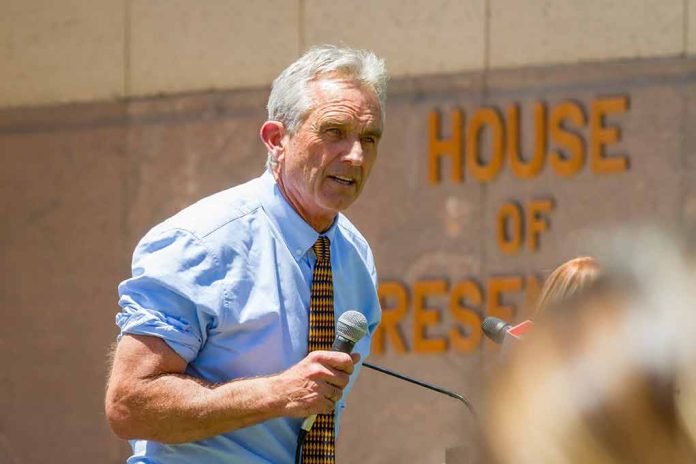
US Health Secretary Robert F. Kennedy Jr. has launched a controversial plan to identify the cause of autism within five months, sparking intense debate between environmental advocates and the scientific community.
Key Takeaways
- RFK Jr. announced a “massive testing and research effort” to determine autism causes by September, focusing primarily on environmental factors.
- Autism diagnoses have increased nearly fivefold since 2000, affecting 1 in 31 U.S. children according to recent CDC data.
- The scientific community and advocacy groups have criticized the plan as oversimplified, noting autism’s complex nature involving genetic, biological, and environmental factors.
- Kennedy’s past promotion of debunked theories linking vaccines to autism and his hiring of controversial figures has intensified scrutiny of his initiative.
- The Autism Society warns the approach may perpetuate harmful stigma and distract from critical needs of the autism community.
Kennedy’s Bold Initiative and Claims
Health and Human Services Secretary Robert F. Kennedy Jr. announced plans for what he termed “a massive testing and research effort” aimed at identifying the causes of autism by September. The initiative will reportedly “involve hundreds of scientists from around the world” and focus heavily on examining potential environmental contributors, including vaccines, food systems, water quality, air pollution, and even parenting methods. Kennedy has emphasized his belief that the rising rates of autism diagnoses represent a preventable public health crisis.
During his announcement, Kennedy made several definitive claims about the timeline and scope of his initiative. “By September, we will know what has caused the autism epidemic and we’ll be able to eliminate those exposures,” Kennedy stated. He has consistently emphasized his focus on environmental factors, asserting: “Genes don’t cause epidemics. You need an environmental toxin.” This position has raised eyebrows across the scientific community, which generally recognizes autism as having complex, multifactorial origins.
Rising Autism Rates and Scientific Context
The CDC reports that autism diagnoses have increased significantly, with approximately 2.77% of 8-year-olds diagnosed by 2020, rising to 1 in 31 children in newer data. This represents nearly a fivefold increase since 2000. The scientific community largely attributes this rise to expanded diagnostic criteria, greater awareness, and improved screening practices. Boys continue to be diagnosed more frequently than girls, with varying rates among different ethnic groups.
“The reasons for increases in autism diagnosis come down to scientific and health care progress,” said Annette Estes, an autism researcher.
Kennedy has rejected these explanations, stating: “Autism destroys families. More importantly, it destroys our greatest resource, which is our children. These are children who should not be suffering like this.” He further claimed: “These are kids who, many of them, were fully functional and regressed because of some environmental exposure into autism when they’re 2 years old.” Such statements have drawn criticism for potentially oversimplifying complex developmental processes.
Criticism and Concerns from Experts
The Autism Society of America has strongly criticized Kennedy’s approach and timeline. The organization expressed “deep concern about the lack of transparency surrounding this proposed research and looming September deadline—specifically regarding who is leading this research, what methodologies are being used, and whether it will meet established scientific standards.” This sentiment echoes throughout much of the professional community studying autism spectrum disorders.
“These misleading theories perpetuate harmful stigma, jeopardize public health, and distract from the critical needs of the Autism community including — access to quality care, early intervention, adult services, inclusive education, and long-term supports,” stated Christopher Banks of the Autism Society.
Adding to these concerns is Kennedy’s hiring of David Geier, a controversial figure and known vaccine skeptic, to assist with the initiative. This appointment has heightened skepticism about the scientific rigor of the planned research. The NIH currently allocates over $300 million annually to autism research, with significant focus on understanding its complex origins through rigorous, peer-reviewed studies examining both genetic and environmental factors.
Balancing Public Health Policy and Science
The debate surrounding Kennedy’s autism initiative highlights broader tensions in how public health policy addresses complex developmental conditions. While the investigation of environmental contributors to autism is a legitimate area of scientific inquiry, experts caution that approaching such research with predetermined conclusions or oversimplified timelines may undermine scientific integrity. The scientific consensus maintains that autism is influenced by a complex interplay of genetic, biological, and environmental factors.
As Kennedy’s September deadline approaches, the scientific and autism advocacy communities continue to emphasize the importance of comprehensive, evidence-based approaches that include input from autistic individuals themselves. They stress that effective public health policy must be grounded in rigorous science while addressing the practical needs of those affected by autism spectrum disorders, including access to quality care, early intervention services, and inclusive education.
Sources:
- RFK Jr pledges to find the cause of autism by September
- Statement on Robert F. Kennedy Jr.’s Comments Regarding the Cause of Autism and Misleading Deadline
- Health secretary RFK Jr. says U.S. autism cases are climbing at an ‘alarming rate’