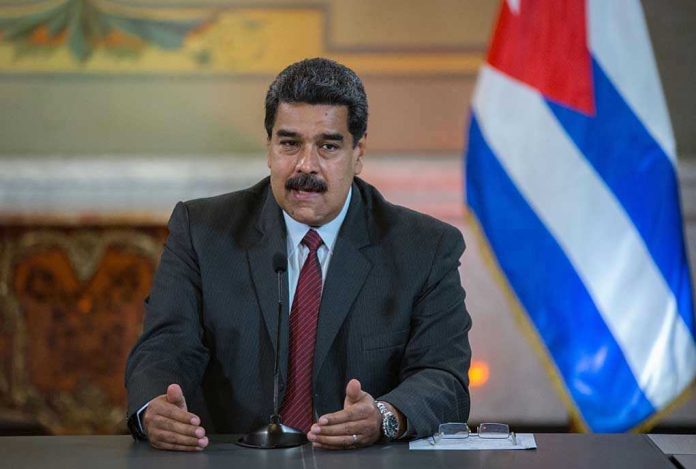
President Trump has stunned the world by signaling a willingness to open direct talks with Venezuela’s Nicolás Maduro, marking a dramatic shift from years of hardline U.S. policy and escalating military pressure.
Story Highlights
- Trump publicly floated the possibility of diplomatic discussions with Maduro, a stark reversal from previous regime-change efforts.
- The announcement comes amid a major U.S. military buildup in the Caribbean, including carrier group deployments and anti-narcotics operations.
- Maduro has condemned U.S. military actions as provocative, while the Venezuelan government remains silent on Trump’s overture.
- Experts warn this could signal a new era of pragmatic engagement or a sign of policy inconsistency.
- The move raises questions about America’s long-term strategy in Latin America and the future of Venezuela’s crisis.
Trump’s Diplomatic Pivot
President Trump’s recent remarks about opening discussions with Nicolás Maduro represent a significant departure from longstanding U.S. policy. For years, the United States has labeled Maduro as illegitimate and criminal, supporting opposition leader Juan Guaidó and imposing harsh sanctions.
Now, Trump’s administration is signaling a willingness to negotiate directly with Maduro, despite ongoing military operations in the Caribbean. This shift comes as the U.S. deploys the Gerald R. Ford carrier group and conducts Operation Southern Spear, targeting alleged drug trafficking networks linked to Venezuelan officials.
The juxtaposition of military escalation and diplomatic outreach has left both allies and adversaries questioning the administration’s true intentions.
The timing of Trump’s overture is critical. Venezuela remains in the grip of a deep economic and humanitarian crisis, with mass emigration and internal unrest.
The U.S. military buildup is officially aimed at counter-narcotics, but it is widely interpreted by Venezuela as a threat to its sovereignty. Maduro has responded by urging vigilance and warning of a “criminal war,” while the Venezuelan government has not yet officially responded to Trump’s remarks.
The lack of formal talks and continued military operations suggest that any diplomatic breakthrough remains uncertain.
Stakes and Regional Impact
The potential for direct talks between the U.S. and Venezuela carries major implications for the region. The Venezuelan population, already suffering from years of crisis, faces heightened anxiety about the possibility of further conflict or a sudden shift in U.S. policy.
Regional neighbors are concerned about spillover effects, including increased migration and instability. Domestically, Trump’s move could bolster his standing among supporters who favor pragmatic foreign policy, but it may also draw criticism from those who see it as legitimizing an authoritarian regime.
The energy sector, particularly oil markets, could react to any changes in Venezuela’s political landscape, given the country’s status as a major oil producer.
Experts are divided on the long-term impact of Trump’s approach. Some analysts view the shift as a recognition of the limits of “maximum pressure” and the need for pragmatic engagement.
Others warn that talks could legitimize Maduro without meaningful reforms, potentially undermining U.S. credibility and emboldening other authoritarian leaders. The historical pattern of U.S. oscillation between intervention and negotiation in Latin America adds further complexity to the situation.
Uncertain Future and Policy Questions
As the U.S. continues its military operations in the Caribbean, the future of U.S.-Venezuela relations remains uncertain. No formal talks have been announced, and the Venezuelan government has not officially responded to Trump’s remarks.
The continued military presence suggests that the administration is maintaining leverage, but the door to diplomacy is now open. This development raises important questions about America’s long-term strategy in Latin America and the future of Venezuela’s crisis.
Will this lead to a genuine diplomatic breakthrough, or is it merely a tactical maneuver in a broader game of geopolitical chess?
For now, the world watches closely as President Trump’s administration navigates this delicate balance between military pressure and diplomatic outreach.
The outcome could reshape U.S. policy in the region and have lasting effects on the lives of millions in Venezuela and beyond.
Sources:
Trump says US may open talks with Venezuela’s Maduro