Trump’s shocking announcement to pardon a foreign leader convicted of cocaine trafficking has ignited a firestorm over justice and presidential power that threatens to undermine America’s entire war on drugs.
Story Highlights
- Trump announces plan to pardon former Honduran President Juan Orlando Hernández, convicted of cocaine trafficking
- Hernández currently serves 45-year sentence for accepting millions in drug cartel bribes
- Pardon would set unprecedented precedent for foreign leaders convicted of serious crimes
- Move raises concerns about undermining rule of law and emboldening drug cartels
Trump Defends Controversial Pardon Decision
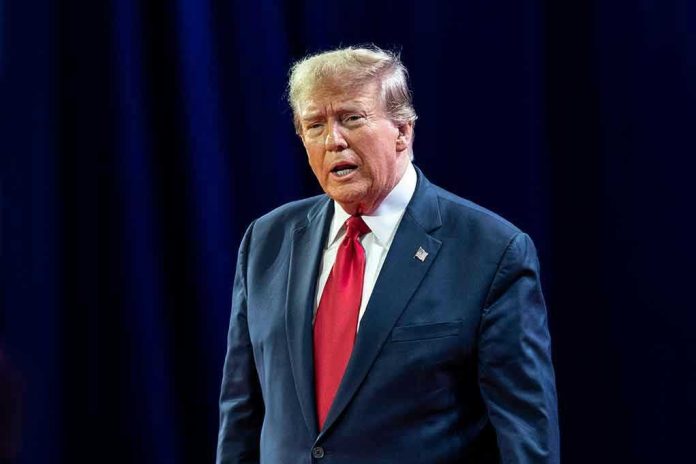
President Trump announced on November 29, 2025, his intention to pardon Juan Orlando Hernández, the former Honduran president serving a 45-year sentence for cocaine trafficking. Trump declared that Hernández “has suffered enough” and called for “justice and closure.”
This unprecedented move involves pardoning a foreign head of state convicted by a Manhattan jury in 2024 on charges of accepting millions in bribes from drug cartels while serving as Honduras’s president from 2014 to 2022.
The pardon announcement comes as Honduras prepares for a contentious December 2025 presidential election, with Hernández’s case serving as a central campaign issue. Legal experts warn this decision could establish a dangerous precedent for future cases involving foreign leaders convicted of serious crimes.
The timing appears strategically calculated to influence both Honduran domestic politics and Trump’s own political positioning ahead of the 2026 midterm elections.
Justice Department Faces Unprecedented Challenge
Hernández’s conviction marked the first time a sitting or former Latin American head of state faced drug trafficking charges in U.S. courts. Federal prosecutors successfully demonstrated that Hernández transformed Honduras into a “narco-state,” accepting bribes to protect cocaine shipments destined for American communities.
The conviction represented years of painstaking investigation into Central American corruption networks that have fueled the ongoing border crisis and drug epidemic plaguing American families.
The U.S. Department of Justice expressed concerns about the pardon’s impact on ongoing anti-drug operations throughout Central America. Officials worry that pardoning Hernández could embolden other corrupt leaders and drug cartels, potentially undermining decades of law enforcement efforts.
This decision strikes at the heart of America’s commitment to combating the flow of illegal drugs that continue devastating communities nationwide, particularly in conservative heartland states.
National Security and Rule of Law Concerns
Conservative legal scholars argue this pardon threatens fundamental principles of American justice and national security. Honduras serves as a critical transit point for South American cocaine entering the United States, contributing directly to the drug crisis that has claimed hundreds of thousands of American lives.
Pardoning a convicted drug trafficker sends a troubling message that political considerations can override legitimate law enforcement victories against international criminal networks.
The broader implications extend beyond Honduras to America’s credibility in fighting transnational crime. This unprecedented pardon could signal to other corrupt foreign leaders that sufficient political influence might shield them from consequences for crimes against American interests.
Such perception undermines the deterrent effect of U.S. law enforcement and potentially encourages more brazen criminal behavior by hostile foreign actors seeking to exploit American weakness.