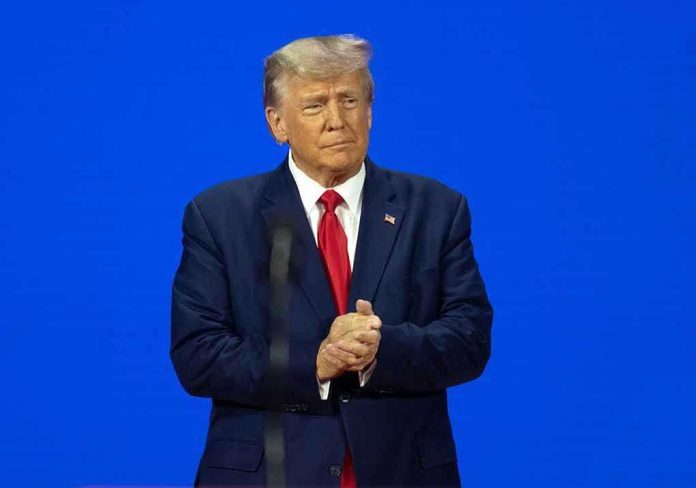
President Trump’s direct engagement with families of freed Israeli hostages at the Knesset signals a renewed U.S. commitment to strong leadership and constitutional values in a turbulent world.
Story Snapshot
- President Trump met Israeli families at the Knesset, highlighting U.S.-Israel solidarity.
- Trump’s administration marks a definitive shift away from prior leftist policies on immigration and globalism.
- Conservative values, border security, and constitutional protections are taking priority in U.S. policy.
- Trump’s actions aim to restore national pride and address Americans’ frustrations with past government overreach.
Trump’s Meeting at the Knesset Reinforces U.S.-Israel Alliance
On October 13, 2025, President Donald Trump visited the Knesset to meet with families of freed Israeli hostages. This high-profile engagement underscores the Trump administration’s commitment to supporting America’s closest allies, especially Israel, amid ongoing security challenges in the region. The meeting was seen as a symbolic gesture that reaffirms the longstanding partnership between the U.S. and Israel, and signals a sharp departure from the previous administration’s perceived leniency towards adversaries and globalist priorities. The event resonated strongly with Americans who value a robust foreign policy and the protection of democratic allies.
Trump’s presence at the Knesset also sent a powerful message about the administration’s approach to hostage crises and terrorism. By personally engaging with families affected by such traumatic events, Trump emphasized his stance on prioritizing the safety of citizens and advocating for decisive, constitutionally grounded responses to international threats. This contrasts sharply with the prior administration’s approach, which many conservatives felt was weak and undermined national security. The renewed focus on American leadership abroad aligns closely with the values held by many frustrated voters who seek a return to principled, effective governance.
Immigration Policy: A Shift Toward Security and Constitutional Protections
Since taking office in January 2025, President Trump has implemented sweeping changes to U.S. immigration policy, marking a stark contrast to the previous administration’s open-border stance. Key actions include the declaration of a national emergency at the southern border, an end to the “catch and release” policy, and the signing of the Laken Riley Act mandating detention for immigrants charged with certain crimes. The administration has also moved to block most asylum seekers, suspend refugee admissions, and end birthright citizenship for children of non-permanent residents. These measures directly address concerns about illegal immigration, fiscal mismanagement, and threats to American sovereignty, resonating with voters who demand the restoration of law and order on U.S. soil.
Empowered by new executive orders, Immigration and Customs Enforcement (ICE) has increased raids and deportations, including in locations previously considered off-limits such as schools and churches. The administration eliminated the “sensitive locations” policy, allowing broader enforcement actions and pressuring states and localities to cooperate with federal authorities. These aggressive moves have led to a sharp decrease in illegal border crossings and a climate of greater accountability, though they have also sparked legal challenges and public debate over due process and constitutional rights. Conservatives view these policies as necessary to protect American communities, uphold the rule of law, and counter the erosion of traditional values.
Restoring Conservative Values and Addressing Voter Frustrations
Trump’s administration has set forth a clear agenda to reverse what many see as the harms of prior leftist policies, including unchecked immigration, government overreach, and threats to gun rights and family values. By prioritizing border security, enforcing existing laws, and reaffirming America’s constitutional foundations, Trump addresses the core frustrations of his conservative base. The administration’s actions—both at home and abroad—reflect a broader commitment to restoring national pride, individual liberty, and respect for American traditions. While some critics argue that these measures test the limits of executive power, many voters see them as essential corrections to years of misguided governance.
The renewed focus on sovereignty and constitutional protections has sparked hope among Americans who felt marginalized by previous government priorities. Trump’s visible support for allies like Israel, combined with decisive domestic reforms, is resonating with voters eager for responsive leadership and concrete results. As the administration continues to implement its agenda, the coming months will be critical in determining the long-term impact on U.S. policy, civil liberties, and the nation’s standing on the world stage.
Sources:
Trump basks in Mideast peace at Israel’s Knesset
Immigration policy of the second Trump administration – Wikipedia
The Trump Administration’s 2025 Changes to Immigration Law – NYC Bar
Protecting The American People Against Invasion – The White House