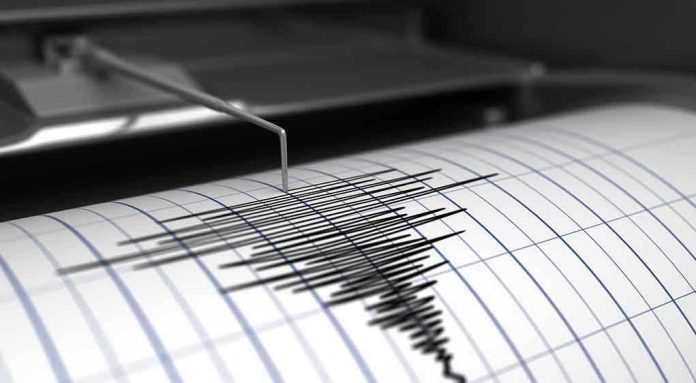
The Pacific Northwest sits on the brink as the Cascadia Subduction Zone quivers, foreshadowing the overdue “Big One” earthquake.
Story Overview
- Recent earthquakes bring renewed focus on the Cascadia Subduction Zone.
- Scientists warn the region is overdue for a catastrophic event.
- Potential impacts could devastate communities from Northern California to British Columbia.
- Public preparedness remains a critical concern amid increasing seismic activity.
Recent Seismic Activity Highlights Cascadia Risk
In September 2025, a series of moderate earthquakes have shaken the Pacific Northwest, underscoring the persistent threat posed by the Cascadia Subduction Zone (CSZ). This fault line, which stretches from Northern California to Vancouver Island, is capable of producing massive earthquakes and tsunamis. Scientists have long warned that the region is overdue for a significant seismic event, often referred to as the “Big One,” which could have devastating consequences for coastal communities.
Historical and geological data indicate that the CSZ has a history of generating enormous earthquakes, the last of which occurred on January 26, 1700, with a magnitude between 8.7 and 9.2. This event resulted in widespread destruction and a trans-Pacific tsunami. Research conducted in the 1990s and 2000s established a pattern of recurring megathrust earthquakes, with intervals averaging between 400 to 600 years. As we near this period, the urgency for public awareness and preparedness increases.
Challenges in Preparedness and Mitigation
The Pacific Northwest is home to major urban centers such as Seattle, Portland, and Vancouver, where critical infrastructure is not designed to withstand a magnitude 9.0 earthquake and associated tsunami. Despite scientific consensus about the looming threat, there remains a significant gap between warnings and public preparedness. Efforts to retrofit infrastructure and educate the public are ongoing but uneven, leaving many areas vulnerable to potential disaster.
Emergency management agencies continue to emphasize the importance of preparedness, urging residents to have emergency plans and supplies ready. However, political and economic pressures often complicate efforts to implement comprehensive mitigation strategies. The potential for multi-billion-dollar losses and significant human displacement underscores the need for immediate action.
Long-term Implications and Expert Opinions
Experts agree that a major earthquake along the CSZ could result in catastrophic impacts, including thousands of casualties, massive infrastructure damage, and long-term economic disruption. Seismologists emphasize the need for urgent preparedness measures, with some debate over the potential for smaller segmented events versus a full-margin rupture. Academic research highlights the importance of integrating geological findings with indigenous oral histories to enhance understanding and readiness.
The risk posed by the Cascadia Subduction Zone remains a pressing concern for scientists, emergency managers, and policymakers alike. With continued advancements in seismic monitoring and early warning systems, the focus remains on bridging the gap between scientific understanding and public action to mitigate the inevitable impacts of the “Big One.”
Sources:
USGS and Oregon State University Earthquake Timeline
Wikipedia: Cascadia Subduction Zone
Pacific Northwest Seismic Network on Earthquake Sources
Surviving Cascadia: Earthquake Frequency
“`