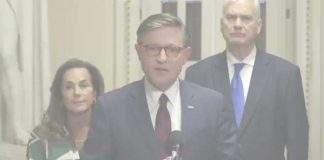
Robert F. Kennedy Jr.’s controversial decision to halt $500 million in mRNA vaccine funding ignites a firestorm of debate on public health preparedness.
Story Highlights
- RFK Jr. cancels mRNA vaccine funding, citing safety concerns.
- Experts criticize the decision, warning of risks to pandemic preparedness.
- Shift in funding priorities may impact future U.S. vaccine development.
- The move aligns with RFK Jr.’s long-standing vaccine skepticism.
RFK Jr. Halts mRNA Vaccine Funding
On August 5, 2025, Robert F. Kennedy Jr., serving as the Secretary of Health and Human Services under President Donald Trump, announced the termination of nearly $500 million in federal funding for mRNA vaccine research. This decision affects 22 projects aimed at developing vaccines for respiratory viruses, including COVID-19 and influenza. Kennedy justified the move by asserting that mRNA vaccines pose more risks than benefits, especially as viruses evolve. Public health experts quickly criticized the decision, highlighting its potential to undermine pandemic preparedness.
mRNA technology played a crucial role in the global response to the COVID-19 pandemic, credited with saving millions of lives. The U.S. government, through agencies like the Biomedical Advanced Research and Development Authority (BARDA), heavily invested in this technology to enhance pandemic readiness. However, RFK Jr.’s appointment as HHS Secretary raised concerns about future vaccine policies due to his known skepticism of vaccines. This recent funding halt raises alarms about maintaining rapid-response vaccine infrastructure.
Impact on Public Health and Preparedness
The immediate cessation of mRNA vaccine projects introduces uncertainty for researchers and pharmaceutical companies that relied on federal support. In the short term, the decision disrupts ongoing research, potentially slowing innovation and competitiveness in the biotech sector. In the long term, it risks the U.S.’s ability to quickly develop and deploy vaccines for future pandemics, thereby increasing vulnerability to emerging infectious diseases.
Experts argue that the decision could result in a significant setback for U.S. leadership in vaccine technology. Dr. Paul Offit and Dr. Michael Osterholm, respected voices in infectious disease research, have publicly criticized the funding halt as reckless, warning of inadequate vaccine supply in future health crises. They emphasize that the decision is not grounded in scientific evidence, posing severe consequences for public health safety.
Shift in Vaccine Policy and Political Implications
Kennedy’s decision to divert resources from mRNA technology to alternative vaccine platforms reflects his long-standing skepticism. This move aligns with his belief that mRNA vaccines may not effectively adapt to viral mutations. However, the scientific community overwhelmingly supports the technology, citing its proven efficacy and safety. The abrupt shift in policy not only disrupts ongoing research but also intensifies partisan divides over science and public health policy.
The economic and social impacts of this decision are profound. The biotech sector faces potential slowdowns in innovation due to the loss of federal investment. Socially, the decision may erode public trust in vaccines and health authorities, leading to increased confusion and misinformation. Politically, it further polarizes the debate over the role of science in government policy, drawing lines between RFK Jr.’s supporters and the scientific community.