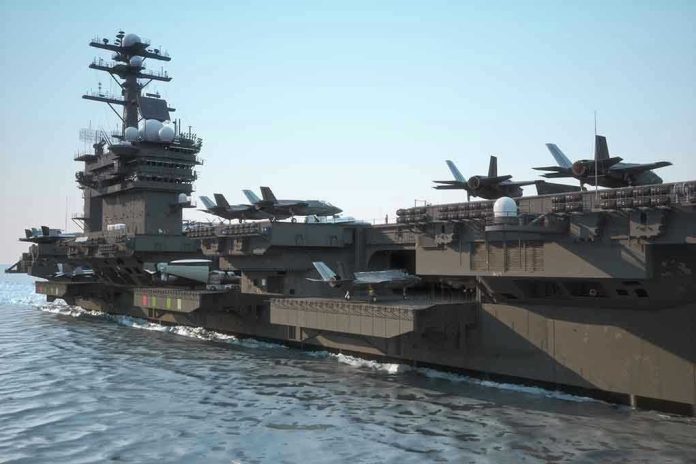
Two US Navy aircraft from the USS Nimitz crashed within 30 minutes of each other in the contested South China Sea, raising urgent questions about operational readiness and safety protocols in America’s most critical strategic theater.
Story Highlights
- MH-60R Sea Hawk helicopter and F/A-18F Super Hornet crashed 30 minutes apart during routine operations
- All five crew members rescued safely with no serious injuries reported
- Incidents occurred amid heightened US-China tensions in strategically vital South China Sea
- Navy launches formal investigations with no evidence of hostile action found
- Financial losses include $60 million Super Hornet during USS Nimitz’s final deployment
Double Aircraft Loss Raises Safety Concerns
The MH-60R Sea Hawk helicopter from Helicopter Maritime Strike Squadron 73 “Battle Cats” went down at 2:45 p.m. local time on October 26, 2025, followed by an F/A-18F Super Hornet from Strike Fighter Squadron 22 “Fighting Redcocks” at 3:15 p.m. The unprecedented timing of these separate incidents during routine operations from the nuclear-powered aircraft carrier USS Nimitz has sparked immediate safety reviews. All three helicopter crew members and two Super Hornet pilots were successfully rescued and reported in stable condition.
The US Pacific Fleet confirmed both incidents remain under formal investigation, with preliminary findings showing no evidence of hostile action or enemy involvement. The crashes occurred during what officials described as routine flight operations in international waters, though the South China Sea represents one of the world’s most contested maritime regions. This operational environment consistently places additional stress on equipment and personnel due to heightened geopolitical tensions and increased military activity from multiple nations.
Strategic Implications in Contested Waters
The South China Sea incidents underscore the inherent risks of maintaining America’s forward military presence in regions where China aggressively asserts territorial claims. The USS Nimitz was conducting operations designed to uphold freedom of navigation principles and counter Chinese expansion in this vital shipping corridor. These crashes follow a troubling pattern of US Navy aircraft losses, including an F/A-18 Super Hornet lost in the Red Sea six months prior and another incident in April 2025 involving aircraft falling from the USS Harry S. Truman.
The timing coincides with President Trump’s Asia tour and ongoing diplomatic tensions with Beijing over trade, technology transfers, and military presence in the region. Defense analysts note that high-tempo operations in contested waters inevitably increase operational risks, particularly when aircraft and crews face extended deployments and complex mission requirements. The financial impact includes the loss of a Super Hornet valued at approximately $60 million, representing significant taxpayer investment in critical defense capabilities.
Operational Readiness Under Scrutiny
These simultaneous aircraft losses raise legitimate questions about maintenance protocols, crew readiness, and equipment reliability under the demanding conditions of South China Sea operations. The incidents occurred during the USS Nimitz’s final deployment as the carrier transitions from Middle East operations, potentially indicating stress on both personnel and equipment from extended operational cycles. Aviation safety experts will likely examine whether increased operational tempo and geopolitical pressures contributed to mechanical failures or procedural lapses.
A MH-60R Sea Hawk helicopter and an F/A-18F Super Hornet fighter jet from the USS Nimitz crashed in separate incidents over the South China Sea during routine operations. All five crew members were rescued and are in stable condition. https://t.co/gLZltnlJri
— The Beacon (@hvbeacon) October 27, 2025
The Navy’s transparency in reporting these incidents and confirming crew safety demonstrates appropriate accountability to the American people who fund these critical defense operations. However, the unusual proximity of two separate aircraft losses within 30 minutes demands thorough investigation to prevent future incidents and maintain the operational effectiveness essential for deterring Chinese aggression. The successful rescue operations highlight the professionalism and preparedness of Navy personnel, even as questions persist about equipment reliability and safety protocols in this strategically vital but dangerous region.
Sources:
Two US Navy planes crash aircraft carrier South China Sea 30 minutes apart
US Navy Super Hornet Sea Hawk South China Sea crash
Navy helicopter crash South China Sea fighter jet