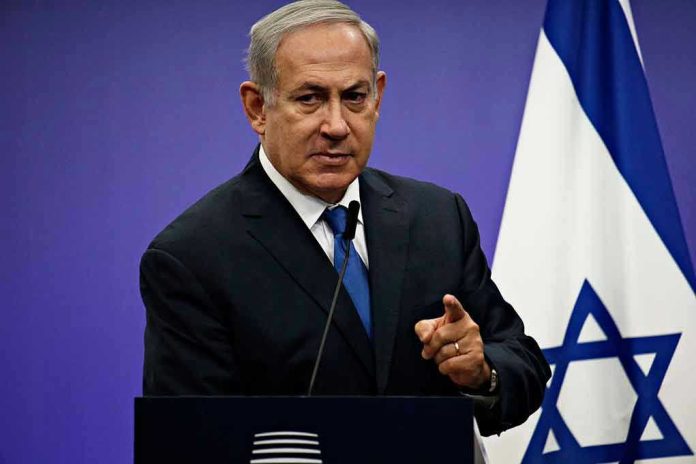
Netanyahu’s rare admission of regret over a deadly Israeli strike on Gaza’s Nasser Hospital exposes the mounting international pressure forcing Israel to acknowledge civilian casualties in ways that would have been unthinkable under previous administrations.
Story Overview
- Israeli strike on Nasser Hospital killed 20 people, including 5 medical staff
- Netanyahu publicly called incident a “tragic mishap” and expressed deep regret
- UN Secretary-General issued strong condemnation demanding accountability
- Strike targeted protected civilian medical facility under international law
Netanyahu Breaks Pattern with Public Regret
Prime Minister Benjamin Netanyahu’s statement expressing “deep regret” over the Nasser Hospital strike marks an unusual departure from Israel’s typical response to civilian casualties. The Israeli leader’s decision to publicly label the incident a “tragic mishap” signals recognition that international scrutiny has reached unprecedented levels. This acknowledgment comes as the strike killed at least 20 people, including five medical personnel, at one of Gaza’s largest medical facilities.
International Law Violations Draw Swift Condemnation
The United Nations Secretary-General immediately condemned the hospital strike, emphasizing that medical facilities hold protected status under the Geneva Conventions. Hospitals serving civilian populations cannot be lawfully targeted during military operations, making this incident a potential violation of international humanitarian law. The UN’s rapid response reflects growing impatience with repeated strikes on Gaza’s already devastated healthcare infrastructure, which has faced severe shortages due to ongoing conflict.
Gaza’s Healthcare System Under Siege
Nasser Hospital served as a critical emergency care hub for southern Gaza’s population, making its targeting particularly devastating for civilian access to medical treatment. The facility had been operating under extreme conditions due to supply shortages and staff limitations caused by Israel’s blockade and repeated military operations. Medical professionals emphasize that such strikes compound the humanitarian crisis by eliminating essential services that Gaza’s population desperately needs during ongoing hostilities.
Strategic Implications for Israeli Military Operations
The incident highlights the challenges facing Israel’s military strategy in densely populated Gaza, where civilian infrastructure and potential military targets often overlap. Security analysts note that international diplomatic pressure has intensified scrutiny of Israeli targeting decisions, particularly regarding protected facilities like hospitals. The unusual nature of Netanyahu’s public regret suggests Israeli leadership recognizes the diplomatic costs of civilian casualties have increased significantly under current international dynamics.
Sources:
UN Secretary-General Statement on Gaza Hospital Strike