A billionaire Trump donor who publicly warned against offshoring is now accused of sending an Ohio factory’s work to China—costing 150 American jobs and igniting a credibility test for “America First” economics.
Story Snapshot
- Hedge fund billionaire John Paulson, a major Trump donor and tariff advocate, is tied to a plan to close a Conn-Selmer plant in Ohio and shift production to China.
- The move is expected to eliminate about 150 jobs represented by United Auto Workers Local 2359, prompting emotional worker backlash.
- Paulson previously said on CNBC that American producers should not close U.S. factories and offshore work, a quote now resurfacing in criticism.
- Conservative China hawk Gordon G. Chang publicly urged President Trump to intervene, while Paulson and the White House did not respond in the cited reports.
Offshoring controversy hits a symbolic “America First” pressure point
Reports in early 2025 said John Paulson, the billionaire founder of Paulson & Co. and a prominent Trump donor, is facing backlash after a Conn-Selmer plant in Ohio was slated to close and move production to China. Conn-Selmer is described as the largest U.S. brass and orchestral instrument manufacturer, making the decision especially sensitive in a manufacturing-focused political climate. The reported outcome: roughly 150 U.S. jobs eliminated as work shifts overseas.
The criticism is intensified because Paulson publicly argued the opposite just months earlier. In September 2024, he said on CNBC, “We can’t have American producers closing American factories and offshoring. We need to protect American jobs and protect American manufacturing.” That statement was consistent with the broader tariff-and-reshoring argument he advanced around Trump’s trade agenda. Now, workers and critics point to the apparent mismatch between pro-tariff messaging and a business decision rooted in lower-cost production abroad.
Workers and union messages sharpen the political accountability question
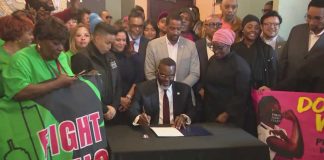
United Auto Workers Local 2359, which represents the affected employees, became a central voice in the public dispute. Workers released emotional messages questioning the rationale of shifting work to China and describing the decision as a betrayal. One quoted line captures the heart of the dispute: “Is sending our work to China protecting American jobs?” The reports also noted the anger was amplified online, where critics framed the story as another example of elite incentives colliding with blue-collar promises.
From a conservative lens, the significance is not the union’s politics but the principle at stake: whether corporate and donor-class behavior aligns with a voter mandate that prioritizes domestic production. When a company tied to a high-profile pro-tariff donor moves work to China, it hands ammunition to skeptics who claim “America First” is only a slogan. The available reporting does not include Paulson’s explanation, and that silence leaves the public narrative dominated by worker testimony and critics’ interpretations.
Conservative China hawks push for Trump-era follow-through
Conservative commentator Gordon G. Chang, known for a hard line on China and associated with conservative political circles, weighed in publicly by urging President Trump to get involved. Chang’s intervention matters because it frames the issue less as a partisan labor dispute and more as a test of national resolve on China and offshoring. The reports said neither Paulson’s representatives nor the White House responded to inquiries, so it remains unclear whether any direct outreach occurred or whether policy leverage is being considered.
What the reports confirm—and what remains unresolved
The underlying facts are straightforward across the cited summaries: the plant closure plan, the shift of production to China, and the approximate number of jobs affected. The sources also align that Paulson’s prior anti-offshoring remarks are central to the backlash. However, some details remain uncertain based on the provided reporting, including the exact timing of the closure process and a minor geographic ambiguity about the plant’s location history versus how it is described in the articles. Those gaps limit any definitive conclusions about internal decision-making.
For Trump’s coalition in 2026—especially voters who backed tariffs to rebuild U.S. industry—the larger takeaway is the accountability problem. Tariffs and trade pressure are designed to change incentives, but they cannot replace leadership from owners who benefit from American markets and political protection while shifting production abroad. If the reporting is accurate, the dispute will likely keep intensifying unless Paulson offers a clear public rationale or reverses course, because the workers’ question is the same one voters ask: who is actually putting America first?
Sources:
Billionaire Trump Donor Ripped by Employees Over Anti-MAGA Jobs Plan
Billionaire Trump donor and tariff advocate is moving his Ohio plant to China