New land ownership restrictions in Texas are drawing a hard line against foreign and federal “land grabs,” igniting fierce debate over property rights, national security, and the limits of government power.
Story Snapshot
- Texas lawmakers pass SB17, banning land purchases by individuals and entities tied to foreign governments deemed security threats.
- The Trump administration halts a major federal land expansion, citing state sovereignty and private property rights.
- Critics warn of discrimination and legal overreach, while supporters see the moves as vital for national security.
- Legal challenges and partisan divides intensify as Texas asserts control over its land against both federal and foreign interests.
Texas Confronts Dual “Land Grabs”: State Pushes Back on Foreign and Federal Incursions
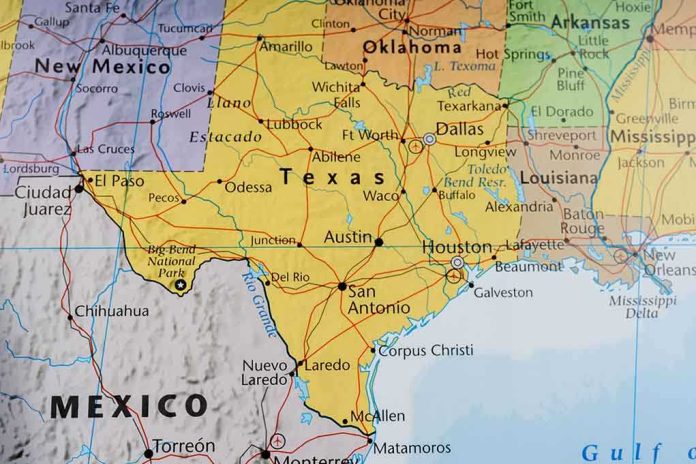
Recent legislative action in Texas has spotlighted a growing movement to block both foreign and federal entities from acquiring state land. The Texas House’s passage of Senate Bill 17 (SB17) in May 2025 marks a pivotal shift, targeting land purchases by individuals and organizations linked to governments such as China, Iran, North Korea, and Russia. This legislative push follows years of mounting concern, fueled by high-profile foreign acquisitions near sensitive sites, including the 2021 purchase of over 140,000 acres by a retired Chinese general adjacent to Laughlin Air Force Base. For many Texans, these developments evoke deep-rooted anxieties over national security and the erosion of private property rights.
The Trump administration’s intervention in July 2025 brought the federal-state standoff to a head, as officials halted a proposed expansion of the Muleshoe National Wildlife Refuge. Local landowners and state leaders had condemned the plan as a “federal land grab,” arguing it threatened longstanding traditions of private ownership and state control. The administration’s move, championed by organizations like American Stewards of Liberty, was celebrated by property rights advocates as a decisive victory against unchecked federal overreach. This dual-front battle—against both foreign and federal encroachment—underscores Texas’s unique position at the crossroads of national security and constitutional principle.
SB17: Legislative Response and Expanding Executive Power
SB17, modeled after Florida’s controversial alien land laws, represents the most aggressive measure to date in Texas’s ongoing campaign to secure its borders and land. The bill not only bans certain foreign acquisitions but also grants the governor expanded authority to add new countries or criminal organizations to the restricted list without legislative oversight. State Attorney General powers have also increased, enabling investigations and reversals of suspicious land deals. Proponents argue these tools are essential for preempting espionage and influence operations, especially near critical infrastructure and military bases. Critics, including civil rights groups, warn that the law could spark discrimination and revive exclusionary practices from the past.
Some advocates for civil liberties point to early twentieth-century alien land laws as a troubling precedent, suggesting that SB17 risks repeating historic injustices. Yet state lawmakers and supporters maintain that the legislation targets hostile actions—not race or nationality—and is a necessary safeguard in a global landscape marked by strategic competition and security threats. The bill’s passage has heightened partisan tensions, with most Republicans backing the policy and opposition coming from civil rights groups and segments of the Democratic caucus.
Legal, Economic, and Political Fallout: The Battle Intensifies
The passage of SB17 and the blocking of federal land expansion have set the stage for complex legal and political battles. Advocacy groups have already vowed to challenge the constitutionality of SB17, citing federal preemption and the risk of discriminatory enforcement. Florida’s similar legislation, currently under court challenge, provides a legal roadmap and a warning for Texas. Economically, the new restrictions could deter foreign investment, particularly in agriculture and energy, while injecting uncertainty into real estate markets. Socially, the measures stoke tensions between property rights advocates and civil liberties defenders, raising fears of profiling and the erosion of due process.
As of October 2025, SB17 awaits final Senate approval before heading to the governor’s desk, while the halted Muleshoe expansion remains a rallying point for property rights proponents. The broader debate over land control in Texas is far from settled. As legal challenges mount and partisan lines harden, Texans face a critical juncture: whether to embrace aggressive state action to defend sovereignty and security, or to reckon with the risk of overreach and the unintended consequences of sweeping legislative change.
Expert Analysis: National Security, Constitutional Rights, and Texas Identity
National security experts largely support efforts to restrict land purchases near military sites but caution against blanket bans that could harm economic relations or invite legal defeat. Legal scholars highlight the risk that SB17 and similar laws could be struck down for targeting specific nationalities, raising questions of constitutionality and federal supremacy. Agricultural economists note that while foreign ownership of Texas farmland remains low, the trend is growing and merits careful oversight. Amid these debates, one constant remains: Texas’s fierce commitment to private property and limited government, values now being tested in a new era of legislative and executive activism. As the situation evolves, the rest of the nation watches closely—seeing in Texas a bellwether for the balance between security and liberty in 21st-century America.
Sources:
Rep. Arrington: Statement on Halting Muleshoe National Wildlife Refuge Expansion
Texas Senate bill would ban some foreign nationals from buying land
COMMISSIONER SID MILLER CELEBRATES COURT WIN AGAINST BIDEN-ERA LAND GRAB
OPINION: FIGHTING FOR TEXAS FARMLAND: THE BATTLE AT MULESHOE
Kyle Bass and the battle over East Texas water rights