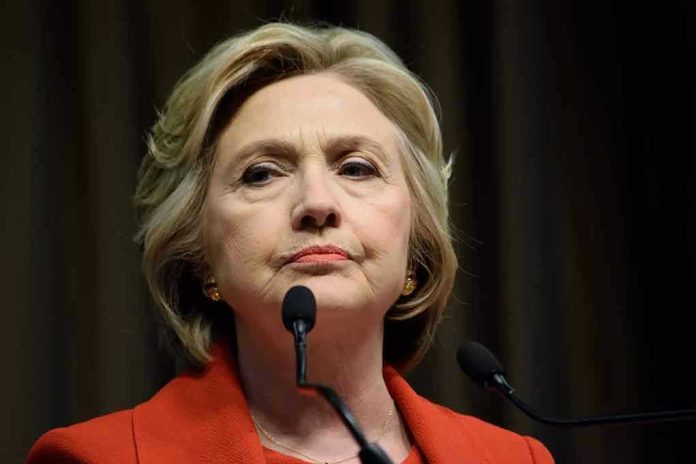
Nayib Bukele’s challenge to Hillary Clinton over El Salvadoran prisoners has sparked a fierce debate about human rights and sovereignty.
Story Highlights
- Nayib Bukele challenges Hillary Clinton to take Salvadoran prisoners after criticism of his policies.
- Clinton criticizes El Salvador’s prison conditions, highlighting human rights concerns.
- Bukele defends his security measures, emphasizing reduced crime rates.
- The exchange highlights tensions between U.S. and El Salvador over governance and human rights.
Bukele’s Defiant Challenge
In a bold move, El Salvador’s President Nayib Bukele publicly challenged former U.S. Secretary of State Hillary Clinton to take in Salvadoran prisoners. This came after Clinton criticized El Salvador’s prison conditions and mass incarceration as signs of authoritarianism. Bukele, known for his confrontational style, used this opportunity to defend his aggressive anti-gang policies, claiming they have effectively reduced crime and gang control in the country.
The exchange is part of Bukele’s broader communication strategy, often using social media to rally both domestic and international support against what he perceives as hypocritical foreign interference. He argues that the U.S. and other critics are more concerned about the rights of criminals than the safety of Salvadoran citizens, framing his policies as necessary for public security.
Human Rights Concerns and International Criticism
Hillary Clinton and other U.S. figures have expressed concerns about the human rights implications of Bukele’s policies. They argue that the mass detention and harsh prison conditions violate democratic norms and due process. International human rights organizations have echoed these concerns, citing reports of arbitrary arrests and poor treatment of detainees. Despite this criticism, Bukele’s policies remain popular domestically, as they have resulted in a significant decrease in crime rates.
The ongoing tension between Bukele’s administration and international critics underscores a broader debate about the balance between security and human rights. While Bukele’s supporters praise his tough stance on crime, critics warn of the long-term implications for El Salvador’s democratic institutions and legal frameworks.
The Broader Implications
The clash between Bukele and Clinton reflects wider ideological battles between populist leaders and liberal democratic values. It also highlights the challenges in U.S.-El Salvador relations, where shared interests in security and migration are often at odds with governance and human rights concerns. As Bukele continues to assert his policies, the question remains whether the international community will engage or confront his administration on these critical issues.
This ongoing narrative is crucial for understanding the dynamics at play in both domestic and international politics regarding human rights and sovereignty.