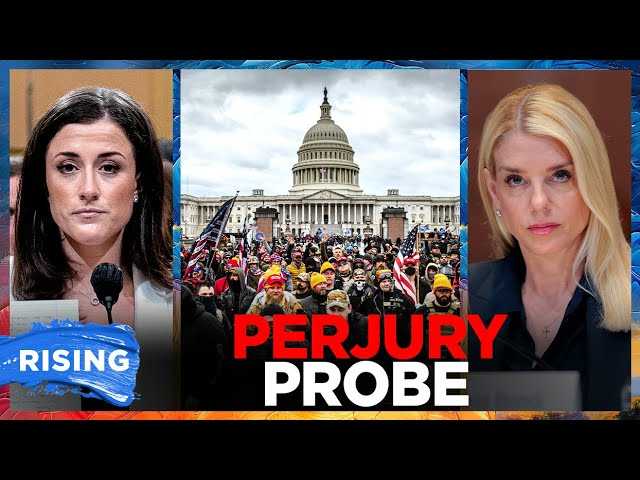
The Justice Department’s Civil Rights Division has launched a criminal investigation into Cassidy Hutchinson, the former White House aide whose dramatic testimony against President Trump before the January 6 Committee captivated the nation, raising serious questions about whether she committed perjury and exposing deep concerns about the weaponization of government power.
Story Snapshot
- DOJ Civil Rights Division investigates Cassidy Hutchinson for potential perjury during her June 2022 January 6 Committee testimony
- Investigation follows criminal referral from Rep. Barry Loudermilk after witnesses disputed key claims from Hutchinson’s testimony
- Unusual routing through Civil Rights Division instead of standard U.S. Attorney’s Office raises questions about DOJ politicization
- Case reflects broader pattern of accountability efforts targeting those perceived as damaging Trump’s legacy
Criminal Referral Triggers DOJ Investigation
Rep. Barry Loudermilk submitted a criminal referral to the Department of Justice in March 2026, accusing Cassidy Hutchinson of providing false testimony during her televised appearance before the House January 6 Committee. The Georgia Republican’s referral specifically challenged the credibility of Hutchinson’s dramatic claims about President Trump’s conduct surrounding the Capitol riot. The DOJ’s Civil Rights Division, led by Assistant Attorney General Harmeet Dhillon, subsequently initiated an active investigation focusing on whether the former White House aide committed perjury. Sources familiar with the matter told reporters there are “a few strong arguments” supporting the decision to pursue the investigation.
Disputed Testimony at Center of Probe
Hutchinson’s June 2022 testimony provided some of the most sensational allegations against Trump during the January 6 Committee hearings. The 29-year-old former aide to Chief of Staff Mark Meadows offered firsthand accounts of events leading up to and following the Capitol riot, leveraging her proximity to senior White House officials to paint a damaging portrait of the president’s actions. However, other witnesses subsequently disputed certain claims made by Hutchinson, particularly regarding Trump’s alleged physical actions inside the presidential vehicle. These contradictions formed the basis for questions about the accuracy and truthfulness of her testimony, which became central to the committee’s narrative about January 6 events.
Unusual Prosecutorial Routing Raises Eyebrows
The investigation’s path through the Civil Rights Division represents a significant departure from standard prosecutorial procedures. Perjury allegations typically fall under the jurisdiction of the U.S. Attorney’s Office in Washington, D.C., which handles criminal matters in the nation’s capital. Instead, the case was deliberately routed to the Civil Rights Division, a unit that traditionally focuses on systemic civil rights abuses rather than individual perjury cases. The U.S. Attorney’s Office in D.C., currently led by Jeanine Pirro, was excluded from handling the matter. Legal experts have questioned this unusual approach, suggesting it reflects political considerations in case handling rather than standard prosecutorial practice.
Broader Implications for Government Accountability
The investigation emerged during a period when the Trump administration has pursued accountability measures against individuals perceived as having damaged the president’s reputation. Trump’s legal representative, Todd Blanche, defended the investigation by stating it represents the president’s right and duty to lead the country in holding people accountable. However, critics worry the case establishes a troubling precedent that could discourage future witnesses from providing testimony against powerful political figures. The timing of the investigation’s initiation under then-Attorney General Pam Bondi, who faced pressure regarding her position, adds another layer of concern about whether prosecutorial decisions are being driven by political motivations rather than impartial justice.
The case crystallizes growing frustrations among Americans across the political spectrum who believe the Justice Department operates as a tool for the powerful rather than an independent arbiter of justice. Whether one views Hutchinson as a courageous truth-teller or a dishonest witness, the investigation’s unusual handling reinforces the perception that federal institutions have become battlegrounds for political score-settling. The outcome will likely impact not only Hutchinson’s legal standing and credibility but also the historical record of January 6 events and the willingness of future government employees to come forward with potentially damaging information about their superiors.