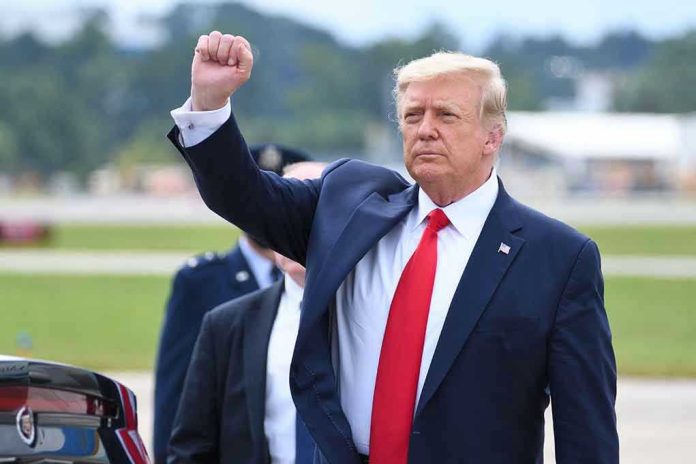
Trump’s approval is inching up, and frustrated Americans who lived through Biden-era inflation are rewarding his renewed crusade to make everyday life affordable.
Story Snapshot
- Trump’s national approval remains net negative, but recent polls show a modest uptick from his late‑November low.
- Republicans and conservative-leaning voters are responding positively to his sharpened focus on affordability and cost of living.
- Pollsters with a GOP tilt show the strongest gains, while major aggregates still place Trump in the low‑40s on approval.
- Affordability is reshaping Republican strategy, pushing kitchen-table economics to the center of the 2026 midterm battle.
Polling Shift: A Small Uptick After a Sharp Slide
Recent national polling shows President Trump climbing off a second-term low, with approval in most aggregates now hovering in the low 40s and disapproval in the low-to-mid 50s. After a rough stretch tied to the long government shutdown, his net approval bottomed out around November 23 before improving by roughly one to two points. That is hardly a political earthquake, but in a deeply polarized country, even small gains signal that some voters are recalibrating.
Two firms, TIPP and InsiderAdvantage, have delivered Trump his best recent numbers, placing his net approval near minus four to minus five, far better than the double-digit negatives seen elsewhere. Analysts note those pollsters tend to lean Republican, which means their numbers likely paint a more favorable picture than the broader landscape. Still, those surveys help nudge the overall average upward and give conservatives concrete data to rally around after weeks of grim headlines.
Affordability Messaging Resonates With Conservatives
Republicans increasingly credit Trump’s renewed emphasis on affordability—gas prices, grocery bills, rent, and medical costs—for the modest improvement. Facing voters who watched their savings erode under Biden-era inflation and big-government spending, Trump has doubled down on a simple promise: make life more affordable for working families. That focus aligns with his long-standing pitch as champion of the “forgotten” middle class, especially non-college workers who feel punished by globalism and bureaucratic overreach.
GOP strategists and conservative commentators are now elevating affordability to a top-tier message heading into the 2026 midterms. Instead of letting Democrats rewrite history on inflation, they are pointing to continued cost-of-living pressure as proof that Washington’s old playbook—overspending, regulation, and open borders—is still failing families. For many right-leaning voters, Trump’s rhetoric on wages, energy costs, and grocery prices speaks directly to lived experience, reinforcing the belief that only a government committed to limited spending and deregulation can restore stability.
Pollsters, Partisans, and the Fight Over the Narrative
Behind the numbers is a tug-of-war over what this small uptick actually means. Data analysts who track all major polls stress that Trump remains underwater nationally and warn against declaring a full-blown comeback based on a couple of friendly surveys. Aggregators that average multiple pollsters continue to show his net approval in negative territory, often between nine and the mid-teens below water. From their perspective, the recent shift looks more like stabilization than a structural realignment.
Conservative media and Republican activists, however, are seizing on the favorable polling to argue that Trump’s economic focus is beginning to pay dividends. They highlight strong Republican approval and improving marks among right-leaning independents as evidence that everyday economic issues still beat elite cultural obsessions. Democrats and mainstream outlets counter that a president mired in negative net approval remains vulnerable, and they frame the movement as narrow, partisan, and fragile. The result is another split-screen reality for voters consuming different news ecosystems.
What This Means for 2026 and the Conservative Agenda
The practical impact of these trends will be felt in campaign strategy more than in day-to-day economic data. Republican candidates now have polling backup for centering their pitch on inflation, energy, and household budgets rather than getting dragged into left-wing narratives about climate mandates or identity politics. If Trump continues tying affordability to secure borders, deregulation, and American energy dominance, it reinforces a vision of limited government and strong national sovereignty as the surest path to relief.
Trump Approval Rating up as Republicans Applaud Focus on Affordability https://t.co/7bN9481mNE
— Sonyx (@ar83461156) December 9, 2025
At the same time, conservatives should recognize the limits of the current rebound. Deep polarization means a sizeable slice of the electorate remains locked in opposition, no matter what the numbers at the gas pump show. That makes turnout and message discipline crucial. For voters burned by years of inflation, open-borders chaos, and bloated federal programs, the emerging polling story is clear: when Republicans talk directly about affordability and rein in Washington’s excesses, they start to regain ground—even in a hostile media environment.
Sources:
November 2025 National Poll – Emerson College Polling
Trump Approval Ratings – Nate Silver Bulletin
Opinion Polling on the Second Trump Presidency – Wikipedia