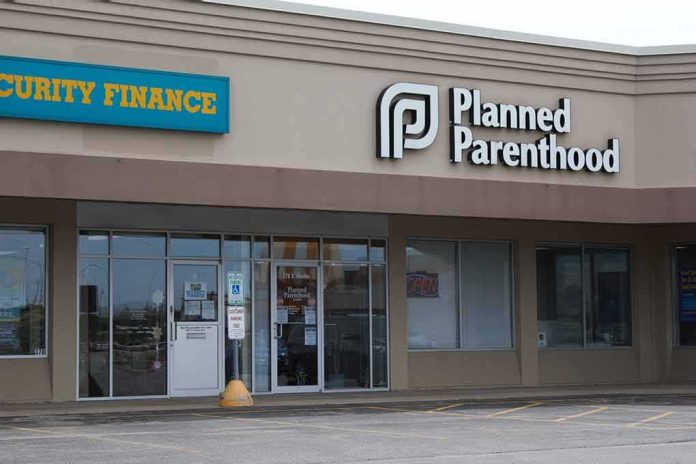
A federal appeals court just refused to throw out a Medicaid fraud lawsuit that could force Planned Parenthood to repay close to $2 billion in taxpayer money.
Story Snapshot
- The full Fifth Circuit Court of Appeals dismissed Planned Parenthood’s appeal and sent the case back to a lower court.
- A whistleblower’s 2021 lawsuit accuses Planned Parenthood affiliates of Medicaid fraud worth close to $2 billion.
- The ruling was about court jurisdiction, not a final decision on whether fraud actually happened.
- The case adds to years of separate legal fights over Planned Parenthood’s Medicaid funding.
Appeals Court Won’t Hear the Case Yet
The full Fifth Circuit Court of Appeals ruled Wednesday that it cannot consider Planned Parenthood’s appeal of an earlier decision in the case. The court said it lacked jurisdiction over the interlocutory appeal, meaning it came too early in the legal process. That sends the case back to the federal district court, which had already ruled Planned Parenthood’s lawyers are not shielded from the lawsuit.
Conservative outlets quickly framed the dismissal as a major defeat for Planned Parenthood, warning it could ultimately force the organization to repay close to $2 billion in Medicaid funds. That number reflects the total the lawsuit seeks, not a court finding of guilt.
Any ruling against Planned Parenthood is a good one. https://t.co/tRY3d2ij4W
Brief facts of case:
A whistleblower ("Alex Doe") filed a False Claims Act lawsuit claiming Planned Parenthood and its affiliates illegally continued to bill Medicaid after Texas and Louisiana moved…
— Ladylawyer (@Ladylaw31256058) August 13, 2026
Whistleblower Alleges Years of Improper Billing
The underlying case began in February 2021, when an anonymous plaintiff identified as “Alex Doe” sued Planned Parenthood Federation of America and several affiliates in the Northern District of Texas. The suit was filed on behalf of the federal government, Texas, and Louisiana. It claims the affiliates kept billing Medicaid for services after Texas moved to cut off their funding, with the total sought once estimated near $1.8 billion.
Immunity Defense Rejected, For Now
Planned Parenthood argued its attorneys had legal immunity from the fraud suit because the disputed conduct happened inside the organization’s own litigation and law department. A Fifth Circuit panel briefly agreed with that argument in a February 2025 opinion, but the full court later vacated it for further review, setting up the jurisdictional fight the court just resolved.
Not a Fraud Verdict — A Procedural Ruling
The dismissal only means the appeals court won’t step in at this early stage. It is not a ruling that Planned Parenthood committed Medicaid fraud. Planned Parenthood has publicly called the lawsuit “baseless” and disputes the fraud allegations. The case now returns to the district court, where the actual claims about billing practices still have to be argued and proven.
Confusion between procedural wins and fraud findings is common in cases like this. False Claims Act suits often start under seal and move slowly through jurisdictional disputes before any judge or jury weighs the actual billing evidence, leaving plenty of room for both sides to spin outcomes as vindication.
Part of a Larger Funding Battle
This fraud case is separate from — but connected to — a broader fight over Planned Parenthood’s Medicaid money. Congress’ 2025 budget law blocked federal Medicaid payments to major abortion providers, and most legal challenges to that provision have since been dropped nationwide. Planned Parenthood has faced other Medicaid billing disputes before, including a $4.3 million settlement by its Gulf Coast affiliate over unrelated allegations more than a decade ago.
Why the Fight Resonates Beyond Abortion Politics
For many Americans already skeptical of how federal health dollars get spent, this case taps into a deeper frustration. Conservatives see it as proof that a well-funded organization has dodged accountability for years. Liberals worry the lawsuit is a political weapon aimed at defunding health providers. Both sides increasingly agree the bigger problem is a system that lets billion-dollar disputes drag on for years without clear answers.
Sources:
thegatewaypundit.com, news.bloomberglaw.com, politico.com, cdn.ca9.uscourts.gov, texasattorneygeneral.gov, omm.com, ca5.uscourts.gov