Federal courts have struck down Pennsylvania’s mail-in ballot date requirement, but ongoing legal battles threaten to undermine election integrity and fuel partisan division in a state pivotal to American democracy.
Story Snapshot
- Thousands of Pennsylvania mail-in ballots rejected over technical envelope dating rules, despite prominent prompts.
- Federal appellate court ruled the date requirement unconstitutional, but the state Supreme Court may reinstate it before the next election.
- Legal uncertainty and conflicting rulings have led to widespread confusion for voters and election officials.
- Partisan divides deepen as Republicans defend safeguards and Democrats push for broader ballot access.
Legal Confusion Surrounds Pennsylvania’s Mail-In Ballots
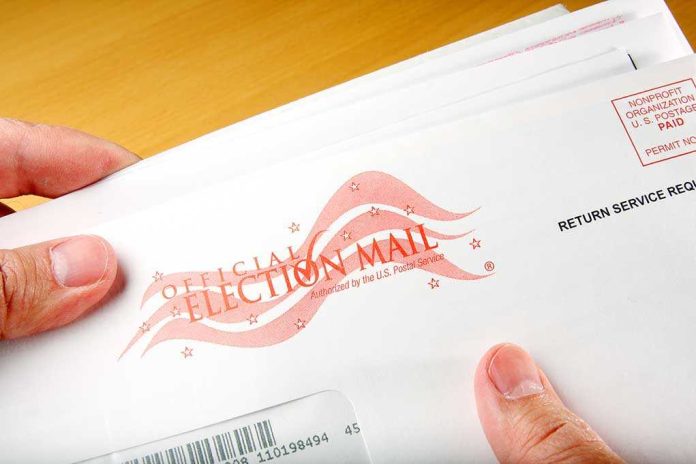
Pennsylvania’s rules for mail-in ballots have ignited a fierce legal and political battle. Since Act 77 was enacted in 2019, voters have been required to sign and date the outer envelope of their mail ballots. Despite envelopes featuring a colorful, prominent box for the date, thousands of ballots have been rejected for missing or incorrect dates. The date itself is not used to verify whether a ballot was cast on time; instead, it serves as a procedural step that has tripped up many voters. This technicality sparked lawsuits and inconsistent practices across counties, with some ballots counted and others discarded based solely on envelope details.
Courts at both state and federal levels have weighed in repeatedly, creating a shifting landscape for voters and election officials. In September 2024, the Pennsylvania Supreme Court ruled that misdated or undated mail-in ballots could not be counted, emphasizing the need for procedural adherence. However, in March 2025, a federal judge found the requirement unenforceable, citing its minimal practical value and disproportionate impact on legitimate voters. Republican groups appealed, arguing the rule is essential for preventing fraud and upholding election integrity. The back-and-forth has left county election boards struggling to implement clear guidance, further eroding public trust in the system.
Partisan Tensions and Stakeholder Motivations
The ongoing dispute reflects deep partisan divides. Democratic organizations and allied advocacy groups argue that rejecting ballots over envelope dates disenfranchises voters, especially the elderly, disabled, and those voting by mail for the first time. They have challenged the requirement in court, seeking to maximize ballot access and minimize technical disqualifications. In contrast, the Republican National Committee and GOP leaders defend the date rule as a crucial safeguard, insisting that even minor procedures are vital for public confidence and election security. Republican legal teams continue to pursue appeals, warning that weakening these safeguards could open the door to fraud and chaos in future elections.
Election officials and county boards are caught in the crossfire, facing administrative burdens and conflicting orders from different courts. Their ability to process ballots consistently has been hampered, increasing costs and confusion. Judges at both the state and federal level now hold the fate of Pennsylvania’s mail-in ballot procedures, with the Pennsylvania Supreme Court’s pending review poised to set a new standard before the next election. The uncertainty has left voters, officials, and stakeholders anxious about what rules will apply and whether every valid vote will count.
Impact on Election Integrity, Voter Access, and Public Trust
The short-term consequences hinge on the outcome of ongoing litigation. Thousands of ballots could be counted or rejected in future close races, potentially swinging election results in a battleground state. Legal experts note that technical envelope requirements do little to verify ballot timeliness and may serve mainly as bureaucratic hurdles. Voting rights advocates warn that such rules disproportionately disenfranchise legitimate voters, undermining faith in the electoral process. Meanwhile, Republican groups maintain that safeguards—however minor—are necessary to ensure only lawful votes are counted, defending constitutional principles and the rule of law.
Court Says Pennsylvania Must Count Mail Ballots With Improperly Dated Envelopes
If you are too stupid to put the date on the envelope, perhaps you shouldn't be voting. 😉
I disagree with this ruling.
We need to get rid of mail-in voting, unless you are disabled or active… pic.twitter.com/RzQ8X0HZwG— NWRain-Judi (@RYboating) August 27, 2025
Long-term, Pennsylvania’s experience is likely to set precedent for other states grappling with mail-in ballot requirements. The federal appeals court ruling, which currently prohibits rejecting ballots solely for missing or incorrect dates, could influence national debates and future litigation. If the Pennsylvania Supreme Court reinstates the requirement, the state could see more ballots rejected and further erosion of public trust. Legal costs and administrative headaches will persist, and the partisan divide over election administration may only intensify. Ultimately, the outcome will shape how technicalities are balanced against fundamental voting rights for years to come.
Sources:
Federal appeals court rules Pennsylvania mail ballot dating requirement unconstitutional
Pennsylvania Supreme Court to revisit mail-in ballot date dispute after SCOTUS declines case
Federal judge says state can’t enforce Act 77 mail ballot date requirement
Pennsylvania government: Mail-in and absentee ballot support