

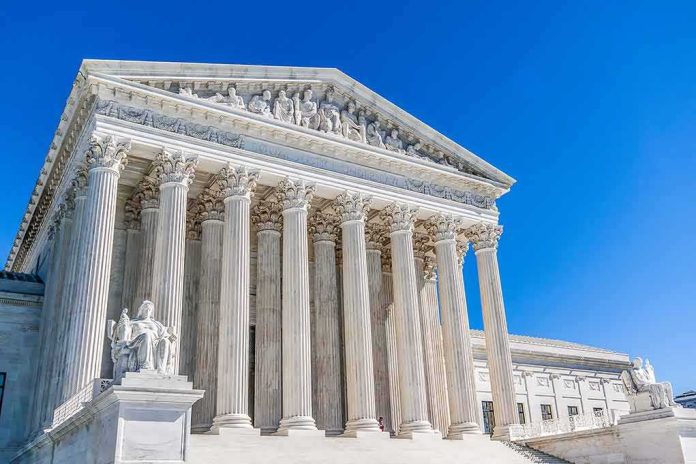
The Supreme Court sided with the Trump administration and agreed to hear its appeal in a watchdog group’s lawsuit seeking records from Elon Musk’s Department of Government Efficiency.
Story Highlights
- The justices agreed to hear the administration’s appeal after lower courts ruled for the watchdog group, CREW.
- CREW says the Department of Government Efficiency, known as DOGE, acted as a federal agency and must open its records to the public.
- The administration says DOGE was a presidential advisory body, which the open-records law does not cover.
- This is the second time the Supreme Court has stepped into this case.
What the Court Did and Why
The Court announced on Tuesday, October 13, that it will hear the case, handing the administration a win at this stage. The appeal asks whether DOGE, the cost-cutting team Musk led early in Trump’s second term, must answer requests under the Freedom of Information Act, or FOIA. FOIA is the federal law that lets the public ask government agencies for their records. It covers agencies, but not the president’s close advisers.
⚖️ BREAKING — SUPREME COURT TO HEAR TRUMP ADMINISTRATION’S CHALLENGE TO COURT-ORDERED INVESTIGATION INTO DOGE RECORDS.
The U.S. Supreme Court announced Tuesday that it will hear a major legal dispute over whether the Department of Government Efficiency (DOGE), formerly led by…
— MDBayNews (@MDBayNews) October 13, 2026
The group that sued is Citizens for Responsibility and Ethics in Washington, or CREW, a government watchdog group. It wants records from DOGE’s early work, when the team helped drive a sweeping overhaul of federal agencies in 2025. The Court has not said when it will hear arguments.
How the Case Got Here
U.S. District Judge Christopher Cooper, a federal trial judge in Washington, ruled for CREW. He ordered fast handling of its records request. He also let CREW’s lawyers question DOGE’s acting administrator, Amy Gleason, under oath. That kind of sworn questioning before trial is called a deposition.
In June 2025, the Supreme Court’s conservative majority limited Cooper’s order, finding that he had ruled too broadly. A federal appeals court panel later sided with CREW again. The administration then returned to the Supreme Court, which has now agreed to take the full case.
The Two Sides
The administration says DOGE gave advice to the president and made no binding decisions of its own. Justice Department lawyers argue the appeals court ignored the Supreme Court’s earlier direction to weigh the separation of powers, the rule that keeps each branch of government within its own lane. They say the lower court intruded on the “autonomy and confidentiality” of the president’s advisers. “Subjecting advisory bodies to intrusive discovery” raises the very concerns Congress meant to avoid when it left advisers out of FOIA, they wrote. Discovery is the pretrial process where one side must hand over documents and answer questions.
CREW argues DOGE acted like a real agency. Its lawyers wrote that public facts, including the president’s own statements, show DOGE “wielding enormous independent authority across the federal government.” The group also says the appeals court fully followed the Supreme Court’s earlier order and that the public has a right to know how DOGE did its work.
Why Conservatives Should Care
Voters sent Trump to Washington to cut waste and shrink a bloated government. Presidents need room to get honest advice from the people they trust. If every advisory meeting can be dragged into court, reform teams spend their time on lawsuits instead of results.
The public still has a stake in knowing who holds real power. That is the line the justices will draw: whether DOGE simply advised the president or acted as an agency in its own right. Their answer will shape how future presidents build reform teams and how watchdog groups chase records.
What Comes Next
Both sides will file written briefs laying out their arguments. The justices will then hear the case in person and issue a ruling. That ruling will settle whether DOGE must open its records to the public.
Sources:
clickondetroit.com, ajc.com, wpxi.com, usatoday.com, wtop.com