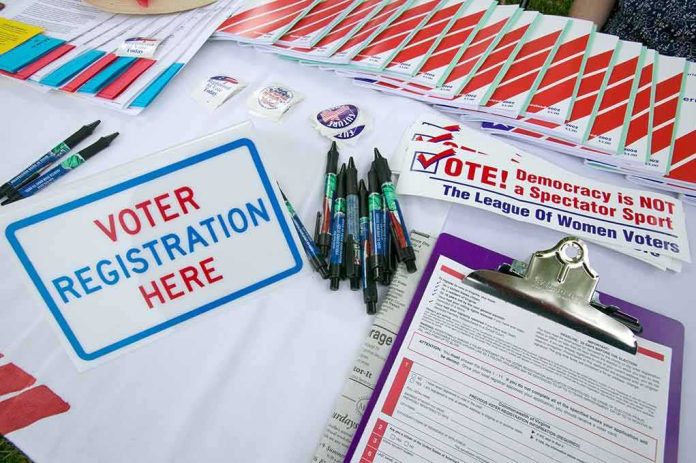
A Michigan sheriff says a whistleblower showed him screens proving the state’s system can register non‑citizens during driver’s license or ID transactions, despite state law and guidance that say it should not.
Story Snapshot
- Michigan uses automatic voter registration tied to driver’s license and state ID transactions.
- State law forbids automatic registration when documents show a person is not a U.S. citizen.
- A sheriff cites a whistleblower alleging software “congratulates” non‑citizens on registration.
- Michigan officials say the system blocks non‑citizen documents from triggering registration.
What the Sheriff Alleges and Why It Matters
Barry County Sheriff Dar Leaf said a confidential informant provided evidence that Michigan’s system can register non‑citizens during Department of State transactions. He claimed the software even “congratulates” these users, suggesting the citizenship gate can fail. The public has not seen the raw proof. Still, the claim cuts at trust in a process that moves applications from state offices to local voter files with little clerk input during the first step.
Michigan’s framework pairs voter registration with common tasks like license and address updates. That design aims to keep records current and reduce paperwork. It also means small data errors can spread quickly if screens fail. That risk is not new. Other states have reported mistakes when driver data moves into voter systems. Those cases show how one software or coding error can reach many records at once, even if officials later fix them.
What Michigan Law and Policy Actually Require
Michigan law says the Secretary of State must not register anyone who provides documents showing they are not a U.S. citizen. Guidance says automatic voter registration applies to eligible customers, with an opt‑out choice, and that branch staff verify eligibility during the driver’s license or state ID process. State materials also say only U.S. citizens are eligible for automatic registration or preregistration. These rules set a clear bar and describe checks at the point of service.
The department’s public guidance adds a strong claim: the computerized system “does not allow” registration when non‑citizen documents are presented. That statement is a direct answer to fears about the workflow. It also creates a testable question. If a software path exists that bypasses the block, logs should show it. If not, the allegation fails. The current record has the sheriff’s account, state denials, and no shared forensic package to reconcile them.
Why the Design Still Raises Bipartisan Concerns
Automatic voter registration depends on truthful answers and correct data mapping. One box checked wrong or one field misread can push an ineligible record forward. Other states have seen exactly that. New Jersey officials reported about 6,600 non‑citizens were registered by a software flaw tied to motor vehicle transactions over a year, before removals. That was not Michigan. It still shows how upstream glitches can scale fast when linked to routine government services.
Michigan’s own updates note that local clerks receive registration files in their inboxes daily. That flow speeds service but can limit local review at the start. Voters want convenience, and officials want cleaner lists. Many readers across the spectrum also fear that busy systems let errors slip through. When trust is low, even the hint of a blind spot, or of “the system registered me automatically,” fuels the sense that distant managers and vendors set rules ordinary citizens cannot see or verify.
What We Know, What We Don’t, and What Would Settle It
We know Michigan runs automatic registration through driver and ID transactions, with an opt‑out, and says it blocks non‑citizen documents. We know the law forbids registering anyone who shows non‑citizen status. We know a sheriff claims a whistleblower proved a fail path, but no document set, code trace, or sworn statement is public in the provided research. We do not have a Michigan count of confirmed non‑citizen registrations tied to this claim.
Clear next steps exist. Transaction logs could show whether any records with non‑citizen documents ever reached voter intake. Audit files could show error rates, reversals, and how fast corrections occur. If the sheriff’s source has screenshots or exports, those could be matched to system events. If the block works as designed, that would appear in the logs. If it failed, engineers could show where and how. Either way, facts would beat talking points and help rebuild trust.
Sources:
thegatewaypundit.com, michigan.gov, worldtribune.com, legislature.mi.gov, content.govdelivery.com, michwomen.com, ncsl.org